
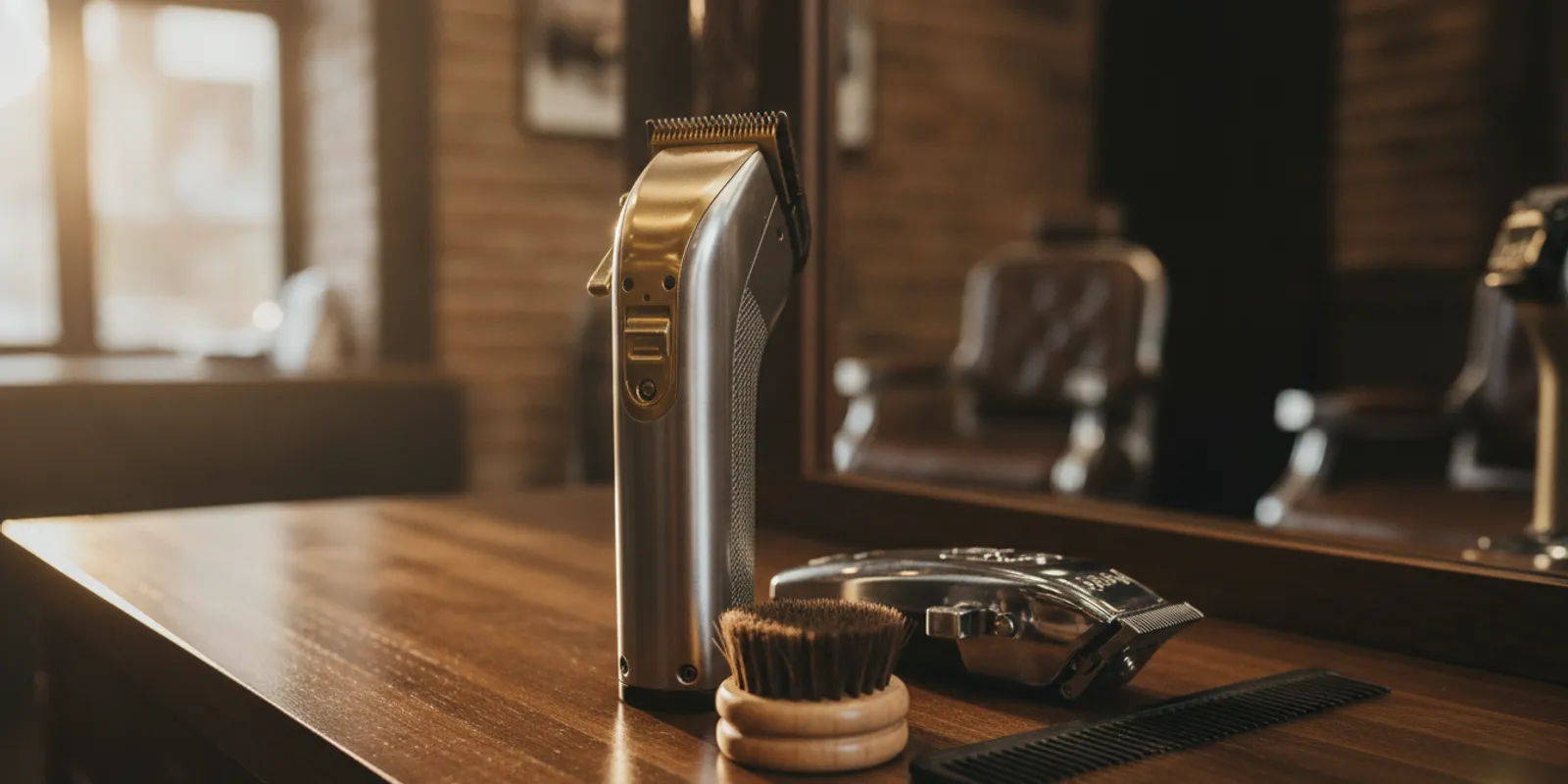
The best clipper for coarse hair is not simply the clipper with the largest motor or the sharpest blade. It is a tool that keeps cutting steadily through the client’s hair, works with the cutting method you use, and stays manageable as the service continues. Start with motor behavior under load, blade design, and heat control, then match the choice to your usual work.
Ask The Barber Company about a clipper for your work
Coarse hair calls for controlled, consistent cutting
Coarse hair describes a strand characteristic, not a single haircut or client type. Hair density, curl pattern, length, product buildup, and the cut you are performing all affect how a clipper feels in use. Choose for the actual service: reliable blade contact and controlled passes matter more than a label or one headline specification.
In practical terms, a clipper for coarse hair should move through the section without repeated, forceful passes. The tool should feel balanced, the blade should suit the work, and the operator should be able to maintain a consistent angle and pace. A clipper that performs well on one dense, short section may not be ideal for bulk removal, close fading, or all-day shop use.
Coarse hair is not a reliable shortcut for predicting what every client needs. Assess the hair in front of you and consider whether it is dry or damp, tightly curled or relatively straight, dense or sparse, and already free of tangles. Keep the tool’s intended use and the clipper or blade manufacturer’s operating instructions in view.
Research can examine coarse hair as a physical hair characteristic; one published study describes clipping coarse hair and capturing a close image of the skin and hair. That kind of observation is not a ranking of clipper models, so it should not be treated as a product recommendation. Read the research on coarse-hair analysis for context on the distinction between a hair trait and a tool claim.
How should you assess motor behavior?
Judge the motor by how consistently the clipper cuts through the sections you actually handle. The useful question is whether the tool maintains a steady cut with an appropriate blade and technique, not whether a single motor label promises more power. Compare manufacturer specifications and test the clipper in a realistic, controlled way before making it your primary tool.
Clipper motors are commonly described by type, such as rotary or magnetic designs, but a motor category alone does not establish how a complete clipper will perform. Blade setup, drive system, battery condition on cordless models, and maintenance all affect the result. Do not assume that every motor in one category cuts at the same speed or responds identically under load.
Look for a steady cut, not brute force
When a clipper slows, chatters, or leaves uneven tracks, more pressure is not the first fix. Check that the blade is clean, oiled as directed, correctly installed, and appropriate for the section. Confirm the hair is prepared for the technique. If the tool still struggles in normal use, compare its maker-listed specifications with another model rather than forcing the blade through the hair.
For shop work, consider the rhythm of a full day. A corded clipper avoids battery-runtime planning, while a cordless model offers freedom of movement but depends on charge level and battery condition. Runtime is model-specific; consult the manufacturer’s documentation for the exact model instead of relying on a generic estimate. If more than one barber will use the tool, comfort, controls, and serviceability also count.
For home grooming, an easy-to-control tool may be more useful than a heavyweight professional model. A clipper that feels powerful but is awkward to guide can make it harder to keep an even angle and avoid overworking one area. Browse professional hair clippers available in Las Vegas and compare the model details to your intended use.
Blade choice: adjustable, detachable, or specialty?
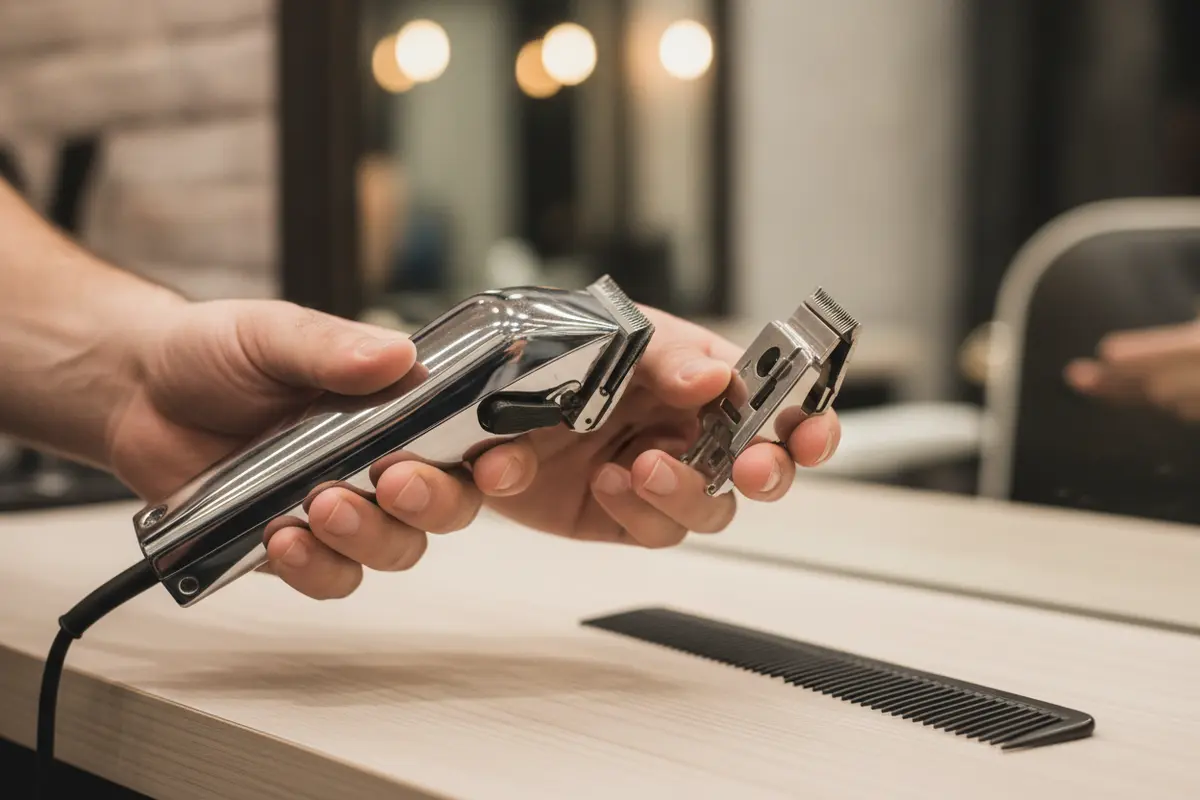
Blade style determines how you move between lengths, how quickly you can switch cutting setups, and which cutting tasks feel controlled. Adjustable blades support gradual length changes on a clipper designed for that system; detachable blades allow a compatible clipper to use different blade sizes. Neither arrangement is automatically best for coarse hair—compatibility, sharpness, and the service decide.
| Setup | Where it can fit | What to verify | Common trade-off |
|---|---|---|---|
| Adjustable blade clipper | Fades, tapers, and length changes with the clipper lever | Lever range, blade condition, alignment, and maker-listed compatibility | Fast adjustments, but the tool’s built-in blade system limits swaps |
| Detachable blade clipper | Bulk removal or workflows that use multiple blade sizes | Clipper-to-blade compatibility, blade size, condition, and attachment fit | Quick blade changes, but requires planning and carrying the right blades |
| Specialty or replacement blade | A specific finish or replacement need on a compatible model | Model fit, intended use, edge condition, and safe installation | Can serve a focused task but is not interchangeable across all clippers |
The table is a starting point, not a substitute for the model instructions. Blade numbering and compatibility conventions differ by system. Confirm the exact clipper and blade combination before ordering, and never force a blade that does not seat correctly. A smooth, correctly aligned blade is more useful than an aggressive setup that is difficult to control.
Use adjustable blades for controlled length transitions
An adjustable clipper can be practical when the service involves a series of length changes without stopping to replace the blade. The lever is useful only when the blade is properly aligned and the operator has a repeatable approach to each transition. On coarse hair, take manageable sections and keep your motion deliberate instead of relying on the lever alone to create the blend.
Use detachable blades when your workflow benefits from swaps
A detachable system may suit a barber who regularly changes blade sizes or wants a dedicated setup for bulk work. Set out the blades needed for the service, check each one before use, and keep the work area organized so a used blade is not confused with a clean one. Verify the clipper is designed for that blade family.
Explore Andis professional tools and Wahl Professional clippers as examples of brand lines to compare; choose by specific model specifications, blade system, and intended service rather than brand name alone. For other options, review Gamma+ Professional, StyleCraft tools, and BaByliss Pro equipment.
How can you manage blade heat during a service?
Heat management is part of technique and maintenance, not a reason to press harder or keep a hot blade against the skin. Blade temperature can rise during extended use, especially when hair, debris, or friction interferes with smooth cutting. Use short checks, clean and lubricate as directed, and follow the maker’s safety guidance before returning a blade to the client.
Check blade temperature at sensible intervals, particularly during long services or after sustained cutting. Pause if the blade feels too warm for comfortable contact. Never test it by dragging the cutting edge across skin. Follow the clipper and blade maker’s instructions for cooling, cleaning, oiling, and any approved cooling product. A brief pause is preferable to continuing with a tool that is uncomfortable or unsafe.
Heat can be a symptom of several conditions: accumulated hair, inadequate lubrication, a blade needing service, misalignment, or extended operation. Do not assume that a hotter motor automatically means the clipper is unsuitable for coarse hair. Inspect the blade and operating conditions first. If heat returns quickly despite proper cleaning and care, stop using the tool until its condition can be assessed.
For a consistent station routine, review the clipper maintenance guide and the instructions for your specific model. Keep clipper blade oil guidance close at hand, since oil type and application should follow the manufacturer’s directions. If you are choosing care supplies, use the barber tool disinfectant selection guide and the relevant product label; disinfection and lubrication have different purposes.
Prepare the hair and station before testing
Preparation removes variables that can make a clipper seem weaker or less controlled than it is. Set up a clean tool, compatible blade or guard, comb, and clear work area. Confirm the client’s hair condition and the model’s permitted use conditions, then test with a manageable section. A consistent setup makes comparison fairer and helps identify whether the issue is the clipper, blade, or method.
Before testing, inspect the blade for visible debris, damage, and secure attachment. Check the lever or guard moves as expected, the cord or battery is in suitable condition, and the clipper is switched off while you fit or remove attachments. Follow the exact manufacturer procedure. A blade that is loose, incorrectly seated, or carrying residue can produce a poor cut regardless of the motor.
Comb through the section and remove tangles without pulling the hair tight. Decide on a clear test length and use the same starting point, stroke direction, and pace for each candidate. Start with a longer guard if you are uncertain about the desired length. On coarse or tightly curled hair, watch the section closely; curl direction and the way hair lies can make the visible result differ from one pass to another.
Separate tool performance from finishing quality. The clipper’s job is to cut the section evenly at the selected setup; blending, edge detail, and final shape also depend on barber technique and other tools. Record whether the clipper catches, skips, or requires repeated strokes, but do not interpret every missed hair as a motor problem. Check blade sharpness and alignment, then repeat the test only after correcting an identifiable setup issue.
For shop evaluation, try the clipper during a representative service rather than relying only on a quick demonstration through a small patch. Note how it feels after several controlled passes, how easy it is to adjust, and whether it is comfortable to clean between services. For personal use, practice on a safe, manageable area and do not attempt a technique or adjustment beyond your experience. Preparation makes a purchase decision more evidence-based and helps prevent unnecessary pressure on the blade.
Technique helps the clipper work well
Technique determines how much work the blade is asked to do on each pass. Start with a clean, detangled section and choose a guard or blade suited to the length you want to remove. Use controlled strokes, keep the clipper angle intentional, and avoid pushing through resistance. If a section does not cut evenly, pause and diagnose before repeating the pass.
For bulk reduction, take smaller sections and work in a pattern that lets you see what has already been cut. Avoid trying to remove too much length in one pass simply because the hair feels dense. For fades, use the appropriate guard and lever position, and make gradual transitions. The clipper is only one part of the result; section size, angle, stroke direction, and finishing work matter too.
Before a close cut, make sure the hair is clear of tangles and heavy residue that could interfere with the blade. Follow the maker’s recommendations on whether to cut dry or damp. Do not wet a clipper or blade unless its instructions allow it. Use a comb to control the section and to keep your cutting path visible.
Zero gapping is a separate blade adjustment, not a shortcut for making every clipper better on coarse hair. It changes the relationship between the cutting and stationary blades and can increase the closeness of a cut; the setup must remain aligned and appropriate for the operator and service. For precision, see how zero gapping works and learn about the in-store zero-gapping service. Do not adjust beyond the model’s safe limits.
Compare clippers with a repeatable test
Use a repeatable comparison instead of choosing from a single headline feature. Shortlist tools that fit the required blade system, check exact model specifications, and handle each clipper if possible. Evaluate how it cuts a representative section, whether the controls feel accessible, and how blade care and service fit into your routine.
- Define the work. Write down whether the main job is bulk removal, fades, tapers, all-around cutting, or home maintenance. Note whether the clipper will be used continuously in a shop or occasionally.
- Choose the blade system. Decide whether adjustable length changes or detachable blade swaps better suit the workflow. Confirm compatibility for the exact clipper model.
- Compare published specifications. Check power source, motor information, weight, blade options, charging details for cordless models, and manufacturer care instructions. Treat runtime and performance figures as model-specific.
- Assess handling. Consider grip, balance, lever position, cord movement or cordless handling, and whether the controls can be reached without changing your grip.
- Test a consistent section. If a demo is available, use the same hair preparation, guard or blade, and stroke approach for each candidate. Note snagging, missed tracks, vibration, and comfort rather than applying more force.
- Plan maintenance. Confirm how to clean, oil, align, and service the blade. Consider whether replacement blades and support for the tool are accessible.
A product comparison should not turn a single trial into a universal verdict. One person’s hair density, skill, blade condition, and technique can change the result. Record the specific setup you tested so you can repeat it. If buying for a shop, have the primary users evaluate comfort and workflow, not only the person placing the order.
For additional context, compare how to choose a barber clipper with the differences between ceramic and steel clipper blades. Blade material alone does not determine the right tool: compare the complete blade assembly, care guidance, compatibility, and the way it feels in the service.
Professional and home users need different priorities
Professionals should prioritize repeatability, serviceability, and comfort across the full workday. Home users should prioritize control, straightforward maintenance, and a tool suited to the haircut they can perform. Both need a compatible, properly maintained blade and a safe technique. The best choice is the one that fits the real workload without relying on unsupported performance claims.
For barbers and shop owners
Think about the clipper as one part of the station. If you cut many clients in sequence, assess balance and heat-check habits along with cutting performance. A backup clipper can keep the workflow moving during charging or maintenance. Shop owners should also plan for consumables and repairs, and discuss wholesale options directly rather than assume one purchase arrangement suits every account.
The Barber Company serves professional barbers and retail customers, and the general public can shop without a professional license. Local barbers can ask about wholesale account options and product guidance. For a service issue, review the in-store clipper repair information or the clipper repair form before arranging a drop-off.
For mobile barbers
Weight, packing, and access to the right blade matter when your station travels. Secure the clipper so the blade cannot be damaged in transit, carry the accessories your service requires, and keep clean and used tools separated. Review the mobile barber equipment setup guide when planning a portable kit. Local restocking may also be an option; check Las Vegas barber supply delivery details for current service information.
For grooming at home
Choose a clipper you can guide confidently and maintain according to its instructions. Start with a longer guard when uncertain, work in small sections, and check the shape before removing more length. Do not attempt a close blade adjustment or repair unless you understand the model’s safe procedure. A professional barber can help you choose a cut and explain the care your tool needs.
Hair porosity is a separate characteristic from strand coarseness, but it can affect which post-wash products work well for a person. A Connecticut Department of Children and Families hair-care manual notes that medium-porosity hair generally works with most products and high-porosity hair may need heavier moisturizers and sealing. That product-care guidance does not identify a clipper model or change blade compatibility. Consult the hair-care manual for its stated care context.
Cleaning and service protect clipper performance
Clean and maintain the clipper on the schedule and by the method specified for its model. Stop to clear hair from the blade when needed, apply oil as directed, and check that the blade is secure and aligned. Repeated pulling, uneven cutting, unusual noise, excess heat, or a damaged cord are reasons to stop and inspect rather than push through a service.
After use, switch off and unplug a corded tool or follow the cordless model’s shutdown instructions. Brush away hair from the blade area, then clean and disinfect tools according to product labels and applicable professional requirements. Oil only where and how the clipper maker directs. Store the tool dry and protected, with the blade guard in place when appropriate.
Do not sharpen a blade or open a motor simply because performance changes. First rule out buildup, incorrect blade fit, low battery charge, and routine adjustment issues. If the blade is dull, damaged, or misaligned, use a qualified service path for the specific tool. The Barber Company offers technical maintenance services including clipper repair and blade work; contact the store to discuss the fault and drop-off steps.
For additional care routines, use the guides for cleaning professional clippers, checking clipper blade alignment, and storing barber clippers. For blade edge concerns, see when to replace or sharpen clipper blades. Follow the specific manufacturer instructions if they differ from a general guide.
Call The Barber Company at (702) 900-9972 about clipper selection or service
Frequently Asked Questions
There is no single clipper specification that guarantees the right result on every coarse-hair service. These quick answers summarize how to narrow the choice and when to seek model-specific guidance. Use the clipper maker’s instructions for operating, cleaning, and adjusting the exact tool you own.
Is a stronger motor always better for coarse hair?
No. A motor label or a high power claim does not prove that a complete clipper will cut better for your work. Compare the model’s specifications, blade system, handling, and performance on a representative section. Proper preparation and a clean, compatible blade also matter.
Should I choose a rotary-motor clipper?
Choose by the exact model and task, not motor type alone. Review manufacturer information about the motor and intended use, then evaluate blade compatibility, power source, handling, maintenance, and the cut. Motor categories do not make every clipper within a category interchangeable.
Does coarse hair require a detachable blade?
No. An adjustable clipper may suit fading and length transitions, while a detachable system can be useful when a workflow calls for blade swaps. Select the setup that supports the service, and confirm blade-to-clipper compatibility before use.
Why does my clipper pull hair even when it is powerful?
Possible causes include a dirty or dull blade, incorrect alignment, unsuitable blade setup, tangled or poorly prepared hair, or technique. Stop and inspect the tool instead of pressing harder. For persistent problems, use a repair professional who can assess the model.
How often should I oil a clipper blade?
Follow the instructions for your specific clipper and blade. Oil type, placement, and frequency are model-dependent. Clean debris first and use only products and procedures approved by the manufacturer; excess or incorrectly applied oil is not a substitute for cleaning or disinfection.
Choose for the work, then keep the tool in condition
When comparing the best clipper for coarse hair, focus on steady cutting in a realistic setup, the blade system that fits your service, and a heat and maintenance routine you can follow. Match the exact model to shop, mobile, or home use, verify manufacturer specifications, and ask for hands-on guidance when the choices are not clear.
Visit The Barber Company’s Las Vegas store and online catalog or contact the team for product and technical-service questions. Free local delivery is available on qualifying orders over $50 throughout the Las Vegas valley; confirm current delivery details with the store.
The Barber Company
4700 Meadows Ln #110, Las Vegas, NV 89107
Phone: (702) 900-9972
Follow The Barber Company on Instagram
With the right fit, a well-maintained clipper can make coarse-hair cutting more controlled and consistent.