
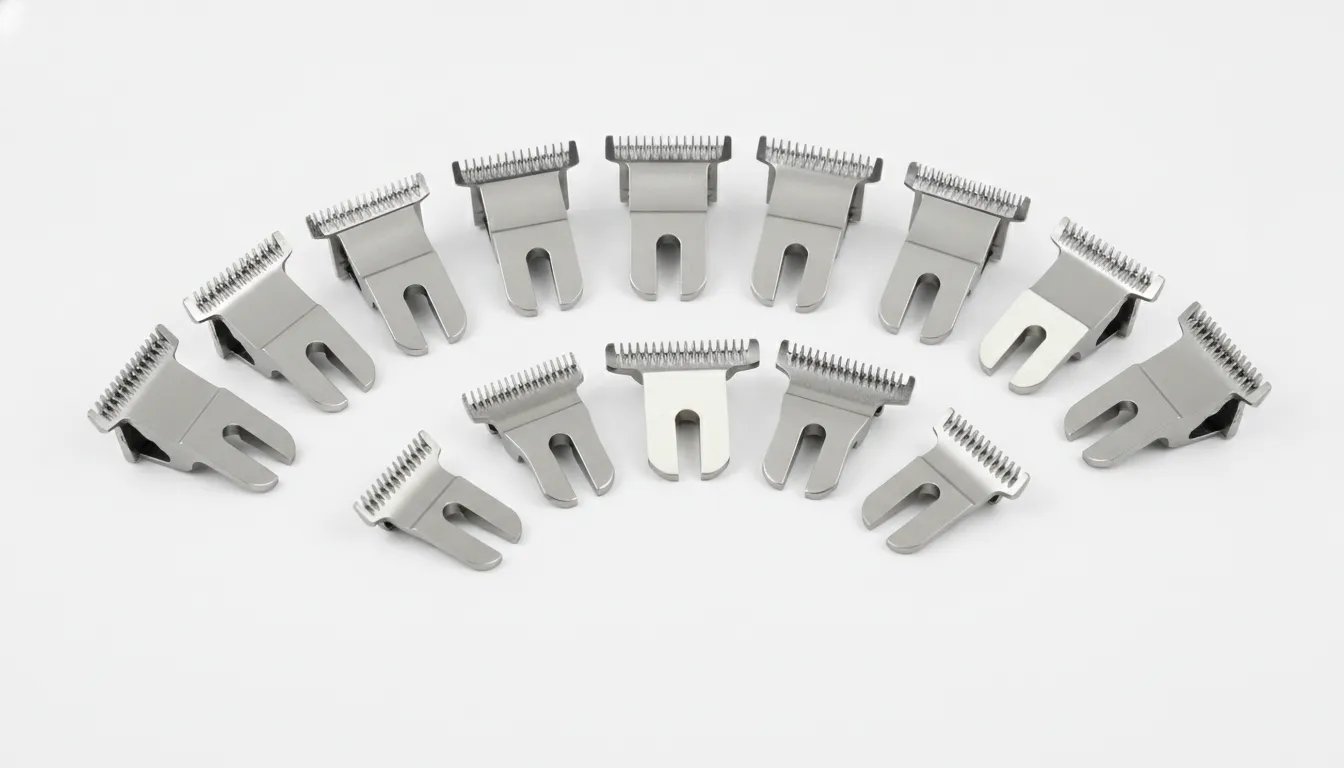
A clipper blade rarely fails on a calendar date. Its useful life depends on workload, steel quality, cleaning, oiling, alignment, and whether the edge is maintained before it starts pulling hair. For a working barber, that distinction matters: sharpening can restore a sound steel blade, while chipped teeth, deep pitting, or heavy rust usually call for replacement. The right decision protects your finish quality and your clients’ comfort. Follow a complete barber clipper maintenance guide for the daily habits that support either path. Bring your blades to The Barber Company in Las Vegas for a professional evaluation.
How long do clipper blades last? Personal-use blades may perform for roughly two to three years, while professional-use blades commonly need sharpening or replacement within six to twelve months. Those ranges change with cutting volume and maintenance, so judge the blade by its cutting behavior and physical condition, not age alone.
The sections ahead separate expected lifespan by usage level, then show which symptoms indicate sharpening and which damage makes replacement the safer choice. That framework helps you avoid replacing a recoverable blade or continuing to use one that can no longer deliver a clean, controlled cut.
How Long Do Clipper Blades Last: How Long Do Clipper Blades Typically Last?
Blade lifespan depends primarily on how often the tool works, how much hair and debris it processes, and whether it is cleaned, oiled, and serviced correctly. For a hobbyist using clippers weekly, a blade may last about two to three years. A daily professional may sharpen or replace blades every six to 12 months. While a high-volume salon can put enough demand on its equipment to shorten the clipper unit’s working life to five to seven years, even with maintenance.
- Hobbyist or personal use: Weekly home use generally allows blades to last two to three years before sharpening or replacement becomes necessary. The lower cutting frequency reduces cumulative wear, but storage moisture and neglected cleaning can still cause premature dulling.
- Daily professional use: A barber cutting throughout the day should expect to evaluate blades every six to 12 months. Professional-use blades commonly need sharpening or replacement on that schedule, depending on service volume, hair type, technique, and the blade’s condition. This is a blade interval, not a prediction that the entire clipper must be discarded.
- High-volume salon use: Multiple barbers or a busy station create substantially more operating hours and more heat, friction, hair, and cleaning cycles. Industry guidance places high-volume clipper lifespan around five to seven years even with maintenance. Individual blades will normally be serviced or replaced several times during that period.
Separate the blade’s cutting-edge lifespan from the clipper’s overall service life. Professional-grade clippers with proper care are reported to last 10 to 15 years, while budget models may last only two to three years. Those figures describe the equipment, not a guarantee that its original blade will stay sharp for the entire period. See the complete barber clipper maintenance guide for cleaning, oiling, storage, and inspection practices that help protect both components.
Maintenance can shift these ranges, but it cannot erase usage. Remove hair and debris after each working session, apply the correct oil, and avoid forcing a slow-moving clipper through the same section repeatedly. Entrapped debris behind the sliding blade can cause double cutting and rapidly dull the edge. Likewise, advancing too slowly can make the blades cut the same hair more than once, shortening the sharp edge’s useful life. If a blade begins pulling hair, snagging, or requiring repeated passes before its expected interval, assess the blade immediately rather than waiting for the calendar.
Sources: professional-use blade interval guidance and clipper lifespan guidance by usage level.
Signs Your Blades Need to Be Sharpened Right Now
Knowing how long do clipper blades last matters less than recognizing performance changes. Sharpening is usually worth investigating when the blade pulls hair, needs repeated passes, or shows surface discoloration, while the clipper itself runs unusually hot. These warning signs point to a blade that needs cleaning, oiling, adjustment, or professional sharpening before continued use causes more wear.
A sharp blade should move through hair smoothly and consistently. If the cutting action changes, stop and inspect the blade instead of pressing harder or increasing speed. Use this checklist during your pre-service tool check:
- Pulling or snagging: The blade catches hair rather than cutting cleanly, creating discomfort for the client and an uneven finish.
- Repeated passes: You need to go over the same area several times to achieve a line or blend that previously took one or two passes. Pulling the clipper through too slowly can also make the blade cut the same hair more than once, shortening the sharp edge. Use this troubleshooting guide for clipper pulling hair before deciding whether the blade needs service.
- Rust or discoloration: Visible oxidation, dark spots, or uneven coloring on the cutting surfaces is a reason to remove the blade from service and have its condition assessed. Do not assume oil alone will restore a damaged edge.
- Burning smell: A hot or scorched odor can signal excessive friction, poor lubrication, motor strain, or a blade that is not moving freely. Turn the clipper off and let it cool before inspection.
- Overheating head: If the blade or clipper head becomes unusually hot during ordinary use, check for packed hair, inadequate oil, alignment problems, and a dull edge. Continuing to work through heat can damage the tool and irritate skin.
First remove trapped hair, clean the blade with the clipper switched off, and apply the correct amount of lubricant. The guide to how to properly oil clipper blades covers the lubrication step. If the blade still pulls, overheats, or cuts unevenly after basic maintenance, bring it to a professional for sharpening rather than forcing more passes through the hair.
Signs Your Blades Need to Be Replaced, Not Sharpened
Replace clipper blades when the cutting edge or blade structure is physically damaged, not merely dull. Pits, chips, broken teeth, bent forks, deep rust, and fractured ceramic cannot be corrected safely through routine sharpening. A damaged blade can pull hair, irritate skin, and produce an uneven finish even after cleaning and adjustment.
Sharpening removes a controlled amount of metal and restores a sound steel cutting edge. It does not rebuild missing teeth, flatten a bent blade assembly, or repair a crack. Before sending a blade for service, remove it from the clipper, clean away loose hair, and inspect both the moving and stationary blades under strong light.
Use this physical-damage checklist
- Pitted or chipped cutting edges: Small surface marks may become snag points. Deep pits and chips leave gaps along the cutting line, so the blade will continue to catch hair after sharpening.
- Broken teeth: One missing or fractured tooth can create an uneven cutting pattern and expose skin to a sharp, irregular edge. Replace the blade rather than trying to grind the damage away.
- Bent blade or fork damage: A bent blade, cracked guide, or damaged fork can prevent the moving blade from tracking evenly. Do not force alignment with extra pressure, because that can increase heat and wear.
- Heavy rust: Light discoloration can sometimes be addressed during cleaning, but deep corrosion, flaking metal, or rust in the cutting surfaces is a replacement condition. Grinding away heavy rust can change the blade geometry.
- Ceramic fractures: Ceramic blades cannot be sharpened like steel. A visible crack, chipped ceramic edge, or damaged ceramic cutter requires replacement, even if the blade still appears to cut.
Also investigate the cause before installing the new blade. Hair and debris trapped behind the sliding blade can cause double cutting, which rapidly dulls the edge, according to the University of Tennessee clipper maintenance fact sheet. Clean the blade channel, check the hinge and spring, and confirm that the replacement is seated correctly.
Pulling, snagging, visible rust, or needing repeated passes can indicate ordinary dulling, but they can also reveal structural damage. Use this troubleshooting clipper pulling hair guide to rule out alignment, cleaning, and adjustment problems. If the cutting edge is visibly compromised, replacement is the safer choice for consistent fades and comfortable skin contact.
Does Sharpening Really Restore Blade Performance?
Professional sharpening can restore a steel clipper blade’s cutting performance when the blade is dull but structurally sound. It corrects the working edge, removes small nicks, and renews contact between the blade surfaces. That is why understanding how long do clipper blades last requires looking at maintenance, technique, and blade material.
Sharpening is not simply removing metal until the blade feels sharp. A qualified technician restores the blade’s factory edge geometry, removes micro-nicks that create snagging, and re-flattens the blade surface so the moving and stationary blades meet evenly. The result should be a smoother cut with fewer passes, less pulling, and more consistent taper control.
That matters because dull blades and poor maintenance are identified as the primary cause of reduced clipper and blade life in the University of Tennessee’s maintenance guidance. Technique also affects the edge. Advancing too slowly can make the blades cut the same hair multiple times, shortening the life of the sharp edge. Restoring the edge helps, but it does not replace cleaning, oiling, and controlled cutting technique.
How many times can a steel blade be sharpened?
Steel blades can generally be professionally sharpened about three to five times before replacement becomes the better option, according to sharpening guidance from Masterclip. The actual number depends on the blade’s remaining thickness, corrosion, previous damage, and whether earlier sharpening preserved the original geometry. A blade with deep rust, a warped surface, chipped teeth, or excessive material loss may not be a good sharpening candidate.
Why ceramic blades need different treatment
Ceramic blades cannot be sharpened in the same way as conventional steel blades. Their cutting surface and material properties require specialized handling, and amateur grinding can chip or permanently damage the ceramic edge. When a ceramic blade becomes dull, consult the manufacturer or a professional service before attempting any sharpening method.
Improper amateur sharpening can create an uneven bevel, remove too much material, or leave the blades unable to track correctly. For background on the process and the risks, review this how to sharpen clipper blades guide. If the blade is steel and otherwise sound, professional assessment is usually safer than experimenting with a file, stone, or home grinder.
Cost of Sharpening vs. Cost of Replacement: What Makes Sense?
The economical choice depends on blade condition, steel quality, and how much usable life remains. Professional sharpening usually lowers the cost per incident because it restores a serviceable cutting edge without requiring a complete replacement. Replacement makes more sense when the blade is damaged, worn beyond correction, or no longer holds an edge.
Compare the decision over the blade’s working life, not just the next service visit. A replacement gives you a fresh cutting surface, but it also starts a new ownership cycle. Sharpening preserves the existing blade when its steel and geometry are still sound. Professional-grade clippers can last 10 to 15 years with proper maintenance, according to the lifespan guidance cited in the research for this article. That makes preserving compatible, well-built components worth evaluating before discarding them.
| Consideration | Professional sharpening | New blade set |
|---|---|---|
| Immediate cost pattern | Lower per-incident cost when the blade is structurally sound and only the cutting edge is dull. | Higher one-time cost because you purchase a complete replacement rather than restoring the existing edge. |
| Useful life | Steel blades can generally be professionally sharpened about three to five times before replacement becomes the better option. | Begins a new service cycle, subject to cleaning, oiling, alignment, workload, and cutting technique. |
| Best fit | Dull but intact blades with acceptable teeth, rails, and overall alignment. | Cracked, badly corroded, warped, missing-tooth, or repeatedly failing blades. |
| Total cost of ownership | Often lower when several sharpening cycles keep a quality blade in service and reduce unnecessary replacement purchases. | Can be more economical when damage or advanced wear means sharpening will not produce a durable result. |
The three-to-five-cycle guideline is not a guarantee for every blade. Steel hardness, previous grinding, tooth condition, corrosion, and the accuracy of the final alignment all affect whether sharpening is worthwhile. A blade that feels dull may also be affected by debris, poor oiling, or clipper alignment, so replacing it immediately can solve the wrong problem.
At The Barber Company in Las Vegas, bring the blade or clipper in for a professional evaluation. The team can assess whether sharpening will restore useful performance or whether replacement is the more economical path for your specific equipment. That evaluation helps you protect total cost of ownership while keeping cutting performance consistent for the next service.
Sources: professional sharpening guidance for steel clipper blades; professional clipper lifespan guidance.
Professional Blade Sharpening in Las Vegas: Bring Them In
Professional blade sharpening can extend the useful life of your clipper blades when the steel is still serviceable. The Barber Company evaluates the blade, sharpens it when appropriate, or recommends a replacement when damage makes sharpening unsafe. The team also handles zero gapping, motor diagnostics, and clipper repair in Las Vegas.
Do not wait until a blade fails during a busy appointment schedule. Pulling, snagging, repeated passes, heat, or uneven cutting can point to a blade that needs professional attention. Amateur sharpening can chip or dull the cutting surfaces, so bring the blade to technicians who understand how the stationary and moving blades must work together.
One evaluation covers sharpening, replacement, and repair
The Barber Company is the only local one-stop-shop that both sells replacement blades and offers professional sharpening services. That matters when a blade has reached the end of its serviceable life. Instead of guessing whether to buy a replacement, the team can inspect the edge, check for damage, and help you choose the practical next step.
The same visit can include clipper motor repair and diagnostics. A blade problem is not always a blade problem. Poor power, unusual noise, overheating, or inconsistent speed may indicate a motor or mechanical issue. Diagnosing the clipper before replacing parts helps protect your equipment investment and keeps your tools working reliably.
Zero gapping requires a safe working clearance
Zero gapping can improve cutting precision, but it should be performed by a professional. The Barber Company adjusts blades to a 0.2mm minimum for safety, helping reduce the risk of skin abrasions and cuts from blades set too close. Ask the team to evaluate the clipper and explain whether an adjustment is appropriate for your service work.
For a deeper maintenance routine, review the complete barber clipper maintenance guide. When you need hands-on help, schedule professional clipper repair and blade sharpening services at The Barber Company. The team serves Las Vegas, Henderson, and North Las Vegas, offers free local delivery on orders over $50, and provides bilingual service. HABLAMOS ESPANOL.
Frequently Asked Questions
How long do clipper blades last for personal versus professional use?
Personal-use blades commonly last about two to three years, while blades used by barbers may need sharpening or replacement every six to twelve months. Actual service life depends on daily workload, hair volume, cleaning, oiling, storage, and whether the blade is kept properly aligned. These intervals are practical benchmarks, not fixed expiration dates.
What are the warning signs that clipper blades need sharpening or replacement?
Pulling, snagging, uneven cutting, or needing several passes over the same area indicate that the cutting edge needs attention. Visible rust or discoloration is another warning sign. Clean and oil the blade first, then test it again. If performance does not improve, have the blade inspected to determine whether sharpening is appropriate or replacement is safer.
Can you sharpen clipper blades instead of replacing them?
Yes, steel clipper blades can often be professionally sharpened instead of immediately replaced. Sharpening makes sense when the blade is structurally sound but dull, while severe corrosion, chips, warping, or damaged teeth usually point toward replacement. A qualified technician can assess the edge and alignment before you spend money on a new blade. See this guide to sharpening clipper blades for maintenance context.
How can I extend the life of my clipper blades?
Brush hair and debris away after each use, oil the moving surfaces as directed by the manufacturer. And clean the blade with an appropriate wash while the clipper is turned off. Avoid forcing a slow pass through dense hair, because the blade may cut the same hair repeatedly and wear its edge faster. Dry the blade fully before storage.
How often should barbers change their shaver blades?
Many barbers replace shaver blades every three to six months, but the right interval depends on service volume, skin-contact performance, cleaning, and visible wear. Replace them sooner if they tug, irritate skin, produce inconsistent results, or show corrosion. Do not extend a blade’s use simply to reach a calendar date when performance has declined.
Ready to Get Your Clippers Working Smoothly Again?
If your blades are pulling, snagging, or requiring repeated passes, an inspection can help determine whether sharpening or replacement makes the most sense. Bring your dull clippers to The Barber Company for professional inspection, blade sharpening, or a replacement consultation. To discuss the next step before your visit, call The Barber Company at (702) 900-9972.