
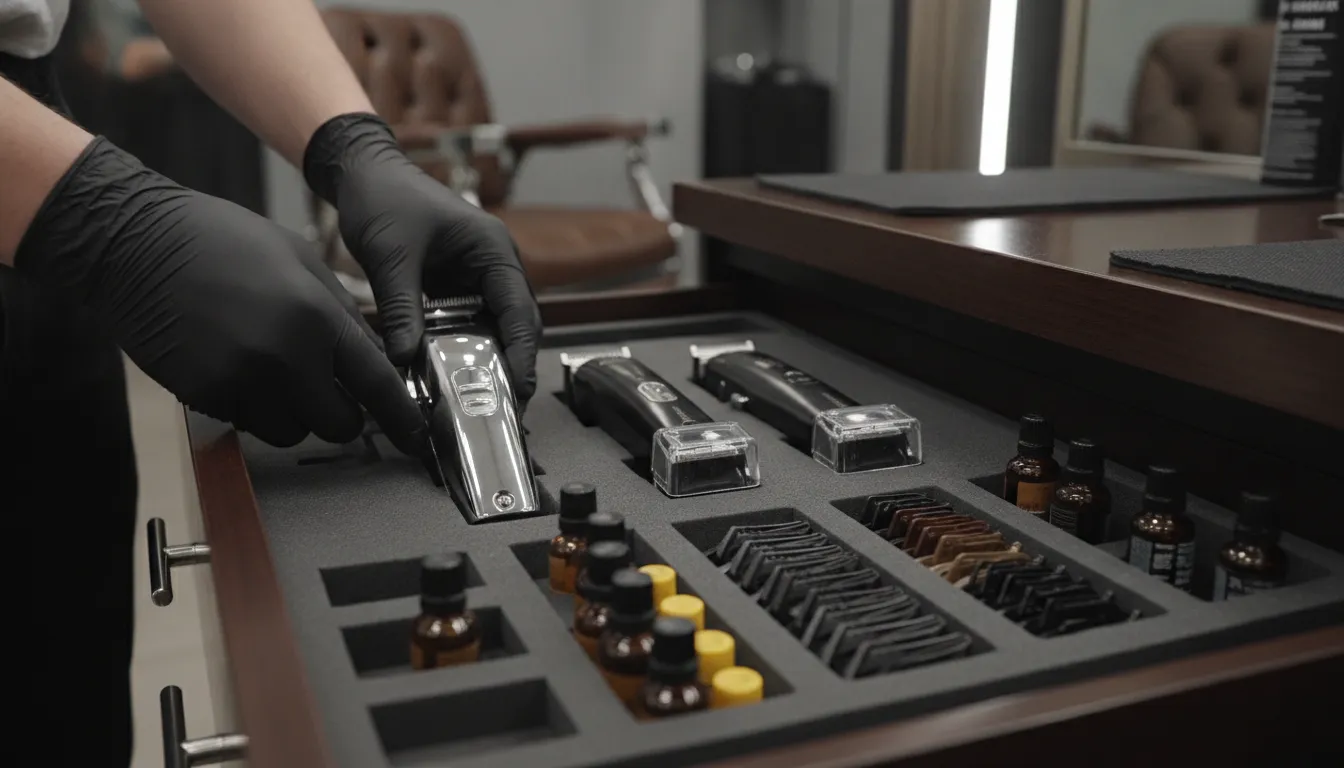
A clipper can have a strong motor, sharp blades, and plenty of daily use ahead, yet poor storage can undo that investment between appointments. Leaving tools exposed to hair, moisture, impact, or tangled cords creates avoidable wear and makes the next service less predictable. Storage is not just about keeping a station tidy. It is part of protecting cutting performance.
To understand how to store barber clippers, clean and sanitize the tool first, let the blades dry completely, apply the correct amount of clipper oil. Install a blade guard, and place the unit in a dry, protected organizer. Keep cords gently coiled rather than sharply wrapped, and store cordless models according to the manufacturer’s battery guidance.
This physical protection works alongside a consistent clipper maintenance routine. The right setup also keeps tools within reach without allowing them to collide, collect debris, or disappear in an overcrowded drawer. The following principles explain why storage affects longevity and how to make it part of a professional workflow.
Visit The Barber Company in Las Vegas for professional clipper care, organizers, and expert guidance.
Why Storage Matters for Clipper Performance and Longevity
Knowing how to store barber clippers protects the cutting system between appointments. Clean away hair, sanitize the blades, dry every surface, apply the correct oil. And place the unit where it will not be dropped, exposed to humidity, or damaged by a tightly wrapped cord. That routine preserves cutting quality and reduces avoidable repairs.
Storage is not simply a matter of keeping a clipper out of the way. It is the final stage of maintenance after a busy day behind the chair. Hair and product residue left around the moving blade can work into the blade assembly. The University of Tennessee notes that trapped hair behind the sliding blade can cause double cutting and rapidly dull the edges. A dull blade then makes the motor and the barber work harder to achieve a clean result.
The same source identifies dull blades and poorly maintained clippers as the leading cause of frustration and shortened life expectancy for both corded and cordless units. A protected storage position cannot restore a damaged blade, but it can prevent a clean. Lubricated tool from being knocked against other equipment or left in conditions that accelerate corrosion. Store the clipper with its blade facing away from loose metal tools, and use a guard when the model supports one.
Clean and sanitize before the clipper goes away
Before storage, remove loose hair with a fine-toothed brush and inspect the blade for impacted debris. If the blade assembly is designed to be removed, take it off for a more thorough cleaning, then oil it according to the manufacturer’s instructions before reattaching it. Barbering guidance also calls for cleaning and sanitizing cutting tools between clients, so end-of-day storage should never replace between-service hygiene.
For a detailed sequence, use this guide to clean your clippers properly, then build the steps into a repeatable clipper maintenance routine. The complete The Complete Guide to Barber Clipper Care and Maintenance can help standardize care across a professional station.
Control moisture and protect the blade
Humidity is especially important in Las Vegas shops that move tools between air-conditioned interiors, vehicles, and warmer outdoor conditions. Never put a damp or freshly disinfected clipper into a closed case. Let approved disinfectant residue evaporate, wipe the exterior dry, and store the tool in a clean, ventilated location. For more detail, follow this guide to proper clipper storage to prevent rust.
The Right Way to Store Corded vs. Cordless Clippers
Corded clippers need a loose figure-eight coil, a dry storage space, and protection from pressure on the cable or blade. Cordless clippers also need clean, dry storage, plus sensible battery care: avoid temperature extremes. Store at a partial charge for long periods, and remove a detachable battery when the manufacturer allows it.
Storage starts before the clipper reaches the drawer or case. Hair, moisture, disinfectant residue, and loose accessories can damage tools or create avoidable wear. Follow this sequence after the final service of the day.
- Clean before storing. Brush hair from the blade area, housing, and attachment points. If the blade needs deeper attention, follow this guide to clean your clippers properly. A University of Tennessee maintenance fact sheet recommends removing impacted hair with a fine-toothed brush, inspecting the blade, and oiling it before reassembly. Let any disinfectant or moisture dry fully before closing a case.
- Protect the blade. Fit the blade guard when one is supplied, especially if the clipper will be moved or stored beside guards and shears. Do not toss an unprotected clipper into a crowded bag where metal tools can strike the cutting teeth. Keep detachable blades in their own protected compartment.
- Coil a corded clipper cable in a figure eight. Make broad, relaxed loops rather than wrapping the cord tightly around the clipper body. A figure-eight pattern reduces sharp bends and keeps the cable from being crushed in storage. Never yank the plug, knot the cable, or place a heavy case on top of it. Store the clipper on a stable surface with the cord free from pinch points.
- Store corded units in a dry, dust-free location. Keep them away from sinks, damp towels, direct spray, and areas where the cord can be stepped on. A ventilated tool case or dedicated station compartment is preferable to a loose drawer full of equipment.
- Prepare a cordless clipper for downtime. Turn the unit off, disconnect the charger, and store it with the blade protected. For overnight or routine daily storage, use the charging method specified by the manufacturer. For longer-term storage, a partial charge is generally more appropriate than leaving the battery completely depleted or continuously connected to power.
- Control temperature and battery access. Keep cordless clippers out of hot vehicles, freezing areas, and direct sunlight. If the battery is removable, take it out for extended storage when the manufacturer permits this, and store it separately in a dry place. Do not use or charge a visibly swollen, leaking, or damaged battery.
Before the next client, check the cable, charger, battery housing, blade alignment, and guard. A quick inspection catches storage damage before it becomes a performance problem.
Barber Station Organization: Keeping Your Tools Ready to Use
The most practical way to organize a barber station is to separate daily-use clippers, blades, cords, and maintenance supplies into dedicated, easy-to-reach storage. A stable rack or organizer keeps tools off damp counters and crowded drawers, reduces drops and tangles, and makes every clipper ready for the next client.
Organization is not just about making the station look cleaner. When clippers are placed in a fixed position, you can see which tool is available. Identify missing guards quickly, and avoid stacking heavy equipment on top of blades or charging cables. That matters during a busy schedule, when a rushed grab can send a clipper onto the floor or leave a blade exposed to moisture and hair debris.
Choose storage around the way you work
A countertop clipper rack works well when several cordless tools rotate through the same station. Keep each clipper upright with its blade facing away from the front edge, and leave enough clearance to lift it without striking the neighboring tool. A wall-mounted holder can free valuable counter space, but it should be installed securely and positioned away from splash zones.
| Storage Type | Best For | Space Needed | Protection Level |
|---|---|---|---|
| Countertop clipper rack | Daily-use cordless tools | Counter or shelf | Moderate |
| Wall-mounted holder | Saving counter space | Wall mount | Good |
| Blade carrying case | Detachable blades | Minimal | High |
| Station organizer | Full tool kit | Moderate counter | High |
| Padded travel case | Mobile barbers | Portable | Maximum |
The Dioche rack is one example of a compact wall-mounted design built to hold up to four clippers. While the WB Barber collection shows how professional storage can include separate racks, blade cases, caddies, trays, and holsters for different workflows.
Separate clippers, blades, and accessories
Do not treat every tool as drawer filler. Use blade cases for detached blades, drawer organizers for guards and small adjustment tools, and a dedicated holder for the clippers used most often. Keep disinfectant, brush, and oil close enough to support the cleaning routine, but not where spills can reach motors or charging contacts. A clean separation also makes it easier to inspect a blade before reinstalling it.
Build a repeatable station reset
At the end of a service block, return each tool to its assigned position, remove loose hair, protect exposed blades, and coil cords without sharp bends. For shops managing multiple stations, consistent placement helps every barber work faster and makes inventory checks less disruptive. The Barber Works Station Organizer gives Las Vegas barbers a professional-grade local option for keeping core equipment visible, protected, and ready for use. Visit The Barber Company in Las Vegas to compare the setup with your station and get practical guidance from a team that works with professional tools every day.
Storage Mistakes That Shorten Clipper Blade Life
To store barber clippers correctly, clean away hair and debris, dry every surface, apply the appropriate blade oil, and use a guard or organizer in a low-humidity area. Avoid loose drawers, tight cable wraps, and non-hair tasks. These small habits protect cutting edges, reduce repairs, and keep your tools ready for the next client.
Storage damage often begins before the clipper reaches its shelf. A barber finishes a cut, sets the tool down with hair around the blade, and puts it away damp. That residue can harden behind the moving blade, interfere with alignment, and accelerate edge wear. Before storage, remove the blade when the design allows, clear impacted hair with a fine-toothed brush, inspect the cutting surfaces, and apply a light coat of clipper oil. The University of Tennessee’s maintenance guidance supports this cleaning approach: remove impacted hair with a fine-toothed brush and maintain the blade.
Do not store wet, dirty blades
Disinfectant, water, sweat, and hair products should not remain on the blade overnight. Wipe and dry the clipper after cleaning, then oil the contact points according to the manufacturer’s instructions. For a detailed maintenance step, follow this guide to oil your clipper blades. Oil is not a substitute for cleaning. Applying it over grit simply turns contamination into an abrasive paste.
Protect the blade and cable
Dropping a clipper loose into a drawer invites contact with combs, shears, and other metal tools. Repeated impacts can nick the teeth or disturb a carefully adjusted blade. Use a blade guard, case, rack, or dedicated station organizer instead. Keep the cutting head from resting directly on a hard countertop when possible.
Cords also take damage from careless storage. Do not wrap a cable tightly around the clipper body or bend it sharply at the plug. Use a relaxed loop, ideally a loose figure-eight, and keep the cord away from heat and standing moisture. For cordless units, store the charger and clipper where the port will not collect dust. And follow the manufacturer’s battery guidance rather than leaving the tool permanently connected by default.
Keep clippers away from avoidable misuse
Professional clippers are precision cutting tools, not general-purpose trimmers. Do not use them on materials or tasks unrelated to hair. Campus Education states that using haircutting tools for other purposes can dull the blades and affect haircut performance. Dull blades and poorly maintained clippers are also identified by the University of Tennessee as a leading cause of reduced clipper life.
Replacing blades, repairing motors, and losing time during a busy schedule all cost more than a consistent storage routine. Protect the investment after every service: clean it, dry it, oil it, guard it, and place it somewhere cool and dry enough to limit moisture exposure.
How to Store Barber Clippers with the Barber Works Station Organizer
The Barber Works Station Organizer gives professional barbers a dedicated place to store multiple clippers and trimmers upright, separated, and ready for the next service. Its durable, professional-grade construction helps reduce drawer clutter, accidental drops, and contact between tools, making proper clipper storage easier to maintain throughout a busy shop day.
Proper storage is not simply about making the station look clean. Clippers are precision tools, and the way they sit between services affects how easily you can inspect, clean, and protect them. A dedicated organizer keeps each machine visible, so a barber is less likely to stack tools. Bury a trimmer under cords, or leave a clipper on an unstable counter edge.
Dedicated slots for a working barber’s tool set
The Barber Works Station Organizer is designed with dedicated slots for multiple clippers and trimmers. That layout supports a practical workflow for barbers who rotate between a clipper for bulk removal, a detail trimmer, and additional tools for fading or finishing. Each device has a defined location, which makes it faster to reach the right machine without rummaging through a drawer or crowded case.
Separate slots also help protect housings, levers, blades, and guards from unnecessary contact. Place each cleaned and dry tool in its own position, with the blade directed safely and any protective guard fitted according to the manufacturer’s instructions. Keep cords clear of moving parts and avoid forcing a larger cordless unit into a slot that does not support it.
Built for professional barber stations
Made in Las Vegas by The Barber Company, this organizer brings a professional-grade design to the daily station rather than treating storage as an afterthought. Its durable construction is suited to the repeated handling that comes with a working shop, school setup, mobile kit, or home barber station. The result is a more controlled workspace that supports consistent care before and after every service.
For barbers who want a straightforward answer to how to store barber clippers without sacrificing access, the Barber Works Station Organizer is a practical upgrade. The Barber Company offers free local delivery on orders over $50 throughout the Las Vegas valley, including Las Vegas, Henderson, and North Las Vegas. It is a useful choice for professionals who want their equipment protected, organized, and ready to work.
Frequently Asked Questions
What is the proper way to coil a clipper cable for storage?
Use a loose figure-eight pattern instead of wrapping the cord tightly around the clipper body. This reduces sharp bends and concentrated stress on the cable. Keep the plug and cable away from damp surfaces, and place the clipper where the cord will not be crushed by other tools.
Do I need to clean my clippers before putting them in storage?
Yes. Brush loose hair from the housing and blade, then clean and sanitize the blade according to the product instructions before storage. For impacted debris, remove the blade when appropriate and use a fine-toothed brush. The University of Tennessee recommends removing trapped hair and examining the blade before reinstalling it: clipper maintenance guidance.
Is it okay to store clippers in a dry, dust-free place?
Yes, a dry, dust-free location is the right baseline. Store the clipper off a wet countertop and away from direct moisture, loose hair, and chemical overspray. Letting the tool dry after cleaning, adding the blade guard, and keeping air circulation around it helps reduce corrosion and contamination.
Can I store my clippers in the same bag as my guards and scissors?
You can, but each tool should have a dedicated compartment or secured position. Loose guards can press against the blade, while scissors and metal accessories may scratch the housing or shift into the power cord. A structured barber bag or station organizer keeps tools separated, visible, and less likely to be dropped.
What type of case is best for storing and transporting professional barber clippers?
Choose a padded, structured case or barber bag with dedicated slots, enough room for the clipper and guards, and a closure that keeps dust out. Avoid overfilling it. For daily shop use, a stable organizer can be more practical than a travel case because it keeps frequently used tools upright and ready without stacking them.
Ready to Keep Your Clippers Working Longer?
Proper storage protects the tools you rely on for consistent cuts, cleaner workflow, and dependable performance. Visit The Barber Company in Las Vegas for barber clippers, organizers, and professional maintenance services. Visit The Barber Company online to find the equipment and support that fit your station.