
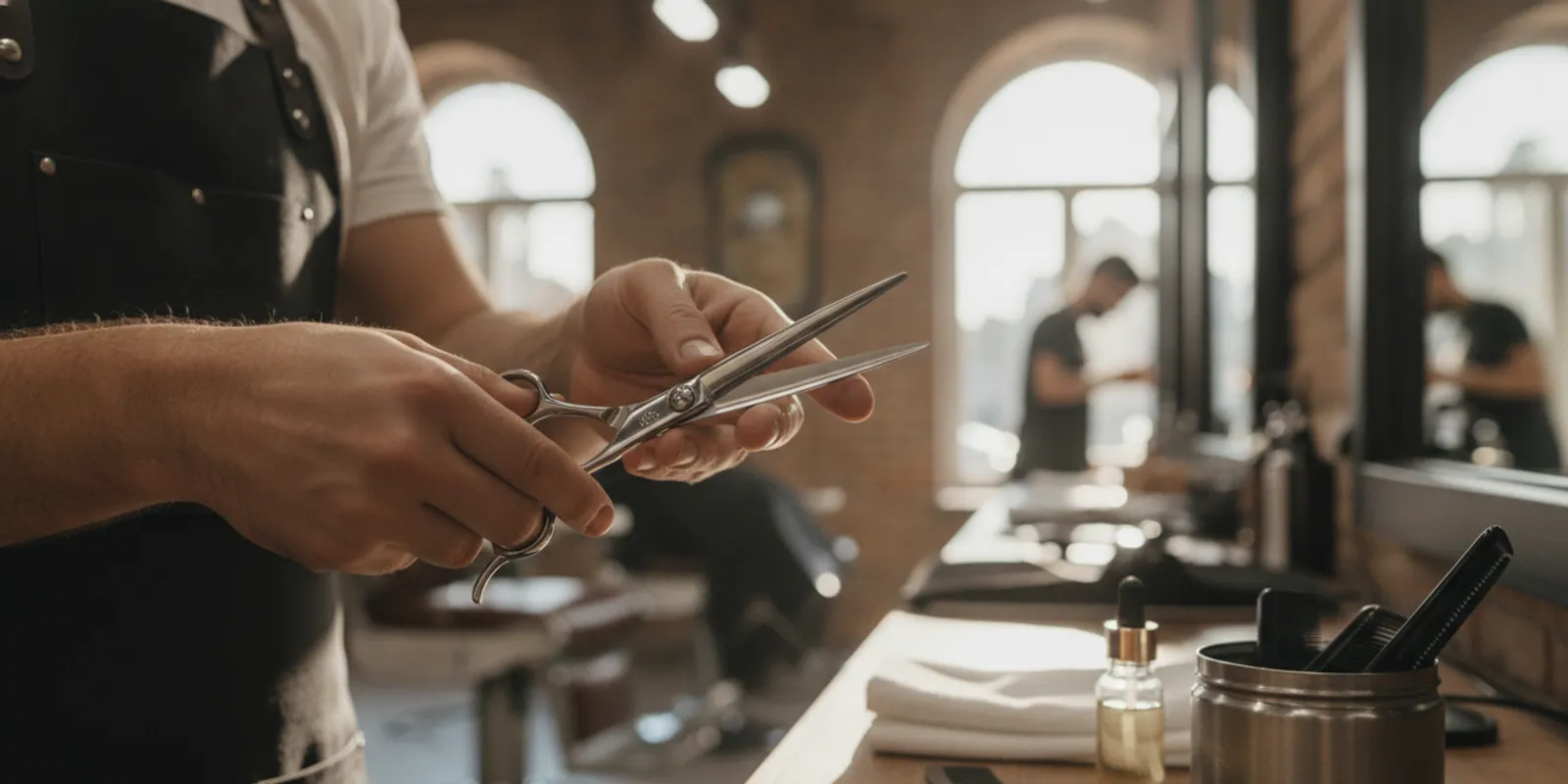
Barber shear tension adjustment is the controlled change of resistance at the pivot, where the blades meet and move. The goal is not to make shears feel as tight as possible. It is to find smooth, predictable movement that lets the blades close cleanly without excessive force, looseness, or unwanted folding of the hair. Start with a clean tool, adjust in tiny increments, and test before returning to a service.
Ask The Barber Company about shear service
Call The Barber Company at (702) 900-9972 for tool guidance
What does shear tension control?
Shear tension is the resistance you feel as the blades pivot against one another during opening and closing. Correct tension supports steady contact along the cutting edges. If the pivot is too loose, blades may separate or fold hair; if it is too tight, movement can feel stiff and tiring. Tension is one part of performance, alongside blade condition, alignment, cleanliness, and technique.
The adjustment usually happens at the pivot screw or tension system, but the exact method varies by shear design. A traditional screw, dial, or click-style system may respond differently. Follow the tool maker’s instructions when available. Do not assume one setting, number of clicks, or turning direction applies to every model.
Also separate pivot tension from blade sharpness. A dull edge may push or bend hair even when the pivot feels stable. A nick, burr, misalignment, debris, or damaged screw can also change the feel. Tightening the pivot to mask any of those problems can make the tool harder to use without correcting the actual cause.
How can you tell whether tension needs attention?
Look for repeatable signs rather than relying on one impression. With the shears clean and dry, open and close them slowly, then check how they behave on an appropriate test material. A change in resistance, blade play, hair folding, or an abrupt catch can indicate a problem, but it does not prove that tension alone is responsible. Inspect and test in a consistent order.
- Too loose may feel like: side-to-side movement at the pivot, blades that close with little resistance, or hair pushed or folded rather than cut cleanly.
- Too tight may feel like: a heavy, scratchy stroke, excess hand force, or blades that resist smooth opening and closing.
- Another fault may feel like: a snag at one point in the stroke, inconsistent cutting, or a rough feel that remains after the pivot is checked.
Assess the condition before turning anything. Confirm the blades are free from hair and residue. Check that the pivot screw and tension components are seated and undamaged. Move the blades through their normal range without forcing them. If one area catches, if the blades appear twisted, or if a screw is loose or damaged, stop and seek service rather than using extra force.
These symptoms are clues, not a diagnosis. A test on hair can be affected by section size, hair texture, cutting angle, and how the hair is held. Hair fibers themselves respond to tension and can deform under load; a University of Pennsylvania research abstract describes elastic and plastic deformation before breakage in a tensile test (academic work on hair mechanics). That finding does not specify shear tension settings, so use it only as a reminder not to confuse hair behavior with a pivot diagnosis.
Prepare the shears before adjustment
Clean, dry shears make the feel easier to judge. Hair fragments, product residue, or excess oil near the pivot can create drag or disguise play. Follow the maker’s care instructions, remove visible debris with an appropriate soft cloth, and apply only the lubricant and amount recommended for that tool. Keep the blades protected while handling them.
- Set up a safe workspace. Work over a clear, stable surface with the blades pointed away from your body. Keep the tool closed when you are not testing it.
- Identify the adjustment system. Look for a screw, dial, or other tension mechanism. If you cannot tell how it works, consult the maker’s manual instead of experimenting.
- Check the blade and pivot. Look for visible debris, damage, looseness, or uneven contact. Do not try to correct a bent blade or damaged fastener by tightening.
- Establish a baseline. Slowly open and close the shears several times, noting where resistance changes. If the tool has an approved test method, use it consistently.
- Keep track of each change. Use very small adjustments and record or remember the starting position so you can return to it if needed.
If the shears are new, under warranty, or unfamiliar, check the manufacturer’s maintenance guidance first. Some systems are intended for user adjustment; others need a specific tool or technician. For selecting a suitable tool in the first place, see The Barber Company’s guide to choosing professional barber shears and its Utsumi shear selection.
How do you adjust shear tension safely?
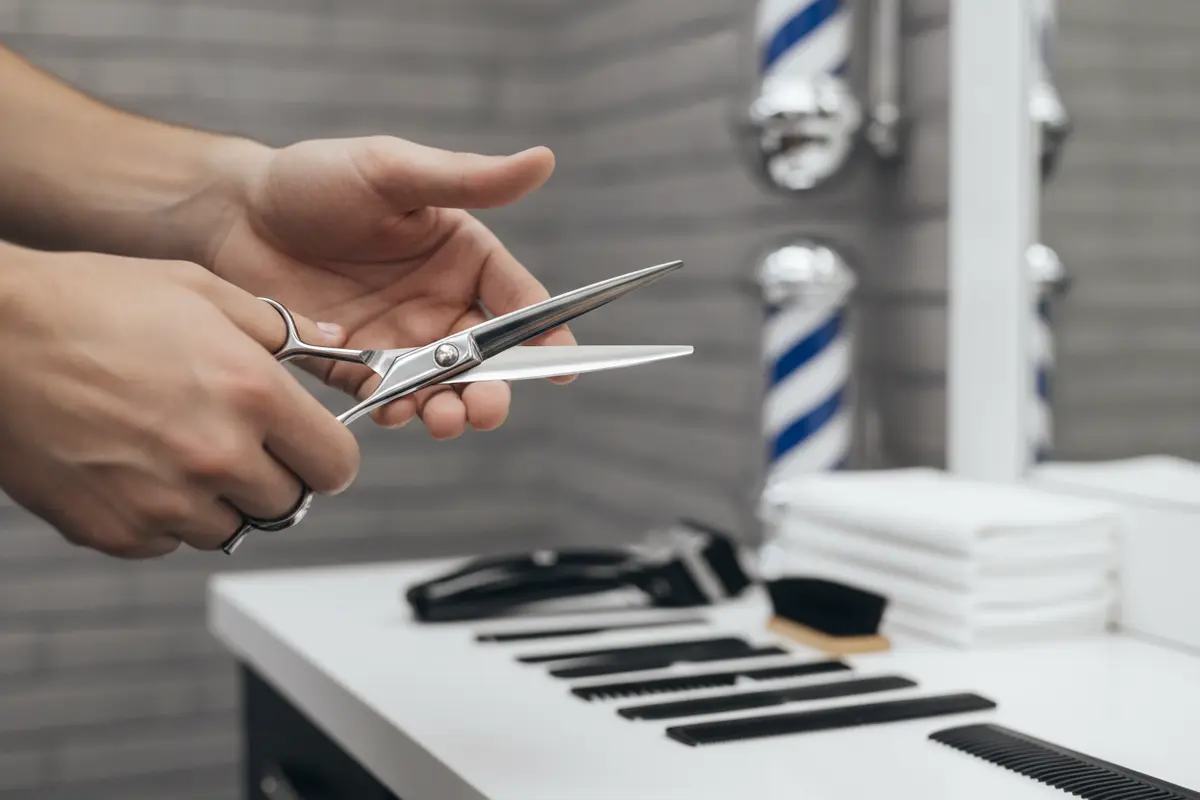
Make the smallest change that lets you evaluate the result. The adjustment should improve the shears’ controlled movement, not force them into a particular feel based on a universal rule. If the maker provides a procedure, follow it. If not, avoid large turns or repeated tightening and loosening, which can obscure the original setting or stress the fastener.
- Hold the shears securely. Keep fingers clear of the cutting edges and support the tool so it cannot slip.
- Use the intended adjustment point. Turn the pivot mechanism with the proper tool, if required. Do not use pliers or an ill-fitting driver that can damage the screw.
- Change the setting slightly. Make a small movement, then stop. Avoid turning multiple full rotations or making a large change in one attempt.
- Move the blades through a controlled stroke. Open and close them slowly. Note whether resistance is even and whether the blades move without catching.
- Test with the maker’s recommended method. If you use a hair test, choose a clean section and repeat the same approach. Do not test against your fingers or force the blades through a thick bundle.
- Repeat only if needed. Make another small change only after the first result is clear. If performance becomes worse or uncertain, return to the baseline if possible and stop.
There is no safe universal number of turns or dial position for every pair of shears. Screw pitch, blade geometry, tension-system design, wear, and the maker’s intended setup differ. Treat any online rule that prescribes an identical setting for all shears with caution. The useful result is clean blade action for the tool and cutting task, not a number detached from its design.
Keep the adjustment incremental and reversible. Before the first change, note the position of the screw or dial and, if practical, take a clear reference photo. After moving the adjuster, test the shears before making another change. This pause matters: if you make several turns at once, you cannot tell which change affected the feel, and it may be difficult to restore the original position. Never force resistance at the adjuster. A screw that binds, turns unevenly, or will not hold its setting may have a mechanical problem that requires service.
Use a consistent hand position during each check. Hold the shear as you normally would, support it securely, and move the handles in a slow, controlled stroke. Avoid gripping harder simply to make the blades close. Excess hand pressure can hide a stiff pivot and make a poor adjustment seem acceptable for a few strokes. If the shear feels different from one opening to the next, stop to inspect it rather than continuing to test through the resistance.
After a promising adjustment, check the shear again in the actual conditions you use for work, but do not begin a client service as the first test. Confirm the movement remains predictable, the blades do not catch, and the tool cuts without unusual force on an appropriate test section. If the problem returns quickly, or if the adjustment will not stay consistent, treat that as a reason for inspection rather than a cue to tighten further.
Some barbers use a blade-drop check, but that check is not a substitute for manufacturer instructions and it does not apply identically to every shear. Do not let the blades fall freely if the maker has not approved the test. A test that risks impact or uncontrolled movement can damage the cutting edges.
What should the adjustment feel like?
A well-adjusted shear should move in a controlled, repeatable way through its working stroke. It should not feel so loose that the blades wobble or so tight that you must squeeze hard to close them. The ideal feel depends on the shear design, blade condition, hand position, and the barber’s technique, so use the maker’s guidance and a consistent test rather than chasing a single sensation.
After a slight adjustment, compare three things: movement at the pivot, smoothness through the stroke, and cutting performance on a suitable test. The tool should not develop a new catch or scrape. If it cuts cleanly only when you apply unusual pressure, stop; forcing the shears can strain your hand and may damage the tool.
When comparing models, remember that handle shape and blade design affect perceived control too. A shear that feels heavy may not need less tension; it may have a different balance or handle geometry. The Barber Company’s professional brand selection and information about its shop and technical expertise can help you identify a route for product questions.
Shear tension symptoms and likely next checks
Use the symptom as a starting point, then rule out other causes before you adjust. This comparison is a troubleshooting aid, not a repair specification: the same symptom can come from different conditions. If a simple cleaning and one small, reversible adjustment do not improve the result, stop and ask a qualified shear technician to inspect the tool.
| What you notice | Possible cause | First check | Next step |
|---|---|---|---|
| Blades feel loose or move sideways | Pivot tension may be low; fastener or assembly may also be worn | Check for debris and visible pivot damage | Make one small adjustment only if the maker permits; service if play remains |
| Closing feels stiff throughout | Tension may be high, or residue may add drag | Clean and dry the pivot area as directed | Ease tension slightly if appropriate, then retest |
| Hair folds or pushes | Possible low tension, dull edge, alignment issue, or unsuitable technique | Check tension and blade condition separately | Do not keep tightening; arrange sharpening or inspection if it persists |
| A catch occurs at one point | Possible nick, burr, damage, or uneven blade contact | Inspect visually without touching the cutting edge | Stop testing and seek professional service |
| Performance changes after cleaning | Residue or lubrication may have affected the original feel | Confirm the tool is dry and lubricated per maker guidance | Reassess the baseline before changing tension |
A table can narrow the next check, but it cannot confirm an internal fault. If you are unsure whether a symptom comes from tension, blade condition, or alignment, an inspection is more useful than repeated adjustments.
When is the problem sharpening rather than tension?
Tension is not a sharpening method. If the pivot moves smoothly but the shear bends hair, pulls, or fails to cut consistently, the edges may need attention, or the blades may require alignment or other service. More tension may briefly change the sensation while leaving the cutting fault unresolved. Separate these checks and avoid repeated tightening to compensate for a poor edge.
Review the signs that a tool may need attention in The Barber Company’s guide to recognizing when shears need sharpening. For an overview of why edge care matters, read its guide to the benefits of shear sharpening. If the blades have a nick, visible damage, or a recurring catch, do not try to remove it with home grinding or aggressive filing. A specialist can assess whether sharpening, alignment, or repair is appropriate.
Shear sharpening and pivot adjustment are related maintenance tasks, but they solve different problems. A sharp edge still needs appropriate pivot action; a correctly tensioned shear can still cut poorly if its edge is damaged. Ask what the inspection includes before authorizing work, and describe the symptom, how it changed, and any adjustment already made.
Build a repeatable maintenance routine
Routine care helps you notice changes before they become disruptive. It does not mean adjusting tension on a fixed schedule. Keep the shears clean and dry, use the maker’s recommended lubrication, store them so the edges are protected, and check for a change in movement as part of normal tool care. Adjust only when there is a clear reason and the tool’s instructions permit it.
- Between clients: Remove hair and product residue using the method appropriate for the tool and your sanitation routine. Avoid letting liquid or disinfectant collect at the pivot.
- At the end of the day: Dry the shears, lubricate as directed, and store them closed in a protected case or holder.
- When performance changes: Note the symptom and inspect cleanliness, pivot play, and edge condition before changing the setting.
- After service: Ask the technician what was adjusted and follow any care instructions supplied for the shear.
Keep a simple record for tools used daily: model or identifying mark, date of service, symptom reported, and any setting change you made. This is especially useful in a busy shop where multiple barbers share equipment. It can also help a technician distinguish a recurring issue from a one-time adjustment.
Good records are most useful when they describe what you observed rather than guess at a cause. For example, note whether the shear felt stiff through the whole stroke or caught at one point, whether the symptom began after cleaning or a fall, and whether it changed after a small adjustment. Include the test method and whether the same result happened more than once. These details give a technician a clearer starting point than a report that the tool simply feels wrong.
In a shared station, assign shears to a known owner or return them to a labeled, protected storage spot after use. Mixing tools or changing another barber’s setting can create inconsistent feedback and make it harder to isolate a fault. If a tool is dropped, develops a new sound, or shows visible damage, remove it from active use until it can be checked. Routine care is not a reason to keep using a shear that has become unpredictable.
For broader tool sourcing, browse barber supplies in Las Vegas or learn about wholesale barber supply options. The Barber Company serves professional barbers and retail customers, and its store is open to the public without a professional license. For Las Vegas valley customers, check the current details for local delivery options before planning a replenishment order.
When should you stop adjusting and ask for service?
Stop if the pivot mechanism is damaged, the blades have visible damage, movement remains rough after basic care, or a small adjustment does not improve control. Also pause if the shear is under warranty or the maker requires service by an authorized technician. Repeatedly changing tension without knowing the cause can complicate diagnosis and risk damage to the fastener or blades.
The Barber Company offers shear-related guidance and sharpening information through its shear sharpening service guide. For a maintenance inquiry, contact the team through the contact page or review the The Barber Company store. Describe the shear model if known, the symptom, and what you have already tried. Ask whether the issue calls for a tension adjustment, sharpening, alignment, or another inspection before proceeding.
Professional help is especially sensible for high-value shears, specialty edges, severe blade damage, or tools used for precise work every day. An experienced technician can evaluate the whole cutting system rather than treating the pivot setting in isolation. Do not continue using shears that snag unpredictably or feel unsafe in the hand.
Set tension with control, not force
The practical rule is simple: inspect first, make only a small permitted adjustment, and test the result in a consistent way. Good tension supports smooth movement, but it cannot repair a dull edge, damaged blade, or faulty pivot. If the shear still does not behave predictably, stop adjusting and get the tool assessed before using it for a service.
Before making a change, consider whether cleaning, lubrication, sharpening, or repair is the more likely next step. Keep the maker’s instructions close, and do not copy a setting from another model. A deliberate process protects control and makes it easier to explain the issue if a technician needs to take over.
Call The Barber Company to discuss shear care
Frequently Asked Questions
These quick answers cover common concerns about adjusting shear tension. Use them as general guidance, not as a substitute for the maker’s maintenance directions or an inspection of damaged shears. If the tool’s behavior remains inconsistent after basic care, pause use and ask a qualified professional to assess it.
How often should I adjust barber shear tension?
There is no universal adjustment schedule. Check how the shears move during normal care and adjust only when performance gives you a reason, following the maker’s instructions. Frequent unnecessary changes can make it harder to identify the real cause of a problem.
Can I tighten shears that fold or push hair?
Possibly, but folding or pushing can also point to a dull edge, alignment issue, residue, or technique. Check cleanliness and pivot play first. If a small permitted adjustment does not help, do not keep tightening; seek sharpening or service guidance.
How far should I turn the pivot screw?
There is no setting that applies to every shear. Make a very small change with the proper tool, test, and stop if the result worsens. Use the manufacturer’s instructions for the specific model rather than copying a number of turns from another tool.
Can I adjust any type of barber shear myself?
No. Some tension systems are designed for routine user adjustment; others may require a special tool or technician. Check the maker’s guidance, particularly for a new, specialty, or warranty-covered tool. Do not force a stuck or damaged adjustment mechanism.
Should I sharpen shears if adjustment does not solve the problem?
Sharpening may be appropriate if the edge is dull or damaged, but a technician should determine whether the issue is sharpening, alignment, pivot wear, or another fault. A tension adjustment and an edge service address different parts of shear performance.
Visit The Barber Company
The Barber Company supports professional barbers and grooming customers with barber tools, product guidance, and technical maintenance information. Call or contact the team before visiting if you want to confirm the best next step for a particular shear or ask about current service details.
Shop The Barber Company · Follow @barbercompanylv on Instagram
Visit 4700 Meadows Ln #110, Las Vegas, NV 89107, or call (702) 900-9972 for assistance.
A small, careful adjustment is useful only when tension is the actual issue; otherwise, let the shear condition guide the next step.