
Professional clippers that overheat or snag hair signal poor maintenance habits. Regular tool servicing fixes these performance issues while protecting clients from skin infections. Every master barber treats their tools as the foundation of their craft.
This barber clipper maintenance guide provides the technical steps needed to keep your tools running well. Proper upkeep is the standard practice of cleaning, oiling, and adjusting your gear to ensure safety and a long life. By following a steady plan, you prevent issues like motor strain, blade heat, and snagging hair. These habits also protect your clients by stopping the spread of skin issues like ringworm. As noted by The Barber Company, a deep clean that involves taking off the blades for weekly washing is vital for professional health. You must also brush away hair and skin residue after every cut to keep the motor clear. Regular care reduces the need for pricey repairs and keeps your blades sharp. Treating your tools with this technical focus ensures they stay ready all day.
You may wonder how often you must scrub your blades to keep them safe and sharp. The process is simple but needs a firm plan to work well. We start by looking at The Essential Daily and Weekly Cleaning Routine for Barber Clippers. The path begins with
Barber Clipper Maintenance Guide: The Essential Daily and Weekly Cleaning Routine for Barber Clippers
A clean clipper is the base of any pro barber station. Keeping tools free from hair and skin bits ensures they run well and last for years. This routine also protects clients from skin issues like ringworm or rashes. To keep tools in top shape, you must master how to clean barber clippers properly. Following a strict cleaning order helps you maintain high hygiene standards in a busy shop.
Daily cleaning after every client
You should brush your clippers clean after every single client. This simple step removes loose hair, skin cells, and old product that can clog the motor. Use a small brush to reach between the teeth of the blades. Professional hygiene guidelines from the CDC show that regular cleaning of tools is vital to stop the spread of germs. Taking thirty seconds between cuts to clear hair prevents buildup that causes blades to pull or snag.
Once you remove the hair, you must disinfect the blades. Use a cooling spray like Andis Cool Care Plus 5-in-1. These sprays kill germs, cool the metal, and stop rust all at once. If you do not have a spray, use isopropyl alcohol on the blades. Applying isopropyl alcohol after each use helps remove oily residue without soaking the internal parts. This daily habit keeps your tools ready and ensures a safe experience for every client in your chair.
Weekly deep cleaning and blade removal
Daily brushing helps, but a weekly deep clean is needed to find hidden hair. Most professional tools use Phillips head screws to hold the blades. You must remove these screws once a week to take the blades off the clipper body. This lets you reach the hair stuck inside the blade housing. Failing to do this deep clean can lead to the spread of fungal issues like tinea capitis between clients. A thorough weekly wash ensures that no harmful germs stay in the hard-to-reach spots.
After you remove the blades, use compressed air to blow out hair from the motor area. This is very helpful for clippers that have magnetic covers or lids that come off. Removing this debris reduces heat and stops the motor from working too hard. Once the inside is clear, wipe the blades with a clean cloth and a strong germ killer. This deep clean is the best time to check for worn parts or loose screws. Regular tool maintenance like this prevents small issues from turning into costly repairs later on.
Inspecting for wear and damage
Cleaning is also the best time to check your gear for signs of wear. Look closely at the blade teeth to see if any are chipped or dull. Dull blades can pull at a client’s hair, which creates a poor experience. If you notice the blades are not cutting well, you might need professional clipper blade sharpening to fix their edge. A well-kept set of blades will feel smooth and stay cool even during a long day of fades and tapers.
Check the power cord or battery area for any loose links. Dust and hair can sometimes get into the charging port of cordless models. This slows down the charging speed and can hurt the battery. Keeping these areas clean ensures your clippers are always ready to go when the shop gets busy. Proper care takes time, but it is much cheaper than buying new tools. By following these steps, you show your clients that you value their health and your own professional craft.
How to Properly Oil Clipper Blades for Peak Performance
Keeping your tools in top shape is the first step to a great cut. When you oil your blades, you create a thin film that protects the metal. This film cuts down on the heat and wear that happens as the blades move at thousands of strokes each minute. Without this shield, the metal parts rub together and get dull very fast.
Clean and oiled tools are also a must for safety and health. State rules like the Nevada Administrative Code require barbers to keep all shop tools in a clean and safe manner. This ensures your equipment lasts longer and stays safe for every client you serve in the shop.
The goal of blade oiling
Oiling does much more than just help the motor run. It acts as a wall that stops rust and keeps the teeth from snagging hair. A tool that is well-oiled stays sharp and runs at a lower heat. This makes the work easier for you and much better for your client.
If you fail to oil your tools often, you might break the factory warranty and cause permanent tool damage. A poorly oiled clipper will wear out much sooner than one that gets the care it needs. It is much cheaper to use a few drops of oil than to buy new tools every few months.
Choosing a pro oil grade
You must use the right kind of oil for your high-speed pro tools. Pro clipper oil has a light thickness and stays thin even under high heat. It also has special parts that stop rust from forming on the steel blades. You should never use household oils like WD-40 or cooking oil on your clippers.
These thick oils create a sticky gunk that can clog the motor and slow down the speed of the blades. Using the wrong oil often leads to loud noise and heat problems. If you need help, read our guide on choosing the right clipper oil for your kit.
The three-drop oiling method
Oiling is a quick task that saves you a lot of time and money in the long run. You only need to put on two or three drops of oil after every few haircuts. Apply the drops to the teeth of the blades and turn the motor on for a few seconds. This helps the oil spread and reach the spots where the top and bottom blades touch.
Once you are done, use a clean cloth to wipe off any extra oil from the case. You do not want oil to drip on a client or get deep inside the motor case. Keeping a clean and oiled tool ensures your Gamma+, Wahl, or Andis clippers work at their peak all day long. This simple routine keeps your tools running smooth for years.
- Apply oil after every three to five haircuts for best results.
- Use a brush to remove hair and skin bits before you add any oil.
- Wipe the side of the blades to keep oil from running down the tool.
- Stop using the tool if the blades feel hot to the touch or start to rattle.
Diagnosing Common Clipper Problems: Noise, Heat, and Pulling
Professional tools are a big cost for any shop. With high-quality clippers costing from $99 up to $650, a fast and right check can save you money. Most issues come from basic wear or poor care. Learning to spot the signs of trouble helps you decide if you can fix it or if you need a pro.
Signs your tools need care
You may see your tools act in a new way during a busy shift. Common warning signs of clipper failure include loud noise, a loose lever, or power that cuts out. If your tools pull or snag hair instead of cutting clean, they need help fast. Ignoring these signs can lead to motor stress or pain for your client.
Why tools get hot
Heat is a major enemy of your tools. A tool gets hot most often from dull blades that need too many passes. Low oil and tight blade tension also cause friction that makes heat. Keeping your tools cool keeps them in use for a long time. It also protects your client from burns or skin marks.
How to find the cause
Follow these steps to find out why your tool is not working well. Most daily issues have easy fixes that take just a few minutes.
- Check for hair. Thick hair can get stuck between the blades. This is the main reason tools stop running well, so brush them clean after every cut.
- Check the blade tension. A loud noise often means the blade screws are loose. If they are too tight, they put stress on the motor and make heat.
- Look at the oil level. Dry blades make high friction and loud noise. Add two or three drops of professional oil to the blades and run the motor to spread it.
- Test the blade edge. Pulling hair is a clear sign of a dull edge. Many passes suggest the blades are no longer sharp and need a new edge.
- Pick the best fix. If cleaning and oiling do not stop the noise or heat, you likely have a deeper problem. Major motor issues or broken parts need a pro to look at them.
If your tools still act up after these steps, it is time for a pro check. The Barber Company has expert techs who can fix motors and sharpen blades in 24 hours. Having a pro look at your $600 set is much smarter than trying a risky fix on a complex motor.
How to Adjust Clipper Blade Tension and Alignment
Proper blade adjustment is a core part of any barber clipper maintenance guide. Most tools leave the factory with a blade gap between 0.5 and 1.5 mm. This safety buffer helps prevent the moving blade from nicking the client during use. But many pros want a closer finish for fades and tapers.
The move to zero gapping
Zero gapping means you move the blades closer to get a tighter cut. For the best skin-close fades, barbers reduce the gap to a range of 0.1 to 0.4 mm. You can find more facts in our professional clipper zero gapping service guide. This small change makes a big difference in how your work looks.
While you can adjust some tools yourself, it takes a steady hand and a keen eye. If the blades are not flush, they can snag hair or scratch skin. According to the CDC, safe tool care is vital for the barber and the client. A bad adjustment can lead to skin issues or cuts that pose health risks.
Setting the right blade tension
Blade tension refers to how tightly the blades sit against each other. If the tension is too loose, the clipper may rattle or make loud noise. This often leads to uneven hair cutting. If the tension is too tight, it puts a heavy load on the motor. This causes the blades to heat up fast and may lead to motor failure.
To check alignment, hold the clipper sideways and look at the blade tips. The top blade must never sit past the bottom blade. If it does, you have a “hot” clipper that will cut the client. Use a screwdriver to loosen the screws, align the blades, and tighten them. For best results, many pros use The Barber Company’s blade sharpening services to get precise 0.1mm to 0.4mm settings.
When to seek pro help
Adjusting blades is a skill that takes time to learn. If you find your clippers still pull hair or make strange sounds, it might be time for expert help. Pro techs can check for bent parts or worn springs that a quick DIY fix won’t solve. Good care keeps your tools sharp and safe for every cut.
When to Sharpen or Replace Clipper Blades: DIY vs. Professional Service
Every barber knows that a sharp blade is the key to a good cut. When your tools lose their edge, your work suffers. You might find yourself making extra passes to get the job done. This adds time to your day and makes your client feel less at ease. Dull blades do more than just slow you down; they also put a lot of stress on your tool’s motor. This extra strain can cause your clippers to fail much sooner than they should.
Signs Your Clipper Blades are Dull
You can tell when your blades are dull by how they feel and cut. One of the first signs is hair pulling. If a client winces or says they feel a tug, your blades are likely snagging instead of slicing. You may also see rounded teeth on the blade edges. This wear prevents the clean lines needed for modern fades. Keeping blades sharp is also a matter of health. Poorly kept tools can spread skin issues like tinea capitis between people. This scalp ringworm is a risk when clean habits and tool care are not a main goal in the shop.
Frequency of Blade Sharpening
How often you sharpen your blades depends on how much you use them. For a busy barber in a local shop, professional sharpening is best every three to six months. This regular care keeps your tools in peak shape. It also helps your gear last longer. If you cut hair all day, you might need to check your blades even more often. A well-timed sharpen can save you from having to buy new blades every few weeks. It is a small cost that pays off by keeping your work fast and exact.
Comparing DIY and Professional Services
Some barbers choose to sharpen their own blades using a stone or a flat plate. While this can save money, it is hard to keep the blades fully level. If the edge is even slightly off, the clipper will not cut well. It might even rattle or get too hot. This is why many pros choose professional clipper blade sharpening. Experts use high-end machines to get a factory edge every time. The Barber Company offers a full service that goes beyond just sharpening. Our team can fix loose brackets, install new motors, and adjust switches. We work on all major brands like Wahl, Oster, Andis, and Remington.
| Feature | DIY Sharpening | The Barber Company Service |
|---|---|---|
| Cost | Low (stone cost) | Starts at $15 per set |
| Time | 30 to 60 minutes | 24-hour wait |
| Quality | Hard to get level | Machine-grade edge |
| Scope | Blade edge only | Full motor and part check |
| Brands | Only what you know | Wahl, Oster, Andis, Remington |
Our Las Vegas shop makes it easy to get your gear back in top form quickly. With our $15 base price, it is a smart choice for any pro. You get your tools back in just one day. This means you do not have to miss out on work while your blades are away. We also check for other issues like motor strain or loose parts. This full check ensures your clippers run smooth and stay cool during long shifts. We even offer free local drop off for orders over $50 to help you stay stocked on other shop needs.
Motor Care and Battery Maintenance for Long-Lasting Clippers
The motor is the heart of your tool. Professional clippers use three main motor types: rotary, vector, and magnetic. Each type has a specific power level and speed for different hair types. Choosing the right motor and keeping it clean ensures your barber clippers last for years.
Types of clipper motors
Rotary motors are the workhorses of the industry. Models like the Andis Master deliver about 7,200 strokes per minute (SPM). This motor type provides the high torque needed to cut through thick or wet hair without stalling. They are strong and reliable for bulk removal.
Vector motors offer even more speed for precision work. The StyleCraft Instinct uses a vector motor to reach 9,500 SPM. This high-speed performance allows for very smooth cutting and detail. Magnetic motors are a third choice. They are lightweight and run quietly, but they have less power than rotary or vector options.
Battery care for cordless tools
Most modern clippers are now cordless. These tools use lithium-ion batteries that need specific care to stay strong. Proper charging cycles help prevent the battery from losing its capacity over time. According to the CDC, proper tool maintenance and battery safety are key to a safe workspace. Avoid letting the battery drain to zero percent. Frequent, short charges are better for the long-term health of the cell.
A high-quality professional clipper set can cost between 9 and 50. Protecting this investment starts with the battery. If you notice your tool losing power quickly, the battery may need a professional check. Heat also damages batteries, so keep your tools in a cool, dry place when they are not in use.
When to seek professional service
Daily cleaning keeps most hair out of the motor. But over time, fine hair dust can build up inside the housing. This buildup causes the motor to work harder and run hot. Dull blades also strain the motor because they require more force to cut through hair. Using clipper oil regularly reduces this friction and protects the motor internals.
You should seek expert help if your motor makes a sharp or loud noise. The Barber Company provides full service for brands like Gamma+, Wahl, BaByliss Pro, StyleCraft, Andis, and JRL. Our technicians can clean internal parts, fix switches, and install new motors to keep your gear in top shape.
Preventative Maintenance: Building a Lifetime Care Schedule
Keeping your tools in top shape is about more than just a clean cut. It protects your shop and your clients from health risks. High-quality clipper sets often cost between $99 and $650, so a clear plan helps you get the most from your gear. Expert care also stops the spread of scalp issues like tinea capitis. This can move between clients when tools are not clean. At The Barber Company, our pros use the latest gear to offer expert blade sharpening services for all major brands.
Building your clipper maintenance kit
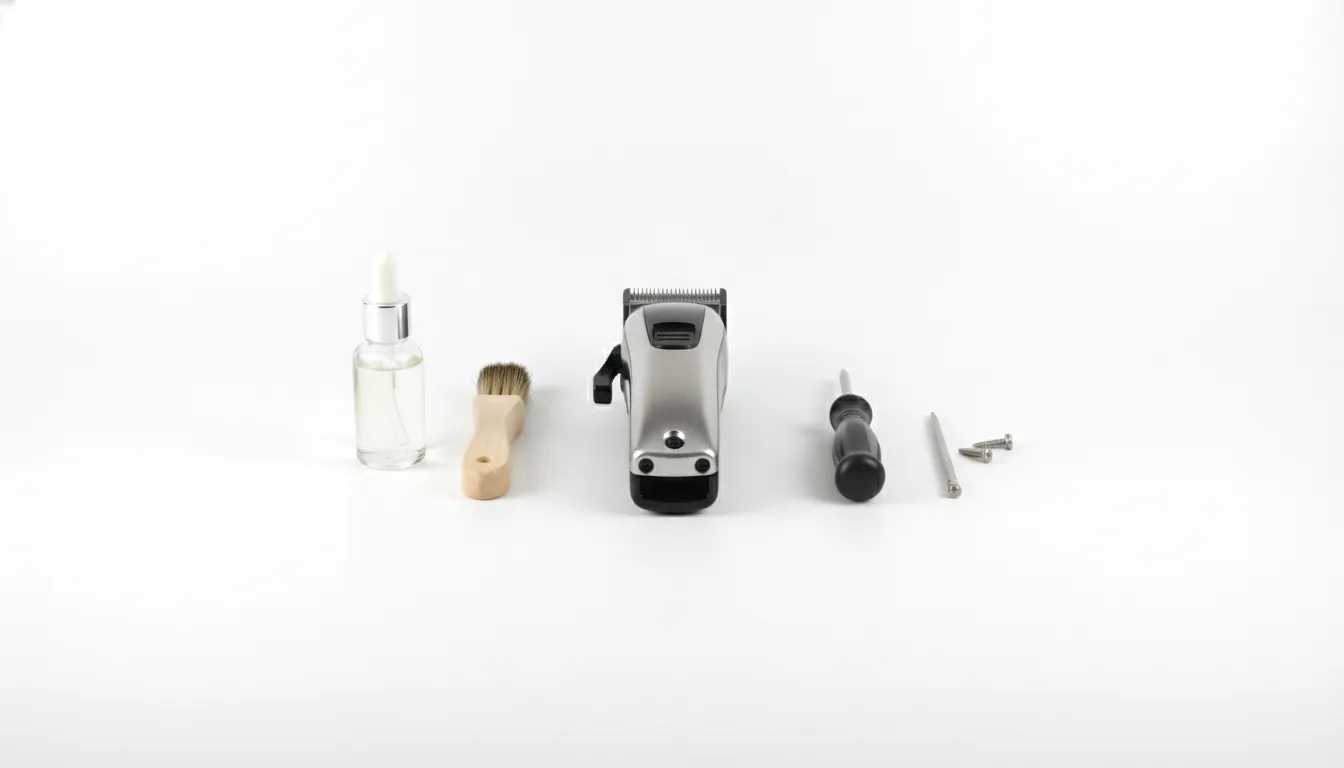
A good kit makes daily care easy and fast. You should have blade oil, cleaning spray, and a stiff brush ready at your station. You also need blade wash and a screwdriver to take tools apart for deep cleaning. We are an official dealer for Gamma+, Wahl Professional, and Andis Professional. You can buy all these supplies and tools from our shop with free local delivery in Las Vegas on orders over $50. Having these items on hand helps you stay on track with your routine.
Best practices for tool storage
Rust is the main enemy of metal clipper blades. You must store your tools in a dry spot to keep them safe from damage. Moisture makes metal break down fast, which leads to dull edges and pulling hair. Use a proper case and blade guards to protect the teeth when you are not at your station. This simple habit keeps the metal sharp and ready for the next day. Using a barber clipper maintenance guide helps you avoid common problems and keeps your motor strong for years.
A well-planned schedule is the best way to avoid surprise tool failure. When you treat your clippers as a major investment, they perform better and last longer. This care routine works for all major brands, including BaByliss Pro and StyleCraft. It keeps your work clean and shows your clients that you value their safety and comfort. By taking a few minutes each day, you save money on new tools and keep your shop running without a hitch.
- Daily upkeep after every client. Brush away all hair and skin bits from the blades after each cut. Use a cleaning spray to kill germs and cool the metal before you start your next task.
- Weekly deep cleaning. Remove the blades with a screwdriver to clean the hair trapped inside the housing. Soak the blades in blade wash to remove old oil and gunk that builds up over time.
- Regular oiling. Apply two or three drops of oil to the blades after every few cuts to reduce heat. Run the motor for a few seconds to let the oil spread, then wipe off the extra.
- Monthly tool check. Tighten any loose screws and clean out the motor vents with a brush. Check the power cord or battery for signs of wear to prevent any sudden loss of power.
- Professional sharpening. Send your blades for professional service every three to six months to keep the edges crisp. Sharp blades reduce motor strain and keep your fades smooth and precise.
- Safe storage. Keep your tools in a dry, cool place inside a padded case or drawer. Always use blade guards to prevent nicks and keep dust out of the internal moving parts of the motor.
Frequently Asked Questions
How often should barber clippers be oiled?
Professional barbers should oil clipper blades after every few cuts or at least once per day. This thin film of oil reduces friction as blades move thousands of times per minute. Proper oiling stops heat and wear from damaging the motor. According to Barber Temple, a well oiled clipper will last much longer than one that is not maintained.
Can WD-40 be used on hair clippers?
No. You should never use WD-40 on your clippers. It is not made for high speed tools and can leave a sticky film that traps hair. This buildup will eventually jam the motor or damage the blade finish. It is best to use a light mineral oil made for barber tools. These oils often have rust inhibitors to protect the metal from moisture.
How often should clippers be cleaned?
You must brush hair off your clippers after every client to keep them clean. This stops hair and skin cells from building up between the blades. According to The Barber Company, a deep clean is needed once per week. This deep clean helps prevent the spread of infections like ringworm and keeps your tools safe for every client.
How often should clipper blades be sharpened?
Most professional barbers need to sharpen their blades every three to six months. You will know it is time when the clipper starts to pull or snag hair instead of cutting it cleanly. Dull blades can pull on a client’s skin and put extra strain on the tool’s motor. We provide a professional sharpening service with a fast turnaround for local shops.
What are the signs of a bad clipper motor?
A failing motor often makes a loud rattling or sharp noise during use. You might also notice the tool loses power or shuts off while you are cutting hair. Overheating is another major sign that the motor is under too much stress. If your clippers pull hair even with sharp blades, the motor may need a professional repair or a full part replacement.
Ready to keep your clippers in peak condition?
Ignoring your tool care leads to dull blades that pull hair and hurt your clients, costing you time and money when gear breaks down. You do not want to wait for a full motor failure to take action, so set up a regular cleaning plan now to stay busy. Most barbers see a big change in speed and comfort just by fixing their daily habits today, which saves on buying new clippers later. We provide the expert clipper sharpening and repair you need to keep your shop running at its best with same-day service.
Ready to set up your shop for success? Call (702) 900-9972 to book a clipper repair service or talk to an expert about opening a wholesale account today.