
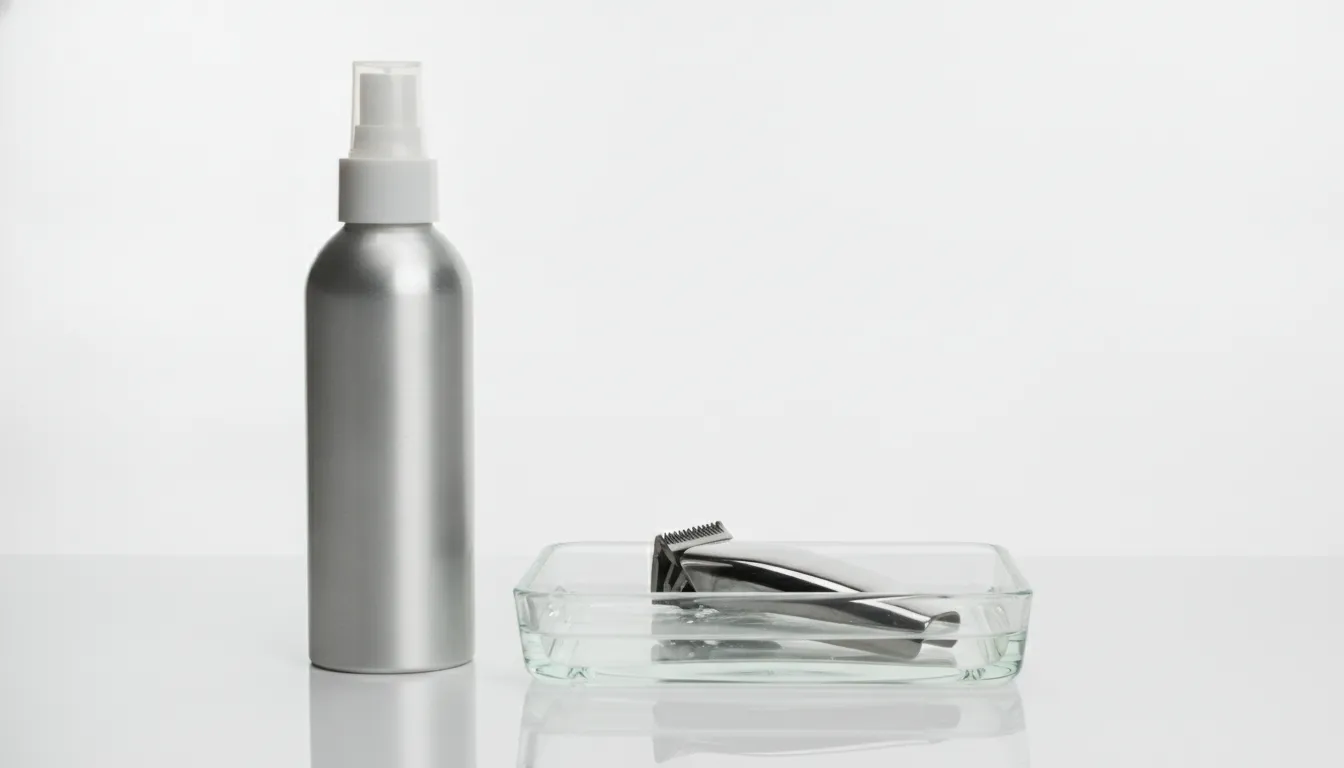
Choosing between clipper spray vs blade wash starts with the maintenance problem in front of you. Spray is built for fast, label-approved between-service care, while blade wash is for deeper cleaning when residue and hair need more attention. Knowing the difference helps barbers protect cutting performance without sending liquid where it does not belong.
Call The Barber Company at (702) 900-9972 for help choosing clipper spray or blade wash.
By The Barber Company
What Is Clipper Spray?
Clipper spray is a fast-acting maintenance product applied to the blade area during a working day. Depending on the formula and label, it may cool the blade, loosen light residue, provide light lubrication, help protect against rust, or support sanitation. It is designed for speed, not for replacing every deep-cleaning step.
In barber shops, the words clipper spray can describe several formulas. Some are marketed as 5-in-1 products that combine cooling, cleaning, light lubrication, rust protection, and sanitation claims. Others focus mainly on cooling or disinfecting. That difference matters. The front label and directions for the exact product determine what it can do. How long it should remain on the blade, and whether it replaces a separate step.
Use spray when the blade needs a quick reset during a shift. A barber can brush away loose hair, apply the product as directed, wipe away excess, and return the tool to service after the blade is safe to use. Spray is especially practical for multiple stations, mobile work, and busy schedules where a full blade teardown would interrupt the workflow.
Do not treat a spray can as a universal solvent. If the blade has compacted hair, heavy product buildup, visible corrosion, or a cutting problem, a quick spray may only mask the symptom. Start with the tool manual and product label. When you need options, The Barber Company connects Las Vegas barbers with Clippercide 5-in-1 clipper disinfectant spray, Cool Care Plus clipper spray, and other professional maintenance products.
What Is Blade Wash?
Blade wash is a liquid cleaning product used to remove hair, oil, skin debris, and residue from a blade assembly. It is typically chosen when a blade needs more cleaning than a surface spray can provide. Use it only in the way the blade and product manufacturer allow, and keep liquid away from the clipper housing and motor.
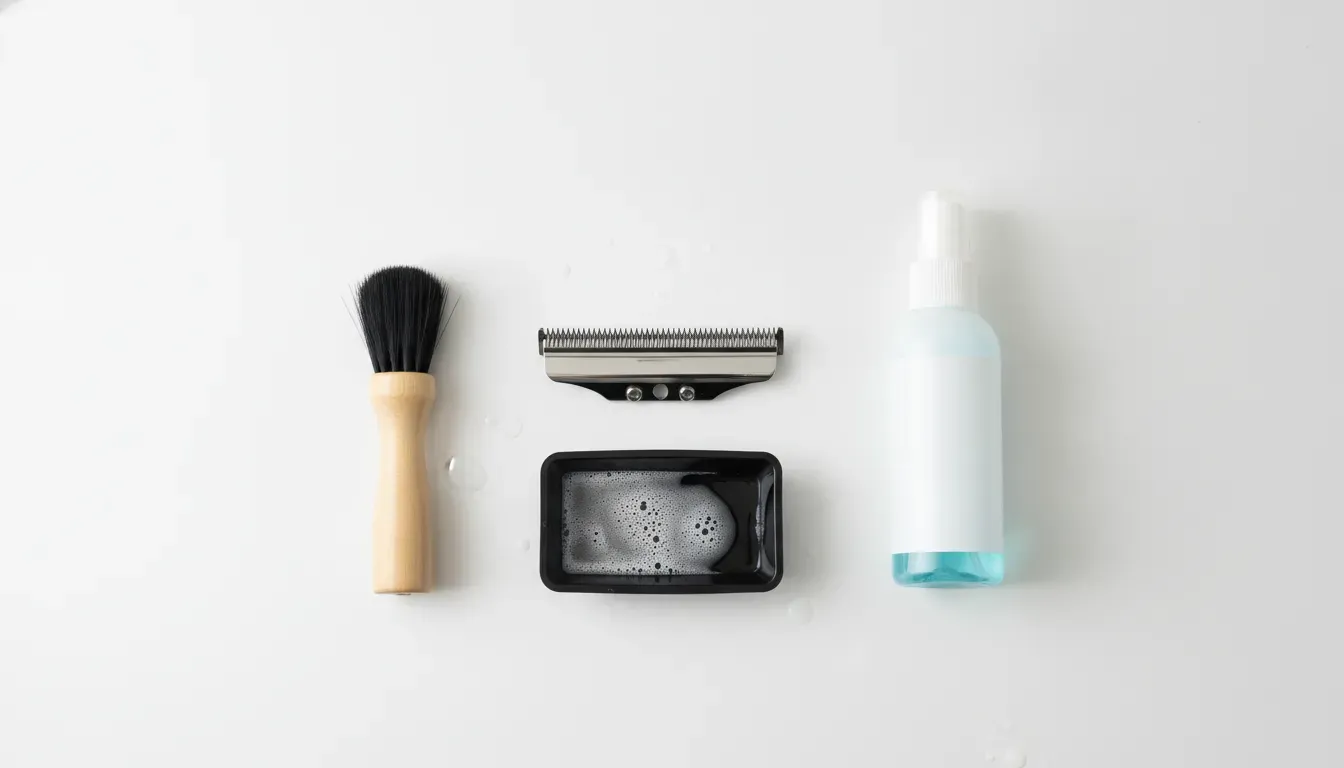
Blade wash is about soil removal. It helps loosen residue in the spaces around the moving and stationary blade surfaces, where brushing alone may not reach. Some systems use a small cleaning bath for a detached blade. Other products or manuals describe a controlled dip or rinse. There is no single universal method for every clipper, so the instructions are part of the product.
Before washing, turn the tool off, unplug a corded clipper, and remove the blade if the model requires it. A removable blade gives you more control over where the liquid goes. If the manufacturer permits an installed-blade method, follow that exact procedure and keep the housing protected. Never improvise by submerging an electric clipper body.
Blade wash also does not automatically mean disinfection. A cleaner may remove residue without carrying an EPA-registered disinfectant claim. If sanitation is the objective, use a product whose label and contact-time directions match that objective. Cleaning and disinfection are separate decisions, and cleaning visible soil usually comes first.
What Is the Difference Between Clipper Spray and Blade Wash?
The simplest distinction is speed versus depth. Clipper spray is the practical choice for cooling and refreshing a blade during the day. Blade wash is the better choice for removing embedded hair and residue during a controlled cleaning session. Neither product should be used outside its label or tool-manufacturer directions.
| Maintenance product. | Primary job. | Best timing. | Main caution. |
|---|---|---|---|
| Clipper spray. | Quick cooling, light cleaning, and formula-specific protection. | Between services or during a busy shift. | Do not assume it provides lasting oil or complete disinfection. |
| Blade wash. | Deeper removal of hair, oil, and residue. | Scheduled maintenance or heavy buildup. | Keep liquid out of the housing and follow the exact method. |
| Clipper oil. | Dedicated lubrication for moving blade surfaces. | After cleaning and whenever the blade needs lubrication. | Too much oil attracts hair and dust. |
| Disinfectant. | Sanitation according to its label and contact time. | Between clients when the product is approved for the tool. | Do not shorten the labeled contact time or mix products. |
That comparison explains why a barber can need all three maintenance categories. Spray manages heat and quick refreshes. Wash removes soil. Oil restores the lubricating film after a cleaning step. A disinfectant handles the sanitation objective when its label supports use on that tool surface. One bottle may combine some functions, but you still need to read what the formula actually promises.
For a broader routine, use The Barber Company’s barber clipper maintenance checklist. The checklist approach keeps cleaning, lubrication, inspection, storage, and service decisions from being collapsed into one rushed spray.
When Should You Use Clipper Spray?
Use clipper spray when the blade needs a quick, controlled refresh during normal work. It is useful for cooling a warm blade, loosening light residue, and supporting label-approved sanitation between clients. Brush away loose hair first, keep the tool pointed as directed, and wipe or dry the blade before the next service.
Spray fits four common moments in a barber workflow:
- After a service: Brush visible hair away, then use the spray according to its label before storing or returning the tool to rotation.
- When a blade runs warm: Stop and address the heat. A cooling product may help, but persistent heat can signal dry blades, excessive tension, dull edges, or a motor issue.
- When light residue is present: Use a formula intended to loosen that residue. Heavy or sticky buildup needs a more thorough clean.
- When sanitation is required: Select a product with the appropriate label claim and follow the full contact-time instruction. Cooling alone is not the same as disinfection.
Give the blade a moment to dry as directed. Spraying a wet blade and immediately placing it against a client’s skin can transfer product or reduce the value of the sanitation step. Wipe the outside of the blade with a clean cloth, and keep aerosol spray away from flames, heat sources, and the clipper’s electrical openings.
If your station needs a spray bottle instead of an aerosol, compare the Level 3 5-in-1 clipper spray with the formula already approved for your tools. The important decision is not the number of functions on the package. It is whether the directions fit your clipper model and your between-client process.
Shop professional barber supplies in Las Vegas, including maintenance products for busy stations.
When Is Blade Wash the Better Choice?
Choose blade wash when brushing and a quick spray leave hair, oil, or product packed around the blade set. Wash is most useful during planned maintenance, after heavy buildup, or before lubrication when the metal needs to be genuinely clean. Remove or protect the blade exactly as the manufacturer instructs.
A wash is a better match when you can see contamination in the blade gaps. When a blade feels sticky after repeated services, or when a tool has been stored with old product on the cutting set. The goal is to remove the material that keeps the moving surfaces from contacting cleanly. If the blade is dull, bent, chipped, or misaligned, cleaning alone will not restore the edge.
Set up a controlled wash area before you start. Use a stable tray, adequate lighting, a clean cloth, and the correct brush. Have the tool manual nearby. Remove the blade if the instructions call for it. Keep screws and small parts organized. Never pour wash over the clipper body or leave a cordless clipper sitting in liquid.
After washing, dry the blade completely. Then apply the correct clipper oil in a small amount and wipe away excess. The University of Tennessee’s hair clipper maintenance guidance reinforces the core principle that cleaning and lubrication need to be handled in the right order. If a product label gives a different sequence, follow the product and tool instructions for that setup.
Use The Barber Company’s guide on how to clean barber clippers for the larger cleaning workflow. This article focuses on the decision between spray and wash, not on replacing a model-specific manual.
Can Clipper Spray Replace Blade Wash?
Clipper spray can replace a separate wash only when the product label and clipper manufacturer say it provides the cleaning level your tool needs. In many stations, spray handles routine refreshes while blade wash handles deeper buildup. If residue remains after spraying, switch to the approved deeper-cleaning method instead of adding more product.
The answer is usually no for heavy buildup and sometimes for light maintenance. A spray may carry a cleaning claim, but that does not mean it can dislodge every packed hair or old oil deposit. Conversely, a blade wash may clean thoroughly but do nothing for fast cooling or labeled sanitation. The function depends on the chemistry, the blade design, and the instructions.
Combination products make the choice less obvious. A 5-in-1 spray may cool, clean, lubricate lightly, and help prevent rust. That can make it an efficient daily product. It still may not replace dedicated clipper oil after a wet cleaning step. And it does not give permission to skip a scheduled deep clean when the blade needs one.
Use a simple test: brush the blade, apply the approved spray, and inspect the result under good light. If the teeth and blade channel are clean, dry, and cutting normally, the routine may be adequate for that moment. If hair or residue remains, stop repeating the spray and move to the approved wash or service procedure.
The official Wahl clipper and trimmer care guide illustrates why manufacturer directions matter. Brand guidance can specify which lubricant or cleaning approach is safe for a particular tool. A product that works on one blade system should not automatically be transferred to another.
How Do You Use Spray and Blade Wash in the Same Routine?
Use spray and blade wash as separate steps rather than mixing them together. Brush first, wash when the blade needs deeper cleaning, dry completely, then lubricate. Use spray during normal service rotation for the jobs listed on its label. This sequence limits residue, protects the motor, and makes troubleshooting easier.
- Power down safely. Turn the clipper off. Unplug corded tools and follow the model’s instructions before removing a blade.
- Brush away loose hair. Use a clean blade brush around the teeth, hinge, and blade channel. Do not force packed debris deeper into the housing.
- Choose the maintenance level. Use spray for a quick refresh. Use blade wash when residue remains or a planned deep clean is due.
- Protect the housing. Keep liquid on the intended metal surfaces. If the blade is removed, set it on a clean tray rather than on a contaminated counter.
- Dry the blade. Follow the label and tool instructions. Do not lubricate over pooled wash or return a wet blade to service.
- Oil the contact points. Use a purpose-made clipper oil, such as the Wahl 4 oz clipper oil, when it is compatible with your tool. Apply only the amount recommended by the manufacturer.
- Inspect before cutting. Check alignment, teeth, screws, and the blade’s movement. Wipe excess oil and test the clipper away from a client.
Do not mix spray, wash, oil, alcohol, or disinfectant in the same container. Mixing can change how the products work and can create residues that are difficult to remove. Keep each product in its original container, and follow storage and ventilation directions.
For sanitation questions, consult the CDC cleaning guidance and the exact label for the disinfectant you use. The CDC’s general principle is important here: physical soil can interfere with the next cleaning or disinfection step. So a visibly dirty blade needs cleaning before you rely on a disinfectant.
For adjacent upkeep steps, review how to sharpen clipper blades safely, what to do when a clipper pulls hair, and how to get clippers barber sharp.
How Should You Choose a Maintenance Product for Your Station?
Choose based on the task, blade system, workload, and manufacturer directions. Keep a fast spray for between-client maintenance, an approved wash for deeper cleaning, and dedicated oil for lubrication. A busy shop may need all three, while a home user can keep a smaller kit if the same safety and cleaning sequence is followed.
| Your situation. | First choice. | Add when needed. | Check before use. |
|---|---|---|---|
| Back-to-back services. | Label-approved clipper spray. | Dedicated oil at the proper interval. | Cooling, drying, and sanitation directions. |
| Visible packed residue. | Approved blade wash. | Brush, cloth, and fresh oil. | Whether the blade must be removed. |
| Blade runs hot repeatedly. | Stop and inspect. | Spray only as a temporary reset. | Tension, alignment, sharpness, and motor condition. |
| Mobile barber kit. | Small spray and brush. | Compact oil and spare blade care supplies. | Leak prevention, ventilation, and local regulations. |
A professional station should also have a maintenance fallback. If cleaning, drying, and lubrication do not solve pulling, grinding, unusual heat, or inconsistent cutting, do not keep adding product. The issue may require blade sharpening, alignment, a replacement part, or motor inspection.
The Barber Company provides clipper repair service in Las Vegas, plus professional blade sharpening for tools that need more than routine maintenance. A local technician can help separate a cleaning problem from a mechanical problem before a busy shop loses a working tool. If the blade needs a closer, professionally tuned edge, review the zero gapping service in Las Vegas before making an adjustment yourself.
How Can You Build a Reliable Clipper Care Schedule?
Build the schedule around the service cycle, not around a single product. Brush and use the appropriate spray after routine work. Wash when residue or the maintenance plan calls for deeper cleaning, and oil after the blade is clean and dry. Inspect alignment, heat, and cutting quality before problems affect a client.
At the end of each service, clear loose hair and use the approved quick-care product. At the end of a shift, inspect the blade and wipe away excess oil. On a planned maintenance day, remove the blade if permitted, clean the hidden surfaces, check the drive area, and look for damaged teeth or loose hardware.
Keep a small record for a multi-chair shop. Note the tool, blade type, last deep clean, last sharpening, and any symptom such as heat or pulling. This is more useful than guessing which product was sprayed last. It also helps a technician understand the tool’s history if a repair is needed.
Store clean and dry tools with the blade guard in place when the model includes one. Keep aerosol products away from ignition sources and protect liquids from tipping into the station. A clean Barber Station Organizer can help separate sprays, oil, brushes, and small repair tools so a rushed product choice is less likely.
For a full routine that extends beyond this product comparison, read how to maintain your clippers and trimmers. If you need help replenishing supplies, The Barber Company offers local delivery information for the Las Vegas valley, and product availability can be confirmed before you visit.
Frequently Asked Questions
Clipper spray is best for fast cooling and label-approved refreshes, while blade wash is intended for deeper removal of hair and residue. Use either product only as directed for the specific blade system. Clean first, dry before oiling, and seek service when the blade or motor has a mechanical problem.
Is clipper spray the same as blade wash?
No. Clipper spray is usually designed for quick cooling, light cleaning, lubrication, rust protection, or sanitation claims depending on the formula. Blade wash is intended to remove heavier hair, oil, and residue from the blade assembly. Read the label and the clipper manual before choosing a cleaning method.
Can I use blade wash on an assembled clipper?
Only if the blade and product manufacturer specifically permits that method. Many barbers remove the blade so liquid stays away from the clipper housing and motor. Turn the tool off, unplug it when applicable, and never submerge an electric clipper body.
Does clipper spray replace clipper oil?
Not always. Some sprays provide light lubrication, but a dedicated clipper oil may still be needed for the moving blade surfaces. Use the oil recommended for the tool, apply a small amount after cleaning and drying, and wipe away excess so it does not attract hair and dust.
Should I use spray before or after blade wash?
Use the products as separate steps. Brush first, wash when deeper cleaning is needed, dry the blade, then lubricate. Use spray during normal service rotation when its label supports that use. Do not mix the products or assume that spraying a wet blade completes the drying and oiling steps.
What should I do if my clipper still pulls hair after cleaning?
Check blade alignment, tension, oil coverage, and tooth damage. A clean blade can still pull if it is dull, bent, or improperly adjusted. If the problem continues, contact The Barber Company about blade sharpening, zero gapping, or clipper repair rather than repeatedly adding spray.
Where can Las Vegas barbers buy clipper maintenance products?
The Barber Company serves professional barbers and retail customers at its Las Vegas store. Call (702) 900-9972 or visit the contact page to confirm current product availability, maintenance guidance, delivery options, or service intake.
Keep the Right Maintenance Product at Your Station
The right choice is simple when the task is clear: spray for a quick, label-approved refresh, blade wash for deeper cleaning, and clipper oil for dedicated lubrication. Keep the products separate, protect the clipper housing, and use professional service when cleaning cannot correct heat, pulling, noise, or alignment problems.
For professional tools, maintenance is part of the cutting workflow rather than an occasional rescue. Build a repeatable routine, keep your products organized, and choose formulas that match your specific clipper and blade system. The Barber Company can help you compare options, stock a busy station, or arrange technical service in Las Vegas.
Store: barbersupplies.vegas
Instagram: @barbercompanylv
Address: Current store address and contact details
Phone: (702) 900-9972.
Article schema.X.