

Offset vs straight barber shears are distinguished mainly by handle geometry: an offset handle places the thumb ring lower or farther forward than the finger ring, while a straight handle keeps the rings more nearly aligned. That difference can change how your hand sits during a cut, but it does not make one design automatically better. Choose by testing how the shears fit your hand and support the movements you use most.
Ask The Barber Company about professional shears
What is the difference between offset and straight barber shears?
The essential difference is the position of the rings, not an automatic difference in cutting ability. Offset shears place the thumb ring lower or forward relative to the finger ring; straight shears keep the rings more nearly aligned. Both can be professional tools. Compare the exact model in your hand because dimensions and balance vary.
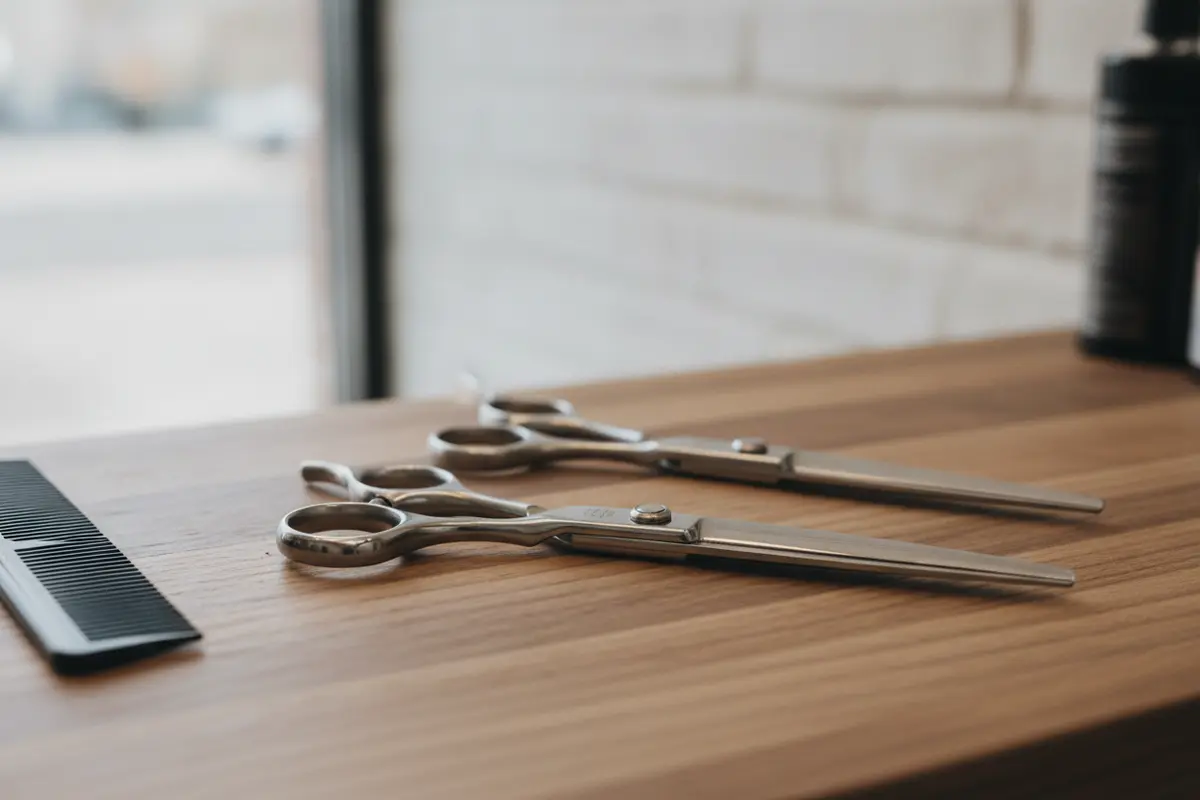
An offset shear has an angled or stepped handle, commonly with the thumb ring positioned lower than the finger ring. A straight shear has rings arranged closer to one line. Both designs can be made for professional cutting; the visible shape tells you about handle layout, not the sharpness, steel quality, or suitability of the cutting edge.
On an offset handle, the thumb can sit at a different height from the ring finger. Some barbers prefer that relationship because it lets the hand rest in a more relaxed-looking position while the blades work. With a straight handle, the rings are more directly aligned, which some users find familiar and predictable. Actual comfort depends on ring size, handle length, hand size, thumb mobility, and technique.
Do not confuse handle style with blade style. A shear can have convex or beveled edges, different blade lengths, and different tension systems while still being offset or straight. Those are separate buying decisions. When reviewing a range such as professional shears from Utsumi, compare the handle and blade details independently rather than assuming that one feature determines the rest.
A useful way to compare two shears is to separate what you can see from what you can feel. Ring alignment is visible before you pick up the tool. Thumb travel, stability, and control only become clear when you operate it. If a product description uses labels such as ergonomic or traditional, treat those as prompts to inspect the shape, not as proof that the model will suit every hand.
How does handle shape affect hand position?
Handle geometry changes where the thumb and fingers meet the rings and how the hand is oriented as the blades open and close. Offset handles may feel more natural to some users in certain positions, while straight handles may suit users accustomed to aligned rings. The result depends on hand size, technique, and the exact shear.
Handle shape changes where the thumb and fingers meet the rings and how the hand is oriented as the blades open and close. An offset arrangement may let some barbers keep the elbow lower or the wrist closer to a neutral line during particular movements. A straight arrangement may feel more natural to a barber trained on aligned rings. Neither shape guarantees a posture; how you hold the tool matters.
Think about your usual cutting position. When you work around the head, your hand may rotate and change height repeatedly. A design that feels comfortable with the shear held in front of you could feel different when you elevate the elbow, cut across the body, or change the angle for detail work. Check the grip through the directions you actually use, not only while holding the tool still.
Fit is also affected by the rings. If a ring is too large, your fingers may slide or need extra effort to stabilize the shear. If it is too small, the ring can feel restrictive. Removable finger inserts can adjust the feel on some models, but do not assume every shear includes them. Ask about the individual model’s construction and available adjustments before making the choice.
Try to notice specific compensations rather than relying on a vague first impression. Do you lift your elbow to keep the blades at a comfortable angle? Does your thumb have to stretch farther than it does with another model? Does the tool rotate when you release and reapply pressure? These observations help identify whether the issue comes from handle shape, ring size, balance, or simply a grip you are not accustomed to.
Comfort is a personal fit observation, not a promise that a handle will prevent discomfort or injury. If you have ongoing pain, numbness, or limited movement, pause repetitive work and seek advice from a qualified health professional. For general workplace safety information, consult the Occupational Safety and Health Administration; it is not a substitute for an individual assessment of your tool or technique.
Offset vs straight barber shears at a glance
The table separates handle design from other buying factors. Use it to decide what to test, then judge the actual shear in motion. Neither handle label reveals edge type, steel, blade length, or model-specific balance, so confirm those details separately before choosing.
Use this comparison as a starting point, not a verdict. The handle category describes ring alignment; it cannot tell you whether the shear fits your hand or performs well for your cutting method. Test the specific model, check how it feels in motion, and consider blade length, tension, and balance alongside the handle.
| Consideration | Offset handle | Straight handle |
|---|---|---|
| Ring relationship | Thumb ring sits lower or forward relative to the finger ring. | Rings are arranged more nearly in line. |
| First fit impression | May feel like the thumb and fingers rest at different heights. | May feel familiar to users accustomed to aligned rings. |
| What to evaluate | Thumb reach, wrist angle, and ease of opening and closing. | Ring fit, thumb movement, and whether the hand stays relaxed. |
| Best decision basis | Choose if the specific model feels controlled through your common cutting positions. | Choose if the specific model feels controlled through your common cutting positions. |
| Does the handle define edge or steel? | No. Check those specifications separately. | No. Check those specifications separately. |
For a fair side-by-side trial, keep the conditions consistent. Use the same hand, the same finger placement, and the same opening-and-closing motion. If one shear has a different blade length or weight, note that as a separate factor instead of attributing every difference to the handle. A short written note after each test can prevent the more recent impression from dominating your choice.
When might an offset handle suit your workflow?
An offset handle may be worth trying if you prefer a thumb ring set lower or forward, or if that geometry feels manageable through your usual working positions. It is not a guarantee of a particular posture or result. Test the individual shear and pay attention to thumb movement, control, and whether you need to compensate.
An offset handle is worth trying if you prefer the thumb ring to sit lower than the finger ring or if that arrangement feels easier to move through your normal cutting positions. Some barbers like the hand position it encourages; others find it unfamiliar. The useful question is whether the particular shear gives you controlled movement without forcing your thumb or changing your grip.
Try it during the actions that matter in your work: opening and closing at a steady pace, detail cutting, and moving between sections. Keep your grip light enough to operate the blades smoothly. Notice if you need to twist your wrist, lift your elbow, or reach awkwardly to keep the blades aligned. Compare those sensations with another handle shape instead of judging the shear from its appearance.
For example, a barber who frequently changes the angle of the shear while moving around a client may value a handle that feels stable through those transitions. Another barber may perform most work with a familiar hand position and prefer not to alter it. Write down the movements that feel easiest and the ones that cause hesitation; then compare the same movements with a straight model.
Offset is not a shortcut to better technique. A poorly sized ring or blade length can still feel awkward, and a familiar handle may suit you better regardless of what is popular. If you are building a kit, keep the handle choice consistent only when consistency helps your work. A second shear can have a different geometry if you have tested it and know when it serves a distinct task.
Barbers assembling a compact kit can also review mobile barber equipment considerations and the broader barber tool essentials guide. Those resources address setup rather than declaring one handle style superior. The same fit-first approach applies when comparing available professional brands through the brand selection.
When does a straight handle make sense?
A straight handle can make sense when aligned rings feel direct and familiar in your hand. It is a valid choice for new and experienced barbers alike. The deciding factors are secure ring fit, smooth thumb action, and control in your working positions—not whether another handle design is more widely discussed.
A straight handle can make sense when its aligned rings feel direct and familiar in your hand. Barbers who already work comfortably with this geometry may value a predictable grip and a straightforward transition between shears. If you can maintain an easy thumb motion and steady blade control, there is no need to change handle styles simply because another shape is discussed more often.
Test the straight shear with your normal thumb placement. The thumb should operate the blade without being forced deep into the ring or held rigidly. Check whether the shear stays stable while you guide the blades. If you find yourself gripping harder to control it, compare ring fit, inserts, and balance before deciding that the straight handle itself is the cause.
Training and habit matter. A tool can feel unfamiliar at first because the hand has learned a repeated movement with a different handle. That does not mean you should push through discomfort. Make a calm, short comparison with a suitable model and pay attention to control, ease of movement, and whether you can keep a consistent grip. If the fit remains poor, choose another option.
A straight handle may also simplify comparison when it matches shears you already use. If you are replacing one tool in a working set, try the candidate alongside your current shear. Check whether you can shift between them without changing finger placement or losing a secure grip. Familiarity alone should not override poor fit, but it is relevant when control and comfort are otherwise comparable.
How should you test shears before choosing?
Test the shear through repeatable movements instead of judging it from appearance or a static hold. Check the rings, thumb action, working angles, and overall balance in order. Compare one variable at a time, and ask about model-specific adjustments and care. A consistent test makes the difference between handle preference and other specifications easier to identify.
A useful shear test moves beyond holding the tool for a few seconds. Check its fit, movement, and balance in a repeatable order. Compare one variable at a time: first ring comfort, then thumb action, then blade movement and balance. This helps separate handle preference from edge performance or a model-specific adjustment.
- Check the rings. Place your fingers and thumb in their intended positions. Note pressure points, excess movement, or a need to squeeze the rings to keep the shear secure.
- Move the thumb. Open and close the blades with a controlled thumb motion. Avoid driving the movement by clenching the whole hand. Compare how far your thumb travels and whether the motion feels smooth.
- Check alignment in working positions. Hold the shear as you would for a typical cut, then change the angle and hand height. Observe whether the handle still feels manageable without an exaggerated wrist turn.
- Evaluate the tool as a whole. Consider blade length, weight, balance, tension adjustment, and whether the shear suits the techniques you use. Handle shape is one part of the fit.
- Ask for model details. Confirm what is included, how tension is adjusted, and which maintenance guidance applies. Specifications differ among shears, including those within a brand.
Make the trial more useful by repeating a small sequence rather than improvising. Hold the shear in the position used for a basic working pass, open and close it several times without cutting, then change to the angle used for detail work. If a clean practice material is available and the seller permits it, evaluate blade action only under appropriate conditions. Do not use another person as a test surface or assume a display model is ready for cutting.
After each model, record three observations: whether the rings fit, whether the thumb motion feels easy to control, and whether the shear remains stable as you change angles. Add notes about blade length and balance if those feel different. A compact checklist makes a later comparison more reliable than trying to remember which tool seemed better after testing several options.
If you are new to professional shears, ask an experienced barber or knowledgeable supplier to help you compare models. The Barber Company serves both professional barbers and the public, and its about page describes the business and its professional supply focus. A conversation can clarify product details, but your own fit test should guide the final choice.
What else matters besides offset or straight handles?
Handle geometry does not define a shear’s edge, steel, length, tension, or balance. Check these features against your work and the manufacturer’s specifications. Two shears with the same handle type may feel very different, so compare the complete model rather than choosing from a handle label alone.
Handle shape is only one part of a shear’s performance. Match blade length, edge type, tension, balance, and maintenance needs to your work. A comfortable handle cannot compensate for a shear that is poorly suited to your cutting method, while a preferred edge or blade length does not guarantee a good fit in your hand.
Blade length and cutting method
Blade length affects reach and maneuverability. There is no single length that suits every barber or technique. Compare the model with the work you do most and check whether it feels easy to control around the head. Do not choose by a number alone; handle fit and balance can change how a given length feels.
When comparing lengths, consider the movements you make repeatedly rather than a single technique you perform occasionally. A longer blade may feel different when working in tight areas than when making broader passes. A shorter blade can offer a different sense of control, but the result depends on your hand, grip, and method. If you switch between lengths, practice with each rather than assuming the feel transfers automatically.
Edge and material
Edge design influences how the shear engages hair and what maintenance it may need. Confirm the maker’s specifications rather than inferring edge type from handle shape or price. If you are comparing models, ask how each is intended to be used and what sharpening approach is appropriate. Keep manufacturer care guidance with the shear.
Do not treat material names or marketing descriptions as a substitute for model-level details. Verify the specifications and intended care instructions for the exact shear. If sharpening is needed later, use a service familiar with the edge design; an unsuitable approach can affect how a tool cuts. The handle arrangement and the edge are separate parts of the buying decision.
Tension and adjustment
Tension affects the resistance you feel as the blades move. Too loose or too tight can interfere with control, but the right setting depends on the individual shear and maker guidance. Learn how its adjustment works before changing it. Avoid turning the screw repeatedly without checking the model’s instructions or getting experienced help.
During evaluation, notice whether the blades move smoothly and consistently rather than trying to judge tension by a universal rule. Adjustment systems vary, so ask how the model is intended to be set and whether tools are required. If the shear’s action changes after purchase, review the maker’s directions before making adjustments; repeated, uninformed turning can make it harder to identify the original issue.
Balance and daily handling
Balance is the relationship between the tool’s weight and where it feels supported in your hand. Try the shear in motion rather than guessing from appearance. If your work includes varied positions, test those positions. Compare a few models and note what feels stable without adding unnecessary effort to your grip.
Consider the whole tool while moving it through a typical sequence. A handle may fit well when held still, yet the combined weight and blade length may feel different once you open and close it repeatedly. Ask whether the tool stays steady when you reposition your hand, and whether you can maintain control without squeezing harder than needed. These are observations about fit, not promises about fatigue or health outcomes.
To browse the available supplier range, start with Utsumi shears and tools and ask about specific model availability. The broader Las Vegas barber supplies information can help you understand local shopping options. Product selection changes, so verify current specifications and availability with the store rather than relying on a generic comparison.
Care habits that protect shear performance
Keep shears clean, dry, and maintained according to the manufacturer’s directions. A simple routine includes removing debris, using only recommended care products, checking blade action, and storing the tool safely. Model-specific guidance matters; a universal adjustment or sharpening method may not suit every shear.
Good care keeps a shear clean, dry, and adjusted according to its manufacturer’s instructions. Build a simple routine around the workday: remove hair and residue, use the recommended lubricant where appropriate, check movement, and store the tool safely. Maintenance needs vary by model, so do not apply a one-size-fits-all adjustment or sharpening method.
- Wipe the blades with a clean, suitable cloth after use and remove visible debris from the pivot area.
- Follow the manufacturer’s directions for lubrication and cleaning. Do not assume products intended for clippers are appropriate for shears.
- Keep the shear dry between uses and store it where the blades will not strike other tools.
- Check blade action and tension before a busy day. If movement changes suddenly, stop and inspect rather than forcing the tool through a cut.
- Use a qualified sharpening service when the shear needs professional attention. Incorrect sharpening can change the edge and performance.
It helps to make care part of closing a station rather than waiting until the shear feels different. Wipe the tool, check for visible buildup, and return it to a case or designated holder where it will not collide with clippers, combs, or other metal tools. If you share a station, keep personal shears separated and clearly identifiable so another tool does not get mistaken for yours.
For more on organizing a work area, see the barber station organization guide. If you are maintaining a new or expanding shop, the barbershop equipment checklist can help you review essential setup categories. The goal is not to add complexity; it is to make tools easy to locate, inspect, and care for between clients.
How can you choose with confidence?
Choose based on the exact shear’s fit and control in your real working positions, not on which handle label sounds more advanced. Compare offset and straight models under similar conditions, then verify blade, tension, balance, and care details. You do not need to use only one handle style across your kit.
Choose the shear that fits your hand and supports your actual work, not the one whose handle label sounds more advanced. Compare an offset and a straight model when possible, test both with the same grip and movements, and judge control and comfort together. Then verify the blade, tension, and care details for the model you plan to use.
A simple decision rule is useful: if one handle lets you operate the shear with a steady grip and natural thumb movement across your regular working positions, it is a strong fit candidate. If it causes you to compensate, test another size or design. There is no requirement to use only one handle style across every tool in your kit.
Professional barbers looking at wholesale options can contact The Barber Company about account inquiries or visit the store to discuss available products. Customers across the valley can also check local delivery information; free local delivery is available on orders over $50 throughout the Las Vegas valley, including Las Vegas, Henderson, and North Las Vegas, according to the company’s stated service terms. Confirm current details directly with the store.
For general product browsing, visit the The Barber Company online store. The contact page is the place to ask about current shear selection, availability, and fit questions before you decide.
Use a practical buying sequence: shortlist models with the blade details and intended use you need, test the rings and thumb action, then check balance in your normal positions. If the comparison is close, choose the model that feels easier to control consistently and that has care instructions you are prepared to follow. Confirm current availability before making a trip or placing an order.
Contact The Barber Company to compare professional shears
Frequently Asked Questions
Offset and straight describe handle geometry, not a ranking of quality or a promise about comfort. The answers below address common buying questions, but the exact model still matters. Use the same fit test for both styles, and confirm edge, blade length, tension, and care requirements independently.
These answers clarify common questions about handle style, fit, and buying shears. Use them to narrow your comparison, then assess the exact model in your hand. Offset and straight describe handle geometry; they do not replace checking the edge, blade length, tension, and care requirements.
Are offset barber shears better than straight shears?
Not for everyone. Offset shears place the thumb ring lower or forward, while straight shears keep the rings more aligned. The better choice is the specific shear that fits your hand and lets you control the blades through your usual cutting positions.
Do offset shears prevent hand or wrist pain?
No handle style can guarantee that. Comfort varies with the person, the shear, the work, and the way it is held. If you have persistent pain, numbness, or reduced movement, stop and seek advice from a qualified health professional rather than relying on a tool change alone.
Can a beginner use straight barber shears?
Yes. Straight handles are not reserved for experienced barbers, and offset handles are not automatically easier for beginners. Choose a model that fits, learn correct handling with qualified instruction, and follow the maker’s use and care guidance.
Should I choose handle shape before blade length?
Consider them together. Handle fit affects how the shear feels in motion, while blade length affects reach and maneuverability. If possible, compare actual models and test them in the positions you use. Do not let a single specification decide the purchase by itself.
Where can I ask about professional shears in Las Vegas?
Contact or visit The Barber Company to ask about current selection and product details. The store serves professionals and retail customers, and staff can help direct you to available products and options. Confirm stock and service details with the business before traveling.
Visit The Barber Company
The Barber Company is a local wholesale and retail supplier for professional barber tools and grooming products. Contact or visit the store to ask about available shears, model details, and product fit; the business serves professionals and the general public.
The Barber Company is a local wholesale and retail supplier for professional barber tools and grooming products. Visit the online store or contact the team to ask about available shears and product fit. HABLAMOS ESPAÑOL.
- Instagram: @barbercompanylv
- Address: 4700 Meadows Ln #110, Las Vegas, NV 89107
- Phone: (702) 900-9972
Compare the handle in your hand, match the shear to your technique, and choose the tool you can control comfortably and consistently.