
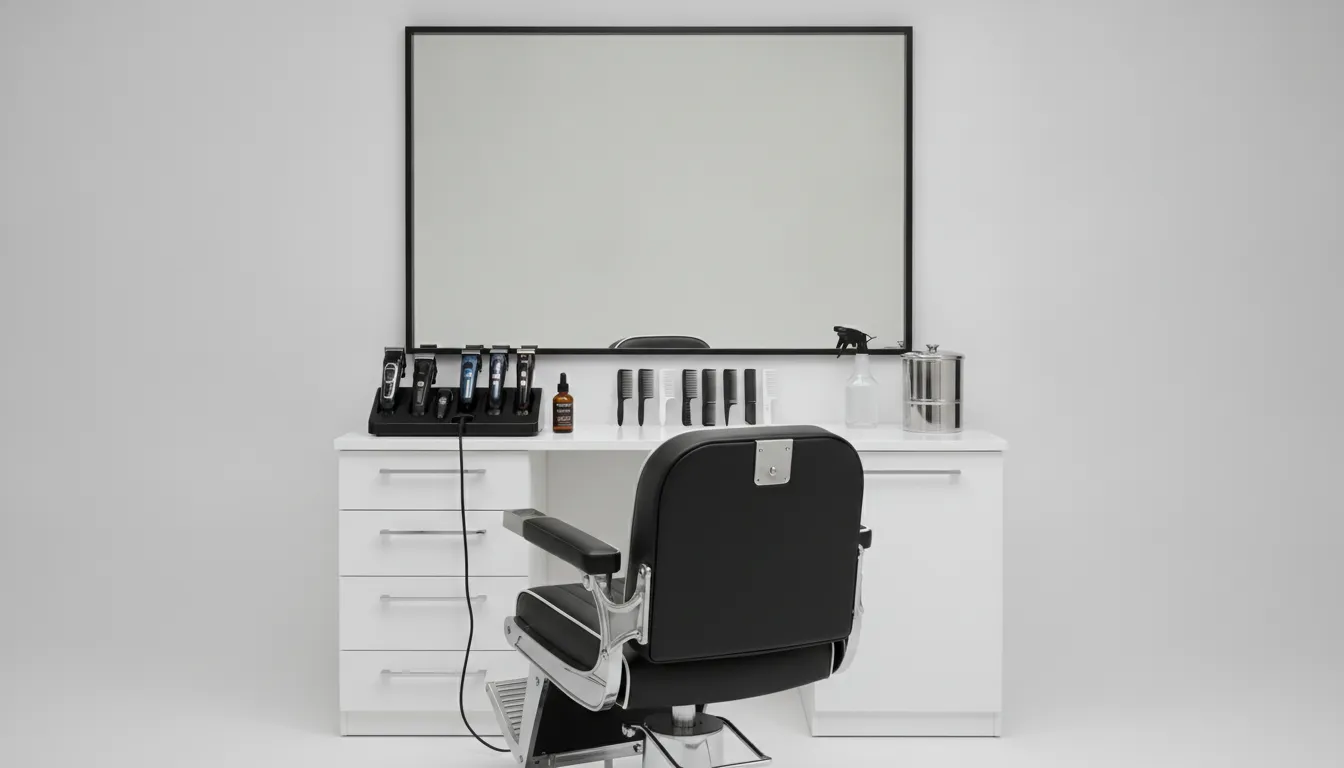
A professional barber station works best when it is arranged around the service, not around a random collection of tools. Your chair, mirror, work surface, clippers, detail trimmer, guards, combs, sanitation supplies, charging area, and storage should support the same repeatable movement from preparation to finish.
A practical barber station setup starts with the active essentials: a stable chair and mirror, an accessible work surface. Primary and detail tools, the guards and combs those tools require, sanitation supplies, and a defined place to charge and store equipment. This arrangement can reduce searching and interruptions without promising a guaranteed service time.
Start by separating what you reach for during nearly every cut from what belongs in backstock. That distinction makes the station easier to reset, easier to inspect, and easier to adapt as your service menu grows. The first decision is the foundation: which station format gives you enough working room while keeping the essentials within a clean, safe reach?
What does a professional barber station setup need first?
A professional barber station setup starts with the service essentials: a stable chair, mirror, work surface or trolley, clippers, and a detail trimmer. Add guards, combs, shears, a spray bottle, cape system, sanitation supplies, charging access, and storage. Then choose a station format that fits your services, space, hookups, and working posture.
| Station type | Best fit | Plan for first |
|---|---|---|
| Traditional. | Haircuts, shaves, and grooming without built-in plumbing. | Chair position, mirror, work surface, tool storage, outlets, and sanitation access. |
| Wet. | Services that combine cutting, styling, and shampooing in one station. | Shampoo bowl, hot and cold water connections, drainage, electrical access, and cleanable storage. |
| Mobile or freestanding. | Flexible layouts, changing service areas, or stations that are not fixed to a wall. | Stable placement, safe cable routing, accessible storage, and enough clearance to work around the chair. |
Build around the active service
Start with the tools used on nearly every client, not the accessories you might use occasionally. Keep the clipper, detail trimmer, guards, combs, shears, spray bottle, and cape system in the active station. A foil shaver or blow dryer belongs in the setup when that service is actually on your menu. This approach keeps the working surface useful instead of turning it into a crowded display.
Storage should match the way the station is used. Drawers, cabinets, open shelving, integrated tool holders, and easy-to-clean surfaces are practical features to evaluate. The frequently used tools should be reachable from the working position, while replacement guards, blades, and other backstock can sit farther away. The essential barber station supplies guide can help fill gaps after the active station is defined.
Check the room before choosing the unit
Before buying, confirm whether the location supports the station’s electrical and plumbing requirements. Do not assume outlets or plumbing are included. Product specifications should identify those features, and the shop layout should determine whether a wall-mounted or freestanding unit makes more sense. An adjustable chair, an appropriately high work surface, and an anti-fatigue mat can also support a more comfortable setup during long shifts.
Good placement can reduce searching, unnecessary movement, and avoidable interruptions. It cannot guarantee faster service. The goal is a repeatable station where the right tools are visible, sanitation supplies are accessible, and each item has a clear return point after the service.
How should you divide the station into tool zones?
Divide the station by frequency of use and by task: keep active cutting tools in the reach zone. Sanitation supplies in a clearly separated cleaning zone, styling products in a presentation zone, and unopened inventory in backstock. This arrangement keeps the working surface deliberate, reduces searching, and helps protect clean tools from used or chemical-handling items.
Reach zone: tools used during nearly every service
The reach zone is the work surface or trolley area closest to your dominant hand. Keep the primary clipper, detail trimmer, guards, combs, shears, spray bottle, and the tools used most often within a controlled reach. A trolley or work surface is useful because it keeps frequently used equipment available without forcing you to turn away from the client. Do not fill this area with every tool you own. If a foil shaver or blow dryer is only needed for certain services, bring it into the active zone when that service requires it.
Set the layout for the person actually working at the station. A right-handed barber may place the clipper and trimmer on the right side, while a left-handed barber may reverse that arrangement. Keep the mirror and client path clear, and leave enough space to set down a tool without balancing it on the chair, sink, or edge of the counter. The goal is a predictable handoff between tools, not a crowded display.
Sanitation zone: separate clean, used, and chemical items
Place the disinfectant container, paper towels, hand sanitizer, gloves, and waste container in a distinct sanitation zone. Non-electric tools such as combs can be placed in a disinfectant container sized for them. But electric clippers and trimmers should be cleaned according to their care instructions and kept away from liquid. Follow the product label for any registered surface disinfectant. A covered bin and a separate container for used capes help keep waste and laundry from crossing into the clean-tool area.
Styling zone and backstock
Keep styling products and finishing tools together, but do not let retail or rarely used products take over the active work surface. The Barber Company carries accessories such as combs, oils, sprayers, and styling products, along with professional clippers and trimmers from Gamma+, Wahl, BaByliss Pro, StyleCraft, and Andis. Its proprietary Barber Station Organizer can support a more defined storage arrangement when the station needs dedicated organization.
Backstock belongs in a drawer, cabinet, or shelf outside the immediate reach zone. Store replacement guards, blades, clipper oil, disposable supplies, and unopened products there. Protect powered tools from spills, heat, and unstable edges. For additional equipment-protection guidance, see how to store barber clippers safely. When planning your inventory or reorganizing a station, browse professional barber supplies by tool category rather than mixing every item into one drawer.
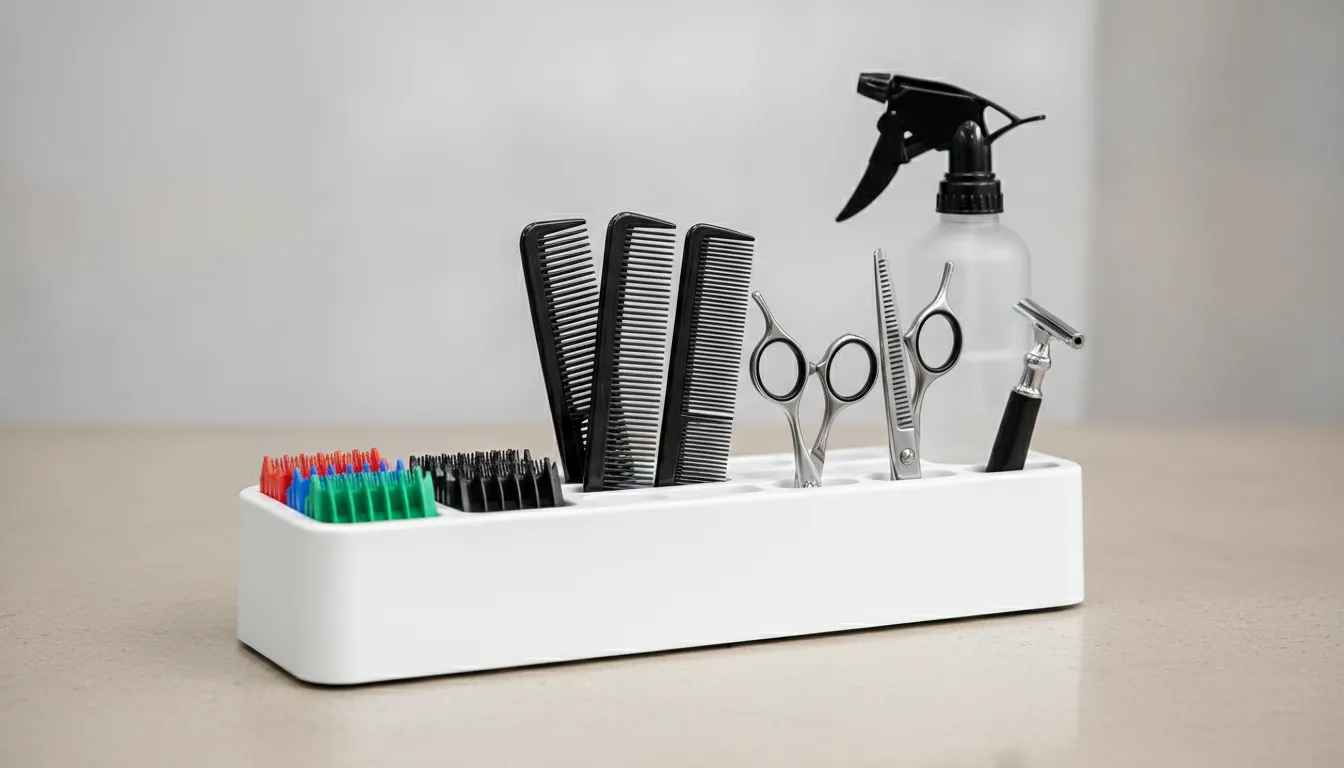
Build a fast, repeatable barber station workflow
A reliable barber station setup turns preparation, service, and cleanup into the same sequence every time. Keep daily consumables visible, place tools where your hand expects them, separate clean and used items, and reset before the next client. This can reduce searching and avoidable interruptions without promising a guaranteed time reduction.
-
Pre-service: stage the station before the client sits
Start with the tools required for the scheduled service, not every tool in the shop. Place the primary clipper, detail trimmer, guards, combs, shears, spray bottle, and cape system in their assigned positions. Keep neck strips, towels or cape liners, paper towels, gloves, disinfectant, and waste-bin liners stocked at the station. The opening inventory should also include clipper oil, blade-cleaning supplies, and replacement guards or blades that fit the tools in use. Use essential barber station supplies to close recurring inventory gaps.
Confirm that the charging area is ready if cordless tools are part of the service. A dedicated setup, such as a professional power station with three charging ports, can keep charging equipment in one known location. Keep cables clear of the client’s movement path and avoid placing electrical tools beside liquids.
-
Active service: return each tool to its home
During the haircut, use a simple handoff rule: take one tool, use it, then return it to its marked position before reaching for the next one. Keep frequently used tools on the work surface or trolley, while less frequently used items stay in drawers or backstock. This preserves a clean working area and makes a missing tool visible instead of forcing a search midway through the service.
Keep clean tools separate from anything used or awaiting disinfection. Place used capes in a separate bin rather than on the station, and keep disposable waste moving toward a covered, lined bin. If cleaning or chemical handling is required during service, use disposable gloves and follow each disinfectant’s label directions. The EPA label is the authority for approved use instructions.
-
Reset: make the next service start-ready
After the client leaves, remove hair, clean and disinfect tools and surfaces as appropriate, replace used disposables, and return fresh tools to their assigned places. Refill the neck strips, towels or liners, paper towels, and other items that reached their restock point. Move used capes to the designated bin, clear the work surface, and return cordless tools to charging if needed.
Finish by checking the next service on the schedule and staging only its required additions. A repeatable reset standard protects presentation and helps expose low stock, damaged guards, dull blades, or tools that need service before they interrupt the next appointment.
Sources: barber station equipment and reset checklist and EPA registered disinfectant label guidance.
How do charging and clipper choices affect station flow?
A corded or cordless clipper can work well in a professional station, but each choice changes how you organize power, movement, maintenance, and backup equipment. A dependable setup gives every tool a defined home, keeps cords out of the cutting path, and matches clipper specifications to the services you perform. That reduces avoidable interruptions without promising a fixed service time.
Corded clippers provide continuous access to power and can be a practical choice for high-volume work or a station where outlets are already positioned well. The tradeoff is cable management. Route the cord along the rear or side of the station, secure excess length, and keep it away from the chair base and the client’s feet. Never let a cable cross the barber’s primary working path. Many modern stations include outlets for clippers and trimmers, but electrical features are not universal, so review the station’s specifications before purchasing. Check station electrical specifications alongside the room’s available hookups.
Cordless tools can reduce cable movement and make it easier to change sides around the chair. They also require a deliberate charging routine. Create a dedicated charging area rather than placing chargers wherever an outlet happens to be free. A professional power station with three charging ports can support a central home for cordless tools, helping separate charging equipment from active cutting tools. The important point is to follow the exact model instructions for charging, battery care, and indicators. Battery runtime is not interchangeable between brands or models, so do not plan your shift around a generic runtime estimate.
Keep one backup clipper or trimmer ready for the tool most likely to leave service. A backup can keep the station operating while the primary tool charges, is cleaned, or goes for service. Match that backup to the work you actually perform. A detail trimmer used repeatedly throughout the day deserves motor and blade quality appropriate to that frequency, while a tool used occasionally may have different requirements. Review the best trimmers for barbers by intended use, motor, blade system, and ergonomics rather than by battery claims alone.
Finally, group chargers, spare guards, oil, and blade-cleaning supplies where they can be reached without crowding the active work surface. The Barber Company carries professional lines from Gamma+, Wahl, BaByliss Pro, StyleCraft, and Andis, along with station accessories. Use its guide to best cordless clippers as a starting point, then confirm the exact model specifications and charging hardware before adding a tool to your station.
Sanitation supplies should be visible and easy to reach
A clean barber station depends on a clear separation between ready-to-use tools, used tools, and waste. Keep disinfectant, paper towels, gloves, and replacement disposables close enough to reach without leaving the client. Protect electric equipment from liquids, follow each product label, and reset the station consistently after every service.
Start with two distinct tool paths. Clean combs, guards, shears, and other ready-to-use non-electric tools should have a dedicated home, such as a covered container or organized drawer. Used tools should never return to that space before cleaning and disinfection. A disinfectant container sized for combs and other non-electric tools can make the separation practical, provided the product is used according to its directions. See the barber equipment sanitation checklist for the underlying supply categories.
Do not treat every tool as if it can be submerged. Clippers, trimmers, foil shavers, charging equipment, and other electric tools need a dry cleaning area. Remove hair with the appropriate brush, wipe surfaces as directed, and keep liquids away from motors, ports, cords, and charging bases. If a tool requires deeper cleaning or starts performing poorly, move it out of the active rotation rather than placing a questionable tool back on the station.
Make label directions part of the workflow
An EPA-registered surface disinfectant is only useful when the product is applied to the surfaces and tools covered by its label, using the stated directions. The EPA label is the authoritative reference for approved use, so do not guess about dilution. Contact time, material compatibility, or whether a product is intended for a specific tool. Keep the label accessible to anyone who resets the station. Disposable gloves belong in the sanitation zone for cleaning and chemical handling, not buried in backstock.
Organize disposables around the service sequence. Store neck strips, towels or cape liners, paper towels, and fresh gloves in clean, reachable compartments. Keep clean capes separate from a clearly identified bin for used capes. A covered waste bin with a liner should sit where used disposables can be discarded without crossing the clean-tool area. Hand soap and hand sanitizer should also be easy to locate, while a first-aid kit should have a known, accessible location.
Reset the station before the next client
Use the same reset order every time: remove hair and used disposables, place used tools in their designated path. Clean and disinfect tools and surfaces as appropriate, replace liners and service supplies, then return fresh tools to their assigned positions. This makes sanitation visible and repeatable instead of dependent on memory. It also helps a barber station setup with essential supplies stay ready without turning the work surface into a crowded supply shelf.
Keep the sanitation zone close, but not in the splash path or directly beside charging equipment. The goal is a station where a barber can identify what is clean, what needs processing, and what must be discarded at a glance. That simple visual system supports a professional presentation while protecting the tools that keep the service moving.
Maintain the station so tools stay service-ready
Daily cleaning, scheduled oiling, and planned equipment checks keep a barber station dependable. A weekly blade review can catch dullness or buildup before it affects the cut, while monthly service checks help identify tools that need sharpening, repair, or zero gapping. The goal is consistent readiness, not maintenance only after a problem appears.
At the end of every service day, brush loose hair from clipper and trimmer housings. Remove residue from the blades, and wipe appropriate surfaces according to the tool and product instructions. Inspect cords, guards, blade screws, and charging contacts for visible damage. Keep clipper oil, blade wash, and a clipper brush together so the maintenance step is easy to repeat. The barber clipper maintenance checklist can serve as the station’s written reference.
Use a daily, weekly, and monthly check
Daily: Clean hair from the tool, brush the blade, apply the manufacturer’s recommended amount of oil where appropriate, and return each tool to its assigned location. Do not flood a blade or allow oil to run into electrical components. If a tool was used heavily, note any heat, unusual noise, pulling, or reduced cutting performance before the next service.
Weekly: Check blade alignment, guard fit, fasteners, and the condition of frequently used trimmers. A blade that snags, leaves an uneven finish, or requires repeated passes deserves attention rather than more pressure. Review replacement guards and blades as well, confirming that spares actually fit the models in use. This is also a good time to clean the charging area and remove dust from power accessories.
Monthly: Review the condition of the full station, including backup tools, cables, storage areas, and consumable levels. Separate equipment that needs professional attention from tools that are ready for service. Dull or poorly maintained blades can make work harder and contribute to uneven cuts or snagging, so do not wait for repeated client complaints before arranging service.
Know when maintenance becomes service
Oiling supports routine care, but it does not correct a damaged blade, worn component, motor problem, or incorrect blade position. Schedule a professional blade sharpening service when cleaning and oiling no longer restore smooth cutting. For a tool that overheats, loses power, makes an abnormal sound, or will not hold normal performance, use a Las Vegas clipper repair service instead of continuing to force it through appointments.
Zero gapping should also be treated as a precision adjustment, not a casual tightening exercise. When a trimmer needs closer detailing but the blade relationship is inconsistent, professional zero gapping can help restore the intended setup while preserving a controlled workflow. Record which tools were serviced and when, then return them to the same storage position so the station remains predictable for the next shift.
Choose station equipment for your shop and service menu
A practical buying plan starts with the services performed at each chair, then matches equipment, storage, power, plumbing, and maintenance support to that workflow. Purchase the active station first, prioritize durable working tools and client comfort, and add shared backstock only after every barber can work cleanly and consistently.
Start with one complete active station before buying decorative upgrades or slow-moving retail inventory. The basic working set includes a professional chair, mirror, work surface or trolley, clippers, and a detail trimmer. Guards, combs, shears, a spray bottle, cape supplies, sanitation products, charging, and storage complete the station. This active-station-first approach keeps purchasing tied to real service capacity rather than spreading equipment too thinly across the shop. Browse professional barber supplies by tool type and service need.
Match the station to the services you actually perform
A traditional station is usually the straightforward choice for haircuts, shaves, and grooming when shampooing happens elsewhere. A wet station combines styling, cutting, and shampooing in one location, but it requires suitable hot and cold water connections, drainage, and enough room for the plumbing run. Electrical outlets may be built in, but they are not guaranteed on every model, so review the product specifications before ordering. Sources describing these distinctions include barber wet station features and plumbing requirements.
If your menu includes foil finishing or blow-drying, add those tools to the station plan rather than treating them as afterthoughts. A detail trimmer used throughout the day deserves motor and blade quality suited to frequent work. The right question is not simply which station looks best. Ask whether its surface, outlets, storage, and clearance support the work your team repeats.
Protect comfort, reach, and reset space
Ergonomics affect both the barber and the client. Check that the chair adjusts appropriately, the work surface sits at a usable height, and the barber can reach frequently used tools without twisting or stepping away. Anti-fatigue mats may also suit long standing shifts. Choose wall-mounted or free-standing equipment according to the room layout, service flow, and whether the station needs to move or remain fixed.
Storage should separate daily tools from backstock. An organizer can keep combs, guards, shears, and small accessories visible without covering the work surface. The Barber Company carries its proprietary Barber Station Organizer and station accessories, along with professional clipper and trimmer lines from Gamma+, Wahl, BaByliss Pro, StyleCraft, and Andis. For Las Vegas shops, local product guidance and support can make it easier to match equipment to the menu, team, and available space. The Barber Company serves both industry professionals and the general public, so ask about wholesale options when outfitting multiple active stations or replenishing shared supplies.
Call The Barber Company at (702) 900-9972 for wholesale and startup equipment support.
Frequently Asked Questions
What equipment is needed for a professional barber station?
Start with a professional chair, mirror, stable work surface or trolley, clippers, a detail trimmer, guards, combs, shears, spray bottle, cape system, sanitation supplies, and tool storage. Add charging equipment if you use cordless tools, then arrange each item around the services you perform most often.
Do I need cordless clippers for my barbershop station?
No. Cordless clippers improve maneuverability, while corded clippers provide continuous power. Choose based on your workflow, service menu, and access to a reliable charging area. If you use cordless tools, route cables safely and keep a maintained backup available for charging or maintenance interruptions.
What should I stock before opening a barber station?
Prepare neck strips, towels or cape liners, disinfectant, paper towels, gloves, waste-bin liners, clipper oil, blade-cleaning supplies, and compatible replacement guards or blades. Keep working supplies within reach and backstock separate, so replenishing the station does not interrupt an active service.
How should barbers organize sanitation supplies?
Separate clean tools from used tools and place disinfectant and related supplies where they are easy to reach without crossing the clean work area. Follow each product label for application, immersion, and contact directions. Keep liquids away from powered equipment, and reset the station after every client.
When should barber clippers be sharpened or repaired?
Arrange maintenance when blades become dull, snag hair, create uneven results, or require more pressure than usual. Regular cleaning and oiling support day-to-day performance, while professional sharpening, zero gapping, or clipper repair can address tools that need more than routine care.
Ready to Build a More Efficient Barber Station?
A well-planned station makes it easier to keep essential tools, sanitation supplies, and backup equipment within a consistent reach pattern. If you are refining an existing setup or outfitting a new shop, The Barber Company can help match products to your workflow and answer wholesale questions. Call The Barber Company at (702) 900-9972 to get product guidance for your barber station.
Visit The Barber Company online for professional barber equipment and station supplies.
Author: The Barber Company
Shop professional barber equipment at barbersupplies.vegas
Follow @barbercompanylv on Instagram
Call (702) 900-9972.