
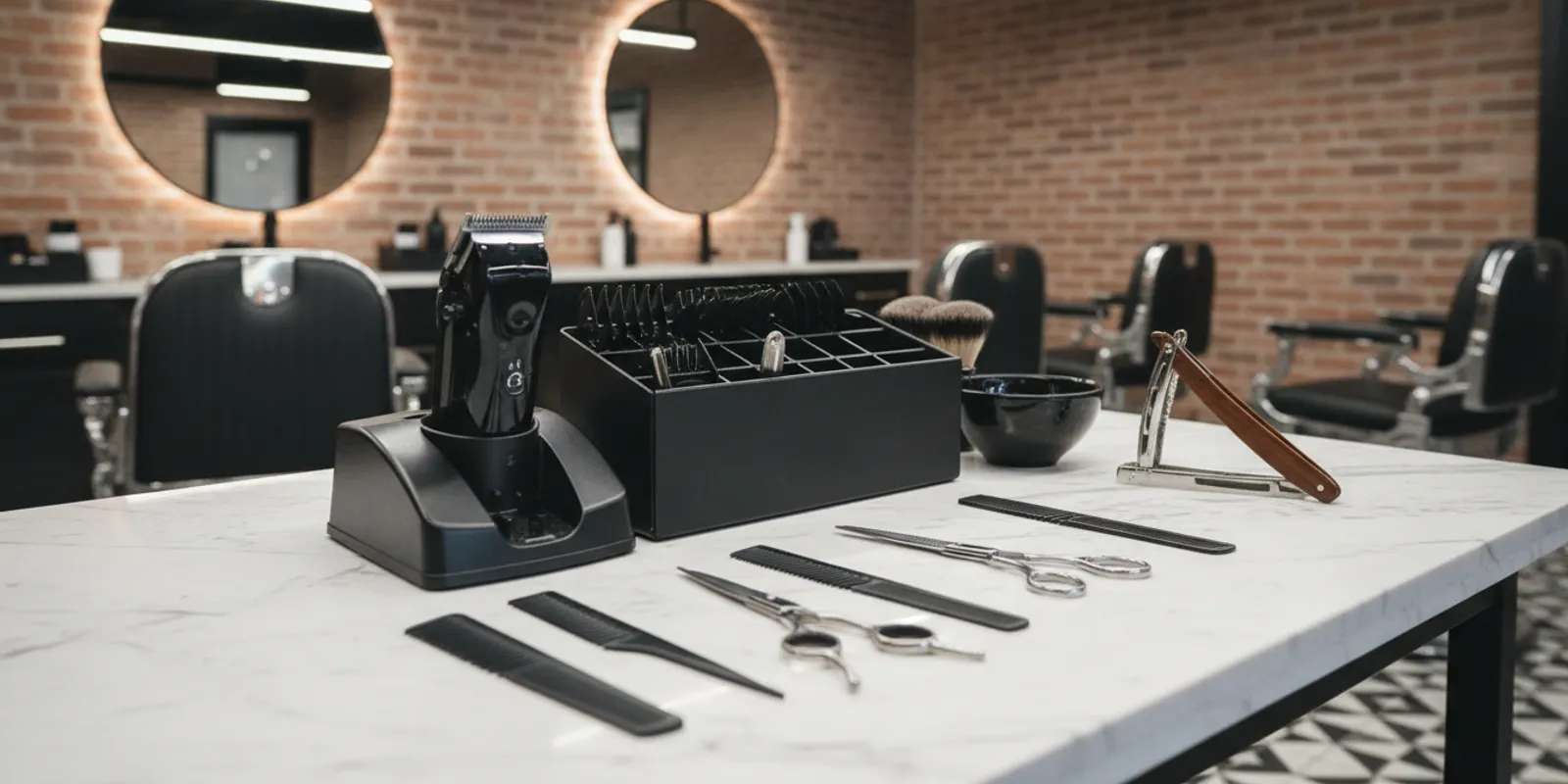
Barber station organization is the deliberate placement of tools, products, and sanitation supplies so a barber can work efficiently without crowding the counter or mixing clean and used items. In a high-volume Las Vegas shop, a repeatable setup makes each service easier to start, reset, and hand off. The goal is not a perfectly styled display; it is a station that supports the work.
Call The Barber Company at (702) 900-9972 for station supplies and shop support.
What does an efficient barber station need to do?
An efficient station keeps the tools for the current service within easy reach, protects clean items from used ones, and gives every supply a predictable home. It should also leave room to work and make a between-client reset straightforward. Organize around those outcomes first; choose containers and accessories only after you know what needs to fit.
A station has to support several tasks at once: tool selection, cutting, detail work, product application, cleanup, and preparation for the next client. Organization is successful when a barber can find a comb by touch, return a clipper to its safe place, and see which items still need attention without stopping to search.
Start by separating the station into three working zones:
- Active-use zone: The small area closest to your dominant hand for the tools used repeatedly during the current cut.
- Clean reserve zone: A protected spot for clean combs, guards, neck strips, and other ready-to-use items.
- Used-item and reset zone: A clearly separate place for used tools and waste as they leave service. Follow the product labels and your applicable sanitation procedures for handling and disinfection.
These zones do not need to be large or complicated. The distinction matters more than the container. If a used comb can land in the clean-tool cup by accident, the station layout is asking for a mistake. If the next clean tool is hidden behind styling products, the layout adds friction to every service.
How should you map the station before buying organizers?
Map the station by observing the work rather than starting with a shopping list. Note what you reach for, where you put it back, and which items migrate across the counter during a service. That short audit reveals whether the real problem is limited storage, poor placement, excess inventory, or a workflow that needs clearer separation.
For one representative shift, pay attention to your most-used tools and the moments when you pause. Is the clipper cord crossing the cutting area? Do guards end up in a pile? Do you reach across the client for a product? Does a clean comb get set beside a used one because there is no separate landing place? Record repeated interruptions, not one-off exceptions.
- Clear the work surface. Remove items that do not support the services you perform that day. Wipe the counter according to your shop’s routine before testing a new arrangement.
- Sort by task. Group cutting tools, detail tools, combs and brushes, styling products, and sanitation supplies. Keep things used together in a sensible relationship, but maintain the separation required for clean and used tools.
- Mark the reach pattern. Identify which hand performs the most precise work and which hand retrieves tools. Put frequent-use items in easy reach without forcing the working hand to cross the cutting area.
- Test one layout. Work through a service with a small set of tools. Notice collisions, tangles, blocked access, and unsafe placements before purchasing permanent storage.
- Set a home for each item. If an item has no obvious return spot, it will probably drift. Assign a location that matches its size, use, and cleaning needs.
This is also a useful point to review the equipment itself. A clipper that is waiting for repair or a tool no one uses should not occupy the prime area at the front of the station. For care and troubleshooting, consult the barber clipper maintenance guide and the clipper storage guide.
Build a three-zone layout that fits your station
A practical station layout uses a primary work zone, a clean-supply zone, and a separate used-item or cleanup zone. The exact left-to-right arrangement depends on the station and the barber’s handedness, but the same principle holds: frequent tools stay accessible, clean reserves remain protected, and items leaving service do not cross back into the clean area.
Primary work zone: Reserve the nearest, easiest-to-reach area for the tools you use throughout the service. Keep only a manageable working set here. Clippers and trimmers need stable resting places where blades will not strike hard surfaces and cords will not snag. Combs or shears can sit in a dedicated organizer rather than in an unstable stack.
Clean-supply zone: Keep clean replacement tools, guards, neck strips, and other ready supplies in a spot that is easy to distinguish from used items. Avoid placing clean items directly beside a sink splash area, waste, or products that can leak. Keep product containers upright and grouped so you can identify what you need at a glance.
Used-item zone: Give tools that have been used a separate, obvious destination. A designated tray or container can help prevent a used item from returning to the clean tool holder by mistake. The container is not a substitute for the required cleaning and disinfection process; it is a workflow cue that marks what needs attention.
The essential barber tools guide can help you think through the working set for your services. For products and equipment across categories, browse the The Barber Company store and its professional barber brands. The point is to select storage for the tools you actually use, rather than fill a counter with accessories.
Choose storage based on the tool, not the trend
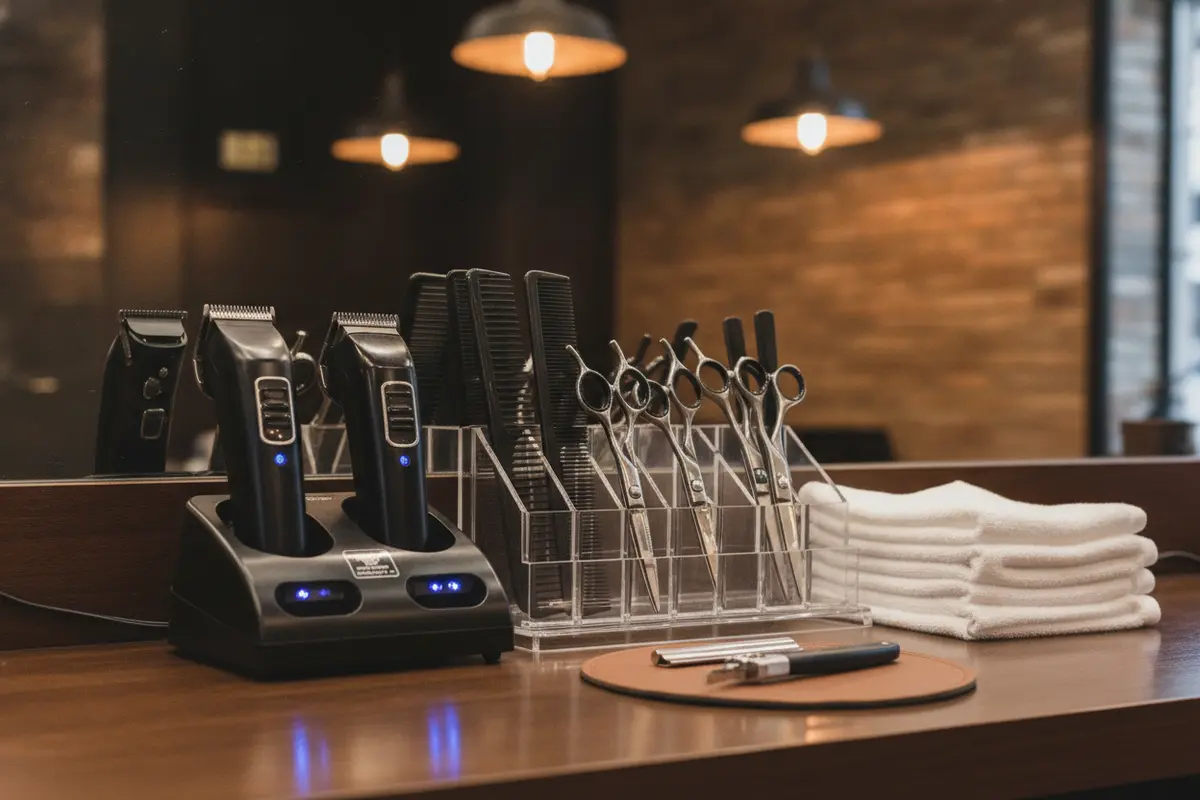
Choose a holder or organizer for the tool’s shape, frequency of use, and cleaning routine. A good organizer reduces clutter while keeping tools visible and easy to return. Before buying, check that it fits the counter, does not block the mirror or work area, and keeps items stable when a barber reaches for the next tool.
A station organizer is useful for smaller hand tools that otherwise collect in a pile. The Barber Station Organizer is a proprietary Barber Company product made in Las Vegas; use its compartments to create consistent homes for the items that fit safely. Do not force oversized tools into a slot or crowd sharp edges together. If your current mix includes long combs, guards, shears, and brushes, sort those items and assess the fit before assigning each section.
A razor needs its own secure location. The Professional Razor Holder – Ultra Exposed can be part of that arrangement, with the holder positioned so the razor is not loose among combs or exposed where a hand can brush against it. Follow the maker’s instructions and your shop’s safe handling routine. Keep blades and razors managed in a way that protects both the barber and anyone else working at the station.
For clippers, think about resting position, cord movement, and heat from charging equipment. A tool should not teeter on the edge of the counter or sit where hair and liquid can collect around it. Keep the charging cable routed away from the cutting path and avoid stacking equipment. If you are selecting tools or replacing a unit, compare the available professional hair clippers, including options from Wahl, Andis, Gamma+, StyleCraft, and BaByliss Pro.
Use storage that can be cleaned and maintained according to its material and the products used in the shop. Avoid containers with corners that trap hair or surfaces that are difficult to wipe. Do not assume a holder disinfects a tool; it only provides a place to store it. Match your cleaning products and method to the item and follow their labels. The barber tool disinfection selection guide and Barbicide use guide offer more detail on sanitation workflow.
See the Barber Station Organizer for a cleaner, more repeatable tool layout.
Which tools belong within immediate reach?
Keep only the tools needed repeatedly for the current service in the immediate reach zone. For many cuts, that may include a clipper, trimmer, a small selection of guards, combs, and shears. The exact set depends on the barber’s technique and service menu. Store backups and occasional-use items nearby, but do not let them crowd the active work surface.
Use frequency as the first sorting rule, then consider safety and cleanliness. The next tool you need should be reachable without reaching over the client, leaning across a hot tool, or moving a clean supply out of the way. Items with blades need stable, deliberate storage. Bottles and powders should stay upright and away from the edge. Cords should not cross the area where hands and tools move.
Keep guards together and in a consistent order. If your shop uses a preferred sequence, return guards to that order after service so the next cut starts without a search. Avoid putting every attachment on the counter just because it is available. Keep the working selection accessible and the rest in designated storage.
Products used during styling should be easy to identify without taking over the counter. Separate them from cutting tools and avoid placing containers where they can drip onto electrical equipment. The Barber Company makes locally produced styling and organizing items; the Barber Works Styling Powder is one option to review alongside the station’s other products. Select products that suit your process and verify the label and instructions for use.
Compare common station storage choices
There is no single organizer that fits every station. Match the storage format to the task: a compact holder for frequently used hand tools, a protected container for clean reserve items, and a separate destination for used tools awaiting the next sanitation step. The table below compares common options by function and the trade-offs to check before adopting one.
| Storage option | Best use | What to check | Common drawback |
|---|---|---|---|
| Countertop multi-slot organizer | Combs, brushes, guards, and selected hand tools | Stable base, useful slot sizes, wipeable surfaces | Can become a catch-all if items lack assigned places |
| Dedicated razor holder | Keeping a razor in a consistent, deliberate location | Secure fit, safe reach position, cleaning instructions | Poor placement can put a sharp tool in the path of a hand |
| Clean reserve container | Ready-to-use supplies and clean replacement tools | Clear separation from used items and splash or debris | Overfilling makes clean items difficult to identify |
| Used-tool tray or container | Temporary staging before the required cleaning process | Easy to distinguish and clean; placed away from clean stock | Can be mistaken for storage if the workflow is not clear |
| Drawer or cabinet | Backups, occasional-use items, and extra stock | Labels, accessibility, and orderly replenishment | Frequently used tools disappear from view or become buried |
Use the table as a decision aid, not a requirement to add every storage type. A compact station may need only an organizer and clearly separate clean and used destinations. A larger shop may benefit from labeled drawer storage for backup supplies. Avoid adding a new holder until you can name the problem it solves.
How can you make between-client resets faster?
A fast reset comes from making the same steps in the same order, with each item moving in one direction through the process. Put used items in their designated destination, clear waste, clean the work area, and replenish the ready supplies. Follow applicable regulations, product labels, and your shop’s sanitation procedure; a tidy counter alone does not establish that tools are properly disinfected.
- Remove used tools from the active zone. Place them in the designated used-item area rather than setting them among clean supplies.
- Clear disposable waste. Dispose of single-use materials as required by your shop’s procedure, then check the counter and floor around the station.
- Clean and disinfect tools as directed. Follow the product label and tool manufacturer’s instructions, including preparation, contact time, rinsing, and drying where applicable. Do not improvise a concentration or shorten a labeled process.
- Reset the surface. Clean the counter and the surfaces touched during the service using products appropriate for them. Keep liquid away from electrical equipment.
- Restock the minimum ready set. Replace the tools and supplies needed for the next service, not every item in the shop’s inventory.
- Check the next start point. Confirm that the clipper, guards, combs, and other expected tools are in their assigned places before inviting the next client to the station.
Make the reset sequence visible with a short station checklist if several barbers share the space. A simple reminder can cover used tools, waste, wipe-down, replenishment, and a final check. Keep the checklist brief enough that people will use it. For additional background on safe work practices, consult current OSHA resources and follow the requirements that apply to your workplace.
Sanitation details can vary by tool and product. Use the label, not a guess, to determine how a disinfectant is applied and how long it must remain in contact. Do not put a tool back in the ready zone because it looks clean. For a deeper look at tool care, review the guides to cleaning professional clippers and oiling clipper blades.
Improve reach, posture, and movement
Ergonomic station organization reduces avoidable reaching, twisting, and searching by keeping frequent tools close and placing supplies where they can be accessed without obstructing the service. Adjust the station to the barber and the client rather than forcing every person into one fixed arrangement. Make small changes, test them through a shift, and keep the layout that feels controlled and repeatable.
Start with the work surface. Arrange the tools so the barber’s working hand can pick up and return them without crossing over the client’s head or reaching behind the body. Put heavier or bulky items where they are stable and easy to retrieve. Store rarely used supplies farther away, but not in a location that requires awkward stretching or repeated bending.
Check mirror and counter access. Organizers should not block sightlines or require a barber to lean around them. Keep the edge of the work surface clear enough for safe tool placement. If the chair or client position changes during a service, make sure cords and containers do not become trip or snag points.
Use a rolling cart only if it improves access and can be parked consistently. A cart that drifts, blocks circulation, or adds another surface to clean may make the station less efficient. Assign zones on the cart and keep its frequently used contents limited. In shared shops, return it to a marked location so it does not interfere with another barber’s path.
Observe discomfort and repeated awkward motion as signals to reassess the setup, not as problems to ignore. For broader workplace guidance, consult OSHA resources and your applicable local requirements. This article is general organizational guidance, not a substitute for an ergonomic assessment or occupational safety advice specific to a workplace.
Keep a shared station consistent across barbers
A shared station works best when every barber can recognize the same zones and return tools to the same homes. Agree on what stays at the station, what belongs to an individual kit, and where used tools go. Consistency helps a barber take over without searching and makes it easier to notice when something is missing, damaged, or due for attention.
Set a small number of clear standards: identify the active-use area, define the clean reserve location, label drawers or bins for backup items, and agree on where used tools wait. Avoid imposing a complicated diagram that does not fit how the team cuts. Ask barbers who use the station to test the setup and flag any awkward reach or unsafe placement.
Keep consumable stock at a practical level. Too little can interrupt service; too much can crowd the station and hide what is available. Decide who checks replenishment and when. For professional purchasing and account questions, The Barber Company serves both retail customers and barber businesses; see its wholesale barber supply information or learn about The Barber Company.
Build a replenishment routine without overstocking
Replenish the station from a defined reserve instead of opening extra packages whenever a supply looks low. Keep a compact par level for frequently used consumables, review it at a predictable time, and store backup stock away from the immediate work surface. The right amount depends on service volume, storage, and how quickly your shop can restock.
Choose one person or shift handoff to check the routine, while making each barber responsible for resetting the tools they use. This avoids the assumption that someone else will replace neck strips, guards, or other basics. Use a short list of minimums that matter for the next service, and record items that need replenishment rather than filling every drawer with duplicates.
For Las Vegas valley customers, The Barber Company notes free local delivery on orders over $50. Check the current details and service area through the local delivery information. To ask about wholesale supply, stock, or delivery, use the contact page. Keep purchasing plans grounded in actual usage, not an assumed discount or a promise of specific stock.
Know when organization is not enough
Organization cannot repair a tool, correct a damaged blade, or resolve a sanitation issue. If an item pulls hair, runs abnormally, has a damaged cord, or no longer performs consistently, take it out of service as appropriate and assess the underlying problem. A labeled repair area away from the active station can stop questionable equipment from returning to use by mistake.
The Barber Company offers technical services including clipper repair, blade sharpening, and precision zero gapping. If a tool needs attention, review its in-store clipper repair service, repair form, and zero-gapping service. These links explain the available service paths; contact the shop to confirm current details and suitability for a specific tool.
Keep repair items and tools awaiting service clearly marked and separate from ready-to-use equipment. Do not let an organizer disguise a maintenance problem by giving a faulty tool a tidy place on the counter. For a broader buying and service overview, read the Las Vegas barber supplies guide.
Call The Barber Company at (702) 900-9972 to ask about organizers, razor holders, and shop supplies.
Frequently Asked Questions
Use these answers as a starting point for adapting the setup to your station. Keep the layout simple, make clean and used items easy to distinguish, and follow tool and product instructions for sanitation and maintenance.
What should be on a barber station countertop?
Keep the countertop to the active tools and supplies needed for the current service, plus clearly separated clean and used-item destinations. Store backup stock and occasional-use items elsewhere. A clear surface is easier to wipe and makes it easier to notice misplaced or damaged tools.
How do I organize clippers and guards?
Give clippers a stable resting place that keeps blades and cords clear of the cutting area. Keep guards together in a consistent order, with the working selection easy to reach and backups stored nearby. Check equipment instructions for charging and care, and do not stack hot or powered tools.
How can I prevent clean tools from mixing with used tools?
Assign visually distinct, separate places for clean ready-to-use tools and tools that have been used. Move an item into the used-item destination immediately after service, then follow your shop’s approved cleaning and disinfection process. A holder or tray supports organization but does not replace sanitation.
What is the best organizer for a barber station?
The best choice is the one that fits the tools you use, stays stable, is easy to clean, and does not crowd your working area. Count and sort your tools first. Consider a multi-slot organizer for hand tools and a dedicated, safe holder for a razor rather than forcing every item into one container.
How often should I reset a barber station?
Reset the station between clients and complete any additional shop cleaning and replenishment checks required by your workflow and applicable rules. Use the same sequence each time, and follow the labels on cleaning and disinfecting products. At the end of a shift, review tools, surfaces, and stock so the next service starts with a ready station.
Make the setup yours, then keep it consistent
Start with the tools you reach for most, divide clean supplies from used items, and give every frequently used tool a stable home. Test the layout through real services and adjust anything that creates extra reaching, clutter, or uncertainty. A simple station that the whole team can reset is more useful than a complicated arrangement no one maintains.
Visit The Barber Company to explore professional barber supplies and locally made Barber Company products. Find updates on Instagram at @barbercompanylv, or contact the shop at (702) 900-9972. The listed business address is 4700 Meadows Ln #110, Las Vegas, NV 89107.