
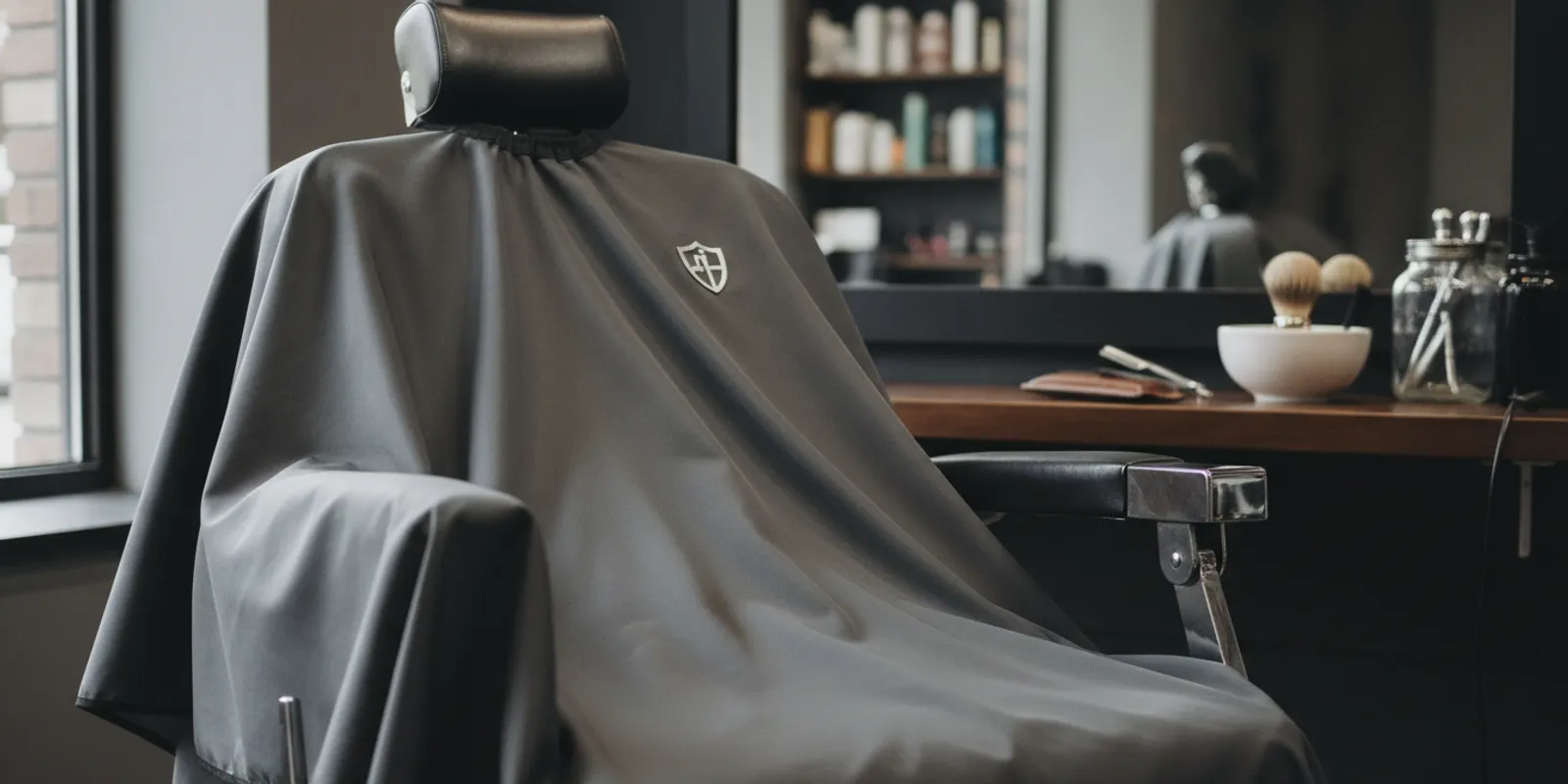
Custom logo barber capes wholesale orders are easier to evaluate when the shop defines the cape’s job before choosing artwork. Fabric, fit, closure, print position, and care all affect how the cape works during a service and how the logo appears. Use this guide to build a clear request and compare supplier answers without assuming that every customization option is available.
Ask The Barber Company about product options
What should a shop specify before ordering custom capes?
Start with the practical requirements of the service, then write down the logo and ordering details. A useful specification covers intended use, cape dimensions, material, closure, artwork file, placement, color, quantity, care instructions, approval, timing, and delivery. Confirm which options the supplier can provide before treating a mockup or estimate as a final production commitment. Separate must-have requirements from preferences. Full coverage, a secure neck opening, and a cleaning method that fits the shop’s routine may be essential. A particular color or oversized back mark may be negotiable.
Be precise about who will wear the cape and what it must cover. A shop cape for repeated chair use has different priorities from a lightweight option for a mobile barber. Describe the work plainly: standard cuts, shampoo services, beard work, or travel between appointments. Ask whether the cape is intended for adults, children, or a range of sizes, and confirm dimensions rather than relying on a generic label. If a detail is unknown, label it as a question instead of leaving room for an assumption.
- Use case and preferred coverage.
- Material and care requirements.
- Closure preference and adjustment range.
- Logo file type, colors, size, and placement.
- Number of capes and any size or color mix.
- Approval process, production timing, shipping or pickup, and order terms.
Write the request so another person at the shop could review it without needing a separate conversation. This record becomes useful when the design is reordered, when stations are added, or when a quote is revised. It also gives the supplier a better chance to identify an incompatible request before production begins.
How do fabric and construction affect daily use?
Fabric and construction determine how a cape drapes, handles moisture, and stands up to repeated cleaning. Ask for the exact material description and care guidance for the specific item, then compare those details against your services. Do not choose by a product name alone: confirm the material, dimensions, finish, and cleaning limits for the cape being quoted.
For a busy shop, the cape needs to cover the client and stay manageable during the service. Check width and length against the chair and the clients you serve. A cape that is too short can leave clothing exposed; excess fabric may catch on the chair or become awkward to handle. Request measurements and, where available, a sample or product demonstration before committing to a larger custom order.
Ask whether the fabric is water resistant, breathable, or intended for chemical services, and get those claims in writing. These are not interchangeable properties. If the cape will be used during color or chemical work, confirm whether the material is suitable and how the manufacturer says it should be cleaned. Avoid assuming that a printed or coated surface can tolerate every disinfectant or laundering method.
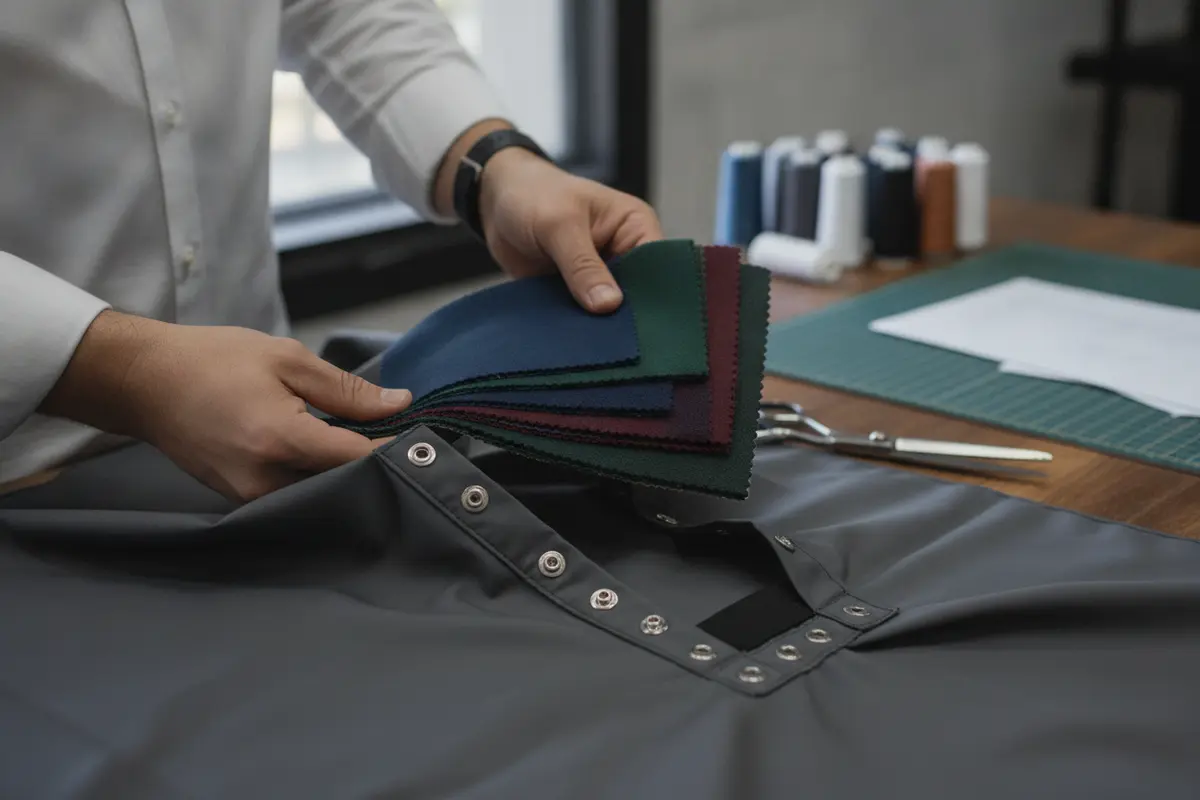
Inspect seams, edges, and the neck opening as well as the main fabric. Reinforced seams can matter in frequent use; a comfortable neck closure helps secure the cape without pinching. Ask how the closure adjusts for different clients and whether neck strips are still needed. For a broader starting point on outfitting a shop, compare this guide with the barbershop equipment checklist and The Barber Company’s barber supply overview.
Think about storage as well as cutting. A cape that is easy to fold, hang, or sort by station is less likely to become mixed with used linens. Ask how the logo area behaves after folding and whether the decoration can snag on hooks or neighboring garments. Storage should be part of the order conversation when several stations share one design.
Choose the logo method and placement deliberately
The decoration method and position should be selected together because the surface, size, and use of the cape affect the finished result. Confirm the available method, color limits, artwork requirements, and expected durability for the chosen material. Then review a proof that shows the mark at its intended scale on the actual cape.
A logo must remain legible on the cape’s actual surface and at the distance clients see it. Ask what decoration methods are available for the chosen material, how many colors are supported, and whether the design needs to be simplified. A detailed image that looks good on a screen may lose fine lines when reduced or reproduced on fabric.
Send clean, high-resolution artwork in the file format requested by the supplier. Include a vector version when available, along with brand color references and a note about elements that must not change. Tell the supplier whether the artwork includes gradients, small lettering, thin outlines, or a background. Request a proof that shows approximate scale and placement on a cape, not only the logo by itself.
Placement changes visibility and practicality. A chest-level mark may be visible in a chair, while a large back mark may be more prominent in photographs. Consider the cape when it is fastened and draped over a seated client. Ask for finished dimensions and position relative to the neckline or edge. Keep critical details away from folds, seams, and areas hidden by the client or chair. Approve the proof only after checking spelling, proportions, colors, placement, and the intended number of logo applications. Keep the approved proof and written specifications with the order record.
Use a repeatable review sequence so a busy team does not approve the wrong version. First match the business name and artwork to the submitted master file. Next, inspect the logo at the actual proposed size rather than zoomed in on a screen. Then review the cape color behind the mark, check that the position is measured from a fixed reference such as the neckline, and confirm whether each cape receives one mark or more. If the artwork has multiple colors, compare the proof against the shop’s supplied color references and ask how the vendor handles colors that cannot be reproduced exactly.
Keep version control simple: label each proof with a date or revision identifier and write “approved” only on the version that should go to production. If the supplier revises artwork after approval, review that revision again instead of relying on the previous sign-off. This is especially useful when several owners, managers, or locations contribute feedback. One final approver prevents contradictory instructions from reaching production and gives the shop a clear reference if it places a repeat order later.
Compare the main choices before requesting a quote
There is no single best custom cape for every shop. Compare options using the same questions so a low-cost quote does not obscure differences in material, decoration, or order terms. Confirm availability and details for the actual product.
| Decision | Option A | Option B | What to confirm |
|---|---|---|---|
| Use | Routine haircut work | Multiple service types | Coverage and material suitability |
| Decoration | One-color mark | Multi-color artwork | Method, color limits, and proof |
| Position | Small chest placement | Larger back placement | Dimensions and visibility when worn |
| Order | Small trial order | Shop-wide order | Minimum, mix options, timing, and terms |
| Care | Routine cleaning | Special service exposure | Manufacturer instructions and approved products |
Use the table during supplier conversations rather than treating it as a scorecard with automatic winners. A mobile barber may value compact storage and a manageable quantity, while a multi-chair shop may prioritize consistent sizing and repeat-order compatibility. The right comparison depends on how the capes will be used, cleaned, stored, and replaced.
How can you request a useful wholesale quote?
A useful quote request gives the supplier enough information to compare like with like. Include the cape style or product reference, quantity, colors, customization request, artwork status, destination, and desired timing. Ask about minimum order quantity, setup or artwork charges, proof revisions, shipping or pickup arrangements, and payment terms. Request those conditions in writing before approving production.
Wholesale terms and custom-order availability are supplier-specific. Do not assume that a retail listing includes personalization or that a bulk price covers artwork preparation. The New York State Department of Taxation and Finance explains tax treatment for barber shops and related supplies in its guidance on beauty salons, barber shops, and hair restoration services; use the rules of the jurisdiction where your business operates for tax questions.
For shops building a broader replenishment plan, The Barber Company offers wholesale and retail access. Ask directly about bulk options through the contact page. Browse available professional brands, including Wahl, Andis, Gamma+, Stylecraft, and BaByliss Pro.
Send the same request to each supplier. Ask them to identify what is included, what remains an estimate, and which details require a sample or proof. This makes responses easier to review and reduces the risk of selecting a quote that appears lower only because setup, artwork, delivery, or other order elements were left out.
Plan quantities and delivery around actual use
Quantity planning should connect the order to station count, service volume, cleaning routine, and backup needs. Count capes in use at peak periods, capes being cleaned, and spares you want available. Confirm whether different sizes, colors, or logo versions count toward one minimum order.
For a new design, ask whether a smaller initial run is possible before outfitting every station. A trial helps the team assess fit, visibility, comfort, and care in real working conditions. It can also expose a proof issue before a larger order is made. If a minimum makes a trial impractical, ask about a sample or another way to inspect the product and proof.
Discuss delivery or pickup timing early, especially if the capes are needed for a launch or rebrand. The Barber Company describes free local delivery on orders over $50 throughout the Las Vegas valley; confirm eligibility, timing, and order details directly. See local delivery information or contact the team. The storefront also serves retail customers who do not hold a professional license, while professional accounts can inquire about wholesale options.
Build a receiving check before the shipment arrives. Assign someone to compare count, colors, dimensions, closure, and logo placement against the approved record. Photograph any concern while items are grouped together and contact the supplier with order details. A prompt check is more useful than discovering a mismatch weeks later.
Common order mistakes to prevent
Most avoidable problems arise from vague specifications, incomplete quote comparisons, or an unapproved proof. Catch these issues before production begins:
- Choosing from a mockup alone. Confirm material, dimensions, and closure separately.
- Submitting low-resolution artwork. Ask for required file type and resolution; approve a rendered proof.
- Leaving placement open. Specify dimensions and location relative to a cape feature.
- Assuming care compatibility. Follow maker instructions and verify product compatibility.
- Ordering too few or too many. Estimate active, cleaning, and backup needs.
- Relying on an oral promise. Keep quote, customization details, proof, timing, and terms in writing.
If branded capes are part of a larger shop refresh, consider how they fit alongside stations, tools, and maintenance needs. Review The Barber Company’s background, see events and community updates, and use the guide to clean professional barber clippers. For equipment support, see clipper repair in Las Vegas and zero gapping service.
When the order is for a new shop, connect the cape decision to the opening checklist. The same conversation can identify missing neck strips, storage space, cleaning supplies, or replacement planning. For an established shop, record the final specification so a future reorder does not depend on memory or a forgotten message thread.
Contact The Barber Company to discuss your order
Frequently Asked Questions
Product availability, decoration methods, minimums, and order terms can differ, so confirm details for the exact cape and quantity before production.
Can any barber cape be customized with a logo?
Not necessarily. Customization depends on the product material and the supplier’s available decoration methods. Confirm whether the particular cape can be personalized and request a proof before placing the order.
What artwork should I send?
Ask the supplier for its required file type and resolution. A clean, high-resolution or vector file is a good starting point. Include color references and review a proof at the intended size and position.
Should I choose a large or small logo?
Choose based on visibility when the cape is fastened and draped over a client. Review a mockup at realistic scale and avoid important details across folds, seams, or covered areas.
What should I confirm before approving a wholesale order?
Confirm product details, quantity, customization method, proof, minimums, charges, timing, delivery or pickup, and payment terms. Keep final specifications and approved artwork in writing.
Visit The Barber Company
The Barber Company serves professional wholesale accounts and retail customers, so you can ask about product availability, bulk ordering, delivery, and related barber supplies in one conversation. Visit The Barber Company online or contact the team. The store is at 4700 Meadows Ln #110, Las Vegas, NV 89107; call (702) 900-9972. Follow @barbercompanylv on Instagram for company updates, and confirm custom cape options and order terms directly before making production plans.