
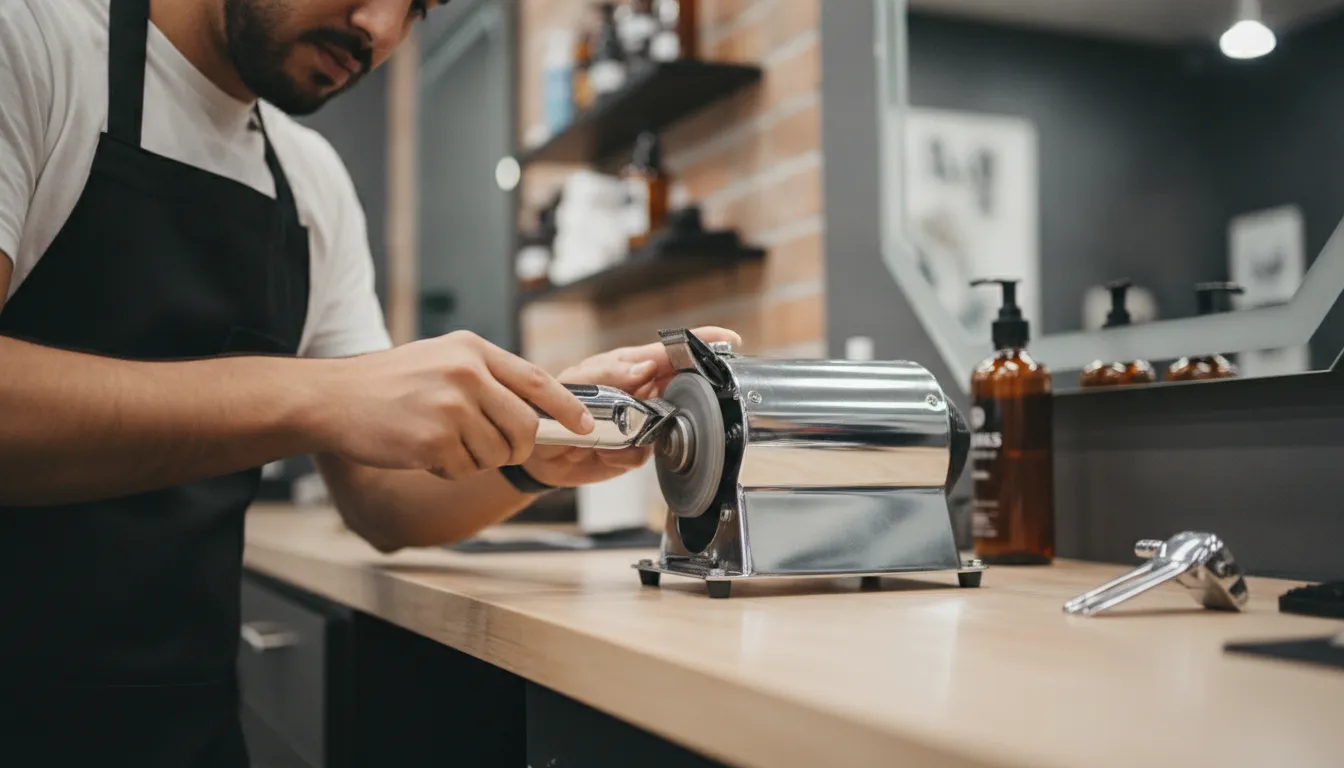
A clipper that pulls, heats up, or leaves an uneven fade may not need immediate replacement. The problem can be a dull edge, incorrect blade tension, misalignment, or damage from removing too much material during sharpening. Those details matter because professional clipper blades are manufactured to tight tolerances, and a quick home fix can permanently change their geometry. Before touching a stone or abrasive, review this clipper blade maintenance guide and compare the risks with the actual condition of your blade.
Call The Barber Company at (702) 900-9972 for precision blade sharpening in Las Vegas.
You can sharpen clipper blades at home in limited cases. But the safer answer for professional equipment is to use a qualified service when the edge, alignment, coating, or blade material is uncertain. A professional process restores the factory angle, checks cutting performance, and can address related zero gapping or motor issues.
The right decision starts with identifying what your blade needs, not simply making it sharper. That distinction becomes especially important when the blade is ceramic, visibly damaged, or still pulling after cleaning and oiling.
Can You Really Sharpen Clipper Blades at Home?
Yes, you can attempt to sharpen some steel clipper blades at home, especially for a light touch-up, but the margin for error is narrow. A stone or DIY kit may restore a little bite, while uneven pressure, excess material removal, or the wrong method can permanently change the blade geometry. Professional tolerances are difficult to reproduce without dedicated equipment.
Home sharpening is technically possible because a clipper blade has a cutting edge that can be abraded and refined. The practical question is whether you can remove material evenly while preserving the factory angle, flatness, alignment, and clearance between the moving and stationary blades. Those details determine whether the clipper cuts cleanly or pulls, heats up, and leaves an uneven finish.
- Simple touch-ups may be manageable: A suitable sharpening stone or purpose-built kit can help with minor edge wear on some steel blades when used carefully.
- Precision is the limiting factor: Consistent pressure and angle matter across the entire blade. A small variation can create an uneven edge or remove more material from one side.
- Geometry is easy to damage: DIY sharpening can create misalignment, excessive beveling, or an edge that no longer mates correctly with the opposing blade. The result may require replacement rather than another touch-up.
- Material changes the method: Ceramic blades are not ordinary steel blades. They require specialized equipment and expertise, so conventional metal sharpening methods are not appropriate.
Why manufacturer tolerances matter
Professional clipper blades are manufactured to specific tolerances, but those tolerances are rarely respected in a home setup. Most DIY kits also cannot reproduce the hollow-grinding precision of professional machinery. Even if the edge looks bright and sharp, the blade may still cut poorly because its angle or mating surface has changed. For a barber, that can mean pulling hair, excess friction, and avoidable motor strain.
Before attempting any sharpening, identify whether the blade is steel or ceramic and inspect the cause of poor performance. Hair packed between the blades, inadequate oil, incorrect tension, or misalignment can mimic dullness. The clipper blade maintenance guide covers those checks before you remove material from the edge.
For an inexpensive steel blade with minor wear, a cautious touch-up may be a reasonable learning project. For a premium blade, a ceramic assembly, a visibly damaged edge, or equipment used on paying clients, precision sharpening is the safer choice. The goal is not merely to make the edge feel sharp. It is to restore a consistent cutting system without compromising the blade or clipper.
DIY Sharpening Methods: What Actually Works and What Does Not
Answer: DIY sharpening can refresh a mildly dull steel blade, but it cannot reliably restore damaged geometry or factory-level precision. A fine stone is the most controlled home option; sandpaper may provide a limited edge refresh. While aluminum foil is best treated as a temporary experiment, not a sharpening system.
Sharpening stones: the most controlled DIY option
A sharpening stone gives you the best chance of making a minor correction because it removes material more evenly than improvised methods. Common guidance recommends a two-stage progression:
- 4000 grit: Use for carefully refining a dull edge.
- 8000 grit: Use for polishing after the rougher pass.
That grit sequence does not make the process foolproof. The blade still has to stay flat and maintain its original angle throughout the pass. Remove too much material, rock the blade, or sharpen the cutter and comb blades inconsistently, and the result can be pulling, uneven cutting, or premature wear. A stone is useful for a minor edge refresh on compatible steel blades, not for correcting a bent, chipped, badly worn, or incorrectly assembled blade.
Fine-grit sandpaper: workable, but easy to overdo
Fine-grit sandpaper in the 1000- to 2000-grit range can smooth a lightly dulled surface when it is secured to a genuinely flat backing. It is less forgiving than a proper stone because the paper can flex, catch an edge, or remove material unevenly. Use it only as a light maintenance option, and inspect both blade surfaces closely before reassembly.
Why aluminum foil is not real sharpening
Running clipper parts across folded aluminum foil is often described as a quick touch-up. At most, it may remove a small amount of residue or create a short-lived improvement in how an already serviceable edge feels. It does not restore the blade angle, correct alignment, or rebuild a worn cutting surface. If the clipper is pulling hair or leaving inconsistent results, foil is unlikely to solve the underlying problem.
The central limitation is precision. Most home kits cannot replicate the hollow-grinding finish produced by professional sharpening machinery. They also cannot reliably account for the manufacturing tolerances of professional blades. Ceramic blades are a separate case and should not be treated with conventional steel-blade methods. For minor steel-blade maintenance, DIY may be reasonable; for damaged geometry or professional-grade performance, use a qualified sharpening service.
The Risks of DIY Blade Sharpening: What Can Go Wrong
Sharpening clipper blades at home can create more damage than it fixes when the edge, geometry, heat, or alignment is not controlled. A blade may feel sharper briefly while cutting unevenly, pulling hair, overheating the clipper, or placing extra load on its motor. The goal is not to discourage careful maintenance, but to separate routine cleaning and oiling from precision metalwork.
Professional clipper blades are manufactured to specific angles, clearances, and tolerances. Removing material with an improvised stone, wheel, or abrasive can change those relationships permanently. The most common risks include:
- Damaged edge geometry: Uneven pressure or an inconsistent angle can produce a rounded, jagged, or uneven cutting edge. Excessive material removal may permanently alter the blade geometry, leaving replacement as the practical solution. The Barber Company identifies this as a common consequence of improper DIY sharpening.
- Manufacturing tolerances no longer match: Professional blades are designed around precise tolerances that home methods rarely reproduce. Even a small change can affect how the moving and stationary blades meet, reducing cutting performance.
- Misalignment and tension problems: Sharpening does not correct a blade that is mounted incorrectly or tensioned unevenly. When alignment and tension are ignored, the clipper can pull hair and generate more heat even if the edge appears sharp.
- Heat damage: Friction from a blunt or poorly finished edge generates heat. Excessive heat can warp blade metal over time, creating a cycle in which the blade runs hotter and performs less consistently.
- Extra motor strain: A rough edge or poor blade fit increases resistance through the hair. Forcing the clipper to work through that resistance can accelerate motor wear and contribute to faster equipment breakdown.
- Wrong method for ceramic blades: Ceramic blades are not interchangeable with standard steel blades from a sharpening standpoint. Conventional steel sharpening methods can damage them. Ceramic components require specialized equipment and expertise.
If the blade is pulling after cleaning and oiling, heating unusually fast, or leaving an uneven finish, stop forcing the clipper through a service. Review the clipper blade maintenance guide for routine care, then use a professional blade sharpening service when the edge, alignment, or blade material needs precision work.
What Professional Blade Sharpening Actually Does (That DIY Cannot)
Professional blade sharpening is a high-precision service that restores the blade’s factory-standard angle, refines the edge with hollow-ground machinery, and verifies cutting performance before return. It can also address the alignment, zero-gapping, and motor issues that a home sharpening kit cannot diagnose or correct reliably.
A clipper blade is a matched cutting system, not simply a flat piece of metal that becomes sharper when rubbed against an abrasive surface. The cutting angle, edge geometry, blade tension, and alignment must work together. Removing too much material or changing the angle can leave an edge that feels sharp but pulls hair, creates excess friction, or produces an uneven fade.
Restoring the angle and edge geometry
Professional sharpening restores the factory-standard blade angle, preserving the geometry the manufacturer designed for clean, efficient cutting. That controlled finish is difficult to reproduce with a stone, sandpaper, or general-purpose sharpening tool. Most DIY kits also lack the hollow-grinding precision machinery used to create a consistent professional edge. Instead of chasing a visibly sharp edge, the technician works toward the correct relationship between the moving and fixed blades.
- Factory-standard angle: The cutting edge is restored to the intended angle rather than reshaped by guesswork.
- Hollow-ground precision: Professional machinery provides a controlled finish that typical home kits cannot replicate.
- Material control: The process avoids unnecessary removal that can permanently alter blade geometry and force replacement.
Correcting the complete clipper, not just the blade
Sharpening alone does not solve every performance problem. The Barber Company also provides precision zero-gapping adjustments from 0.1mm to 0.4mm, helping set the blade relationship for the intended cutting result. If the clipper motor is struggling against resistance, motor repair may be necessary as well. These are equipment-level corrections that a home sharpening session does not provide.
Every professional sharpening process should finish with rigorous cutting-performance testing. Testing confirms that the blade performs to the required standard after sharpening, rather than assuming the job is complete because the edge looks different. This final check matters for barbers who need consistent, comfortable cutting through a full day of appointments.
For a controlled edge, precision adjustment, and equipment assessment in Las Vegas, use The Barber Company’s professional blade sharpening service. Pair the service with the broader clipper blade maintenance guide to protect the result between service visits.
Cost of Home Sharpening vs. Professional Sharpening: Is DIY Worth It?
The real cost of sharpening is not the fee for a kit or service. It is the total cost of ownership: equipment, time, downtime, blade life, and the risk of motor damage. If you sharpen clipper blades at home without controlling blade geometry, a professional service can be the lower-cost choice over the life of the tool.
| Cost factor | Home sharpening | Professional sharpening |
|---|---|---|
| Upfront expense | DIY kits, stones, abrasives, cleaning supplies, and replacement parts can add up before the blade is ready for service. | A service fee covers specialized equipment, the sharpening process, and performance checks without requiring you to buy the machinery. |
| Your time | Disassembly, setup, sharpening, cleaning, reassembly, alignment, and testing all take working time. | You hand off the blade and receive it back ready for use, preserving time for clients, shop operations, or travel between appointments. |
| Downtime | A learning curve, failed attempt, or uneven result can leave the clipper out of service longer than planned. | Efficient turnaround helps minimize downtime, so Las Vegas barbers can keep serving clients with less interruption. |
| Risk of replacement | Removing too much material or changing the geometry can permanently damage the blade and force replacement. | Controlled sharpening protects the blade’s intended geometry. The cost of replacing a damaged blade can exceed multiple professional sharpening sessions. |
| Motor and repair exposure | An uneven or blunt edge can increase resistance, heat, and motor strain, creating a larger repair problem. | Regular sharpening and maintenance reduce the frequency of full motor repairs by preventing avoidable resistance and wear. |
Look beyond the sharpening fee
A DIY method may appear economical when you compare only the first purchase. That calculation changes if the edge is uneven, the blade no longer aligns correctly, or the clipper begins pulling through hair. A damaged blade is not always recoverable, and replacement can cost more than several professional sharpening sessions.
There is also an operational cost. Time spent troubleshooting is time away from clients, while extended downtime can force schedule changes or interrupt a busy shop day. Professional sharpening is designed to minimize that interruption through efficient turnaround, rather than leaving you to repeat the process until the result is usable.
When professional service protects the rest of the clipper
Blade condition affects more than the cutting edge. A blunt or poorly finished blade makes the motor work against greater resistance, which can accelerate breakdown. Consistent maintenance, including sharpening and cleaning, acts as preventive care and can reduce the frequency of major motor repairs.
For a blade that has already been damaged, a professional assessment is more useful than another trial with a stone. The Barber Company’s professional blade sharpening service evaluates the cutting component as part of the equipment’s working system. Choose DIY for routine cleaning and inspection when you understand the limits. Choose professional sharpening when preserving blade life, reducing downtime, and protecting the clipper matter more than avoiding a service fee.
When to Maintain at Home and When to See a Professional in Las Vegas
Home maintenance should cover cleaning, disinfection, oiling, cooling, and routine inspection. Bring blades to a professional when they pull hair, heat up, show visible damage, or no longer cut evenly. For professional daily use, a sharpening and maintenance check every three to six months is a practical starting point; lighter home use can often go longer.
The right schedule depends on workload, blade condition, and how consistently you clean between uses. A home user who trims weekly may need professional sharpening less often than a barber working through multiple clients every day. Do not wait for a blade to become unusable if it is part of your livelihood.
What you can safely handle at home
- Brush hair and debris from between the moving and stationary blades after use.
- Disinfect the blade assembly according to the product instructions, then allow it to dry fully.
- Apply the appropriate amount of clipper oil to reduce friction, and cool the blade when it becomes hot.
- Inspect for pulling, uneven cutting, excessive heat, loose screws, and visible edge damage.
Use dedicated cleaning supplies as part of that routine, and review how to clean and disinfect barber clippers. Cleaning is not the same as sharpening, and oil cannot restore a damaged cutting edge. It can, however, help control friction and preserve a blade that is still correctly aligned and sharp.
When professional service is the safer choice
- Hair pulling or uneven results: A blunt edge can tear rather than cut cleanly, and visible pits or gaps may indicate wear. See the evidence on blunt cutting tools from this peer-reviewed medical review.
- Persistent heat or motor strain: A blunt blade increases resistance, forcing the motor to work harder. Alignment and tension problems can also create pulling and heat even after sharpening.
- Daily professional use: Schedule a check approximately every three to six months, or sooner when performance changes. A professional can assess sharpening, alignment, zero gapping, and motor condition together.
- Ceramic blades or damaged components: Ceramic blades require specialized equipment and should not be treated like standard steel blades. Bent, cracked, heavily worn, or previously over-ground blades also need an expert assessment.
Hygiene is another reason to act promptly. Research has found that clipper blade assemblies used repeatedly without proper sterilization can carry high bacterial contamination, while clipper blades can act as fomites that transfer pathogens. Read the findings on bacterial contamination and pathogen transfer, then build disinfection into every grooming cycle.
Sharp equipment also protects the barber. Efficient blades glide through hair with less pressure and wrist movement, helping reduce fatigue during long days. If cleaning and oiling no longer restore smooth cutting, use The Barber Company’s when to seek professional repair guide, then bring the clipper to a Las Vegas technician for inspection.
Frequently Asked Questions
Can you sharpen clipper blades at home?
Yes, but home sharpening is best limited to experienced users working on compatible steel blades. Uneven pressure can remove too much material, change the cutting angle, or leave the blade misaligned. Ceramic blades require specialized equipment and should not be treated like standard steel blades. For professional tools or client-facing work, a qualified sharpening service is the safer choice.
How do you sharpen clipper blades without a professional sharpener?
DIY methods commonly use a sharpening stone or abrasive paper, but the result depends on maintaining a consistent angle, pressure, finish, alignment, and tension. Household tools cannot reproduce the hollow-grinding precision of professional machinery. If a blade still pulls after sharpening, stop using it rather than removing more material. The problem may be alignment, tension, heat, or motor resistance instead of sharpness.
What is the risk of sharpening clipper blades at home?
The main risks are permanent blade-geometry damage, uneven cutting, heat buildup, and faster motor wear. A blunt or poorly finished blade increases resistance, while incorrect alignment can cause pulling even when the edge appears sharp. DIY work may also affect a manufacturer warranty. Clean, disinfect, oil, and cool the blade as part of routine care, but do not confuse maintenance with precision sharpening.
How often should clipper blades be sharpened professionally?
There is no useful one-size-fits-all interval. Sharpening frequency depends on workload, hair volume, blade material, cleaning, oiling, and how often the blade encounters buildup or unsuitable material. Use performance as the trigger: pulling, uneven cutting, increased heat, or visible edge damage indicate inspection. High-volume barbers should schedule routine checks before performance affects clients, rather than waiting for complete failure.
Is it worth sharpening clipper blades at home or going to a professional?
For inexpensive spare blades and an experienced technician, DIY may be reasonable. For premium blades, ceramic components, or equipment used daily, professional sharpening is usually the better risk calculation. A damaged blade can cost more to replace than several professional sharpening sessions. The Barber Company also offers precision sharpening, motor repair, and zero gapping from 0.1mm to 0.4mm in Las Vegas.
Ready to Move Beyond DIY Sharpening?
If your clipper blades are pulling, cutting unevenly, or need precise zero-gapping, professional service can help restore dependable performance without risking further damage at home. The Barber Company provides technical sharpening support for barbers and grooming professionals in Las Vegas. Call The Barber Company at (702) 900-9972 to discuss professional clipper blade sharpening and zero-gapping service.
The Barber Company
barbersupplies.vegas
Shop our professional-grade grooming tools, blades, and maintenance products online or in person. Follow The Barber Company on Instagram and visit our Las Vegas storefront at 4700 Meadows Ln #110, Las Vegas, NV 89107.
Phone: (702) 900-9972