
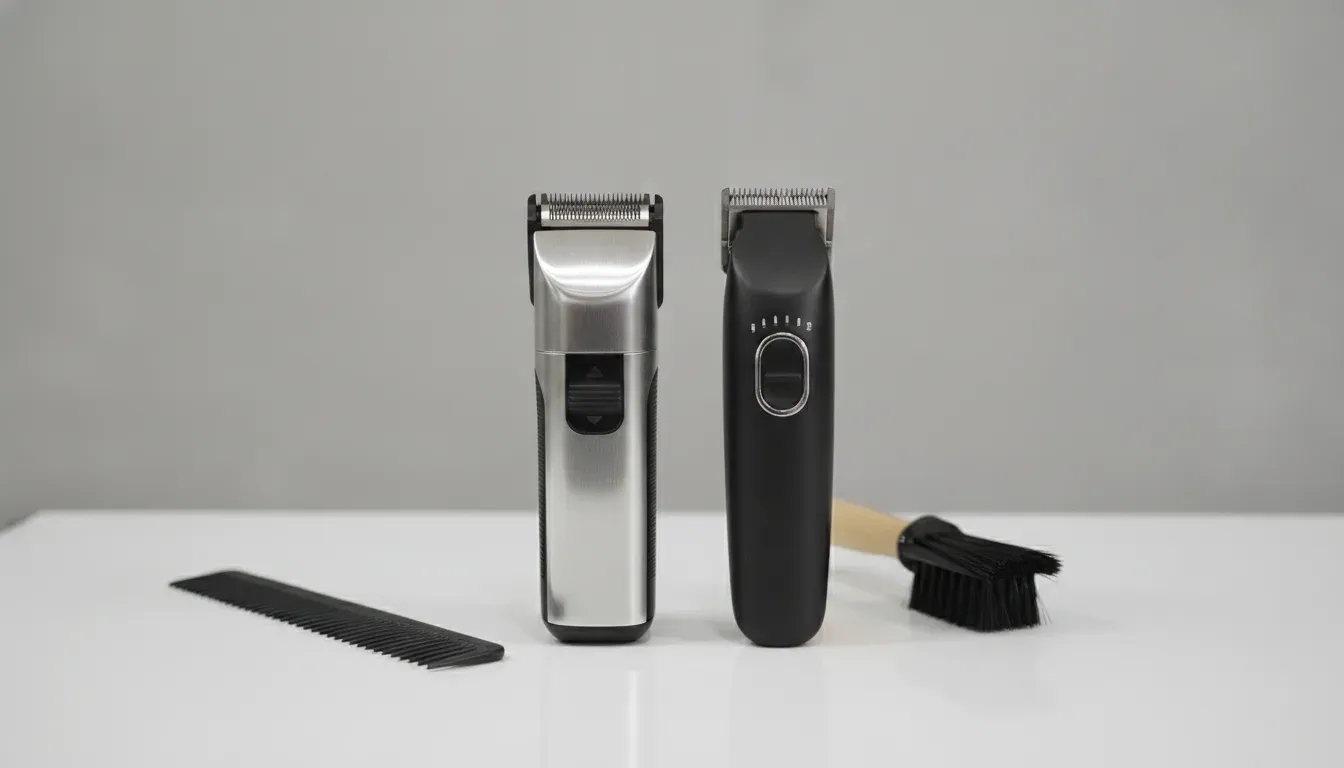
The last step of a bald fade is not the same as a lineup. One tool clears short hair from a broad area, while the other gives you controlled edges, corners, and detail work. Choosing by task matters more than choosing by whichever device promises the closest result.
The practical answer to foil shaver vs trimmer is simple: use a foil shaver for skin-close finishing across already-short stubble, and use a trimmer for outlining, lineups, corners, and controlled cleanup. Neither tool replaces the other, and skin response depends on technique, hair, and the specific model.
That distinction also affects comfort and maintenance. Electric-shaving research describes a balance between effective hair removal and skin comfort, so the right comparison starts with how each tool contacts the hair and where it belongs in a barbering workflow. From there, the design differences become easier to apply to fades, finishing, and everyday product selection.
Call The Barber Company at (702) 900-9972 for help choosing a foil shaver or trimmer.
What Is the Difference Between a Foil Shaver and a Trimmer?
A foil shaver and a trimmer both remove hair, but they solve different barbering problems. A trimmer uses an exposed blade to shorten hair with visible control over the outline and length. A foil shaver uses a perforated foil and internal cutter to finish very short hair close to the skin after bulk has already been removed.
The simplest distinction is this: use a trimmer to shape, define, and clean up; use a foil shaver to refine a short area and create a smoother finish. The Barber Company’s catalog treats professional clippers, trimmers, and foil shavers as separate tool categories because they occupy different positions in a working barber station.
Cutting action and remaining hair
A trimmer’s exposed blade lets you see and place the cutting edge directly against a line. That makes it practical for outlining a hairline, detailing around the ears, cleaning the neck, and removing small amounts of remaining stubble. It can leave a short shadow or controlled length, depending on the blade position, guard, and technique.
A foil shaver is designed for hair removal rather than edge construction. Hair enters the foil openings, where the moving cutter cuts it beneath the foil. This design is intended for close finishing on hair that is already short enough for the foil to contact efficiently. It is not a substitute for the trimmer when you need to establish a crisp corner or carve a detailed lineup.
Skin contact and barber task
Because a foil shaver is used directly over the finishing area, pressure, direction, skin preparation, and the specific model all matter. Research on electric shaving technology examines the balance between effective hair removal and skin comfort. So avoid treating one tool as automatically better for every skin type or shaving pattern. Follow the manufacturer’s use and maintenance guidance for the model in hand.
For product selection, compare tools by the task you perform most often. Review professional foil shaver options for close finishing, and compare the best trimmers for barbers when outlining and cleanup are the priority. If you are building a complete setup, a clipper, trimmer, and shaver bundle illustrates how these tools can work as a sequence rather than as interchangeable devices.
The practical rule is clear: a trimmer shapes the transition and controls the edge; a foil shaver finishes the short area left behind. The right choice depends on the stage of the service, the hair remaining, and the level of control required.
Foil Shaver vs Trimmer for Bald Fades: Which Tool Comes First?
For a bald fade, the usual sequence is clipper first, trimmer second, and foil shaver last. The clipper removes bulk and builds the fade, the trimmer cleans the shortest transition and outlines key edges, and the foil shaver finishes hair that is already short enough for skin-close work. Each tool has a defined job.
Start by using a clipper to remove the larger amount of hair and establish the fade. Depending on the cut, you may then use a trimmer to refine the lowest guideline. Clean around the ears, sharpen the outline, or remove short stubble that still has visible length. A trimmer gives you direct control for detail work, but it is not a substitute for the clipper when substantial bulk remains.
The foil shaver comes after that preparation. Its working surface is intended for finishing very short hair close to the skin, not for clearing a dense section or erasing a heavy guideline. Running a foil shaver over longer hair can make the process less controlled and place unnecessary demands on the tool. If you can still see a distinct amount of length rather than faint stubble, return to the clipper or trimmer before attempting the finish.
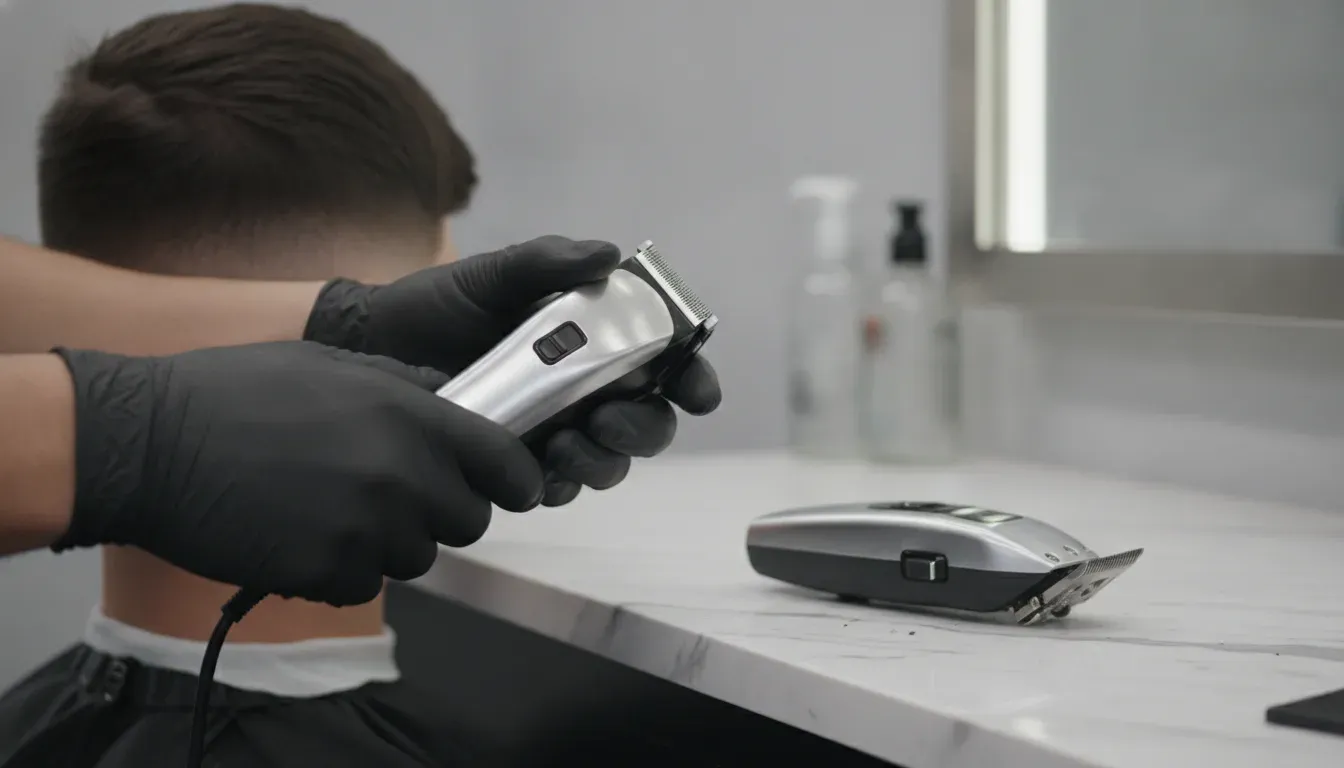
How to judge when the hair is ready for the foil shaver
Use both sight and touch. The area should look like short shadow or stubble, with no obvious bulk standing above the skin. Move your hand lightly against the grain to identify remaining roughness, then use the trimmer where the hair still needs controlled reduction. The foil shaver is for the final pass, not for correcting an unfinished blend.
Work in small sections and keep your pressure measured. The goal is to remove the remaining short hair while preserving control over the fade’s shape. For technique references, review these guides to ways to get a close shave and professional shaving techniques.
When selecting equipment, compare the roles as a set rather than asking which device is universally better. The Barber Company’s clipper, trimmer, and shaver bundle illustrates how complementary tools can cover the full workflow. Check each model’s manufacturer guidance for operation, cleaning, and skin suitability before using it in a professional or home setup.
When Should You Use a Trimmer for Lineups and Cleanup?
A trimmer is the better choice when the goal is control rather than maximum hair removal. Use it to establish a crisp lineup, refine an edge-up, clean the neckline, detail around the ears, or preserve a controlled amount of stubble. A foil shaver is more appropriate for skin-close finishing after the outline is already defined.
For a practical comparison, think of the trimmer as the detailing instrument and the foil shaver as the finishing instrument. A trimmer lets you place the blade exactly where the design, temple, beard line, or neckline needs refinement. It also gives you more control when the client wants short, visible stubble instead of a fully smooth finish. Browse the best trimmers for barbers when you need to compare professional options by task and workflow.
Lineups and edge-ups
Use a trimmer before any foil-shaver pass. First, remove only the stray hairs outside the intended shape. Then trace the forehead, temples, cheek line, or beard perimeter with deliberate, short movements. This sequence protects the design: a foil shaver can erase hair quickly, but it is not the right tool for deciding where the line should go.
For repeatable results, keep the skin reasonably taut and work with the natural contour rather than forcing a straight line across a curved area. The correct blade setting depends on the specific tool and the service. So follow the manufacturer’s instructions instead of assuming that every professional trimmer should be adjusted the same way.
Neck cleanup and detail work
A trimmer is useful for removing isolated hairs at the neckline, around the ears, beneath a beard, and in other areas where visibility and precision matter. It can also clean the transition between a fade and the remaining facial hair without taking the entire area down to bare skin. For brand-specific options, review Wahl professional tools and Gamma+ professional trimmers as part of a broader tool selection.
After the outline and cleanup are complete, reassess the finish under good lighting. If the service calls for a smoother result on an already-cleared area, change tools and use a foil shaver according to its manufacturer guidance. If the client wants visible stubble, stop with the trimmer rather than treating every short hair as something that must be removed.
When Does a Foil Shaver Make Sense for Finishing Work?
A foil shaver makes sense when the remaining hair is already short and the goal is a clean, skin-close finish rather than outlining or removing bulk. It complements a trimmer: use the trimmer to establish the shape, then use the foil shaver selectively on suitable areas after checking the skin and the manufacturer’s instructions.
Use it after the trimmer has done the shaping
A foil shaver is a finishing tool, not a substitute for a trimmer’s detailing control. On a bald fade, for example, the trimmer can remove the last visible transition and define the perimeter. The foil shaver can then clean up short stubble below that transition. It is also useful for neck cleanup and selected areas of a close-shaved head, provided the hair is short enough for the model to handle efficiently.
That distinction is central to the professional foil shaver options you compare. Look for a model whose manufacturer documentation explains intended use, foil care, and skin-contact guidance. Do not assume that a particular foil, cutter, motor, or wet/dry rating applies across an entire product category. Specifications and operating instructions are model-specific.
Light pressure and controlled direction matter
Hold the shaver flat enough for the foil to contact the area, then use light, controlled passes. Pressing harder does not turn a finishing tool into a closer or faster one. It can increase friction and make it more difficult to judge how the skin is responding. Work in the direction that gives you the cleanest result for that area, using short overlapping passes rather than repeatedly scrubbing one spot.
Academic research on electric shaving describes a balance between effective hair removal and skin comfort, with testing methods that examine how shaving technology affects the skin. The PubMed review of electric shaving technology and skin comfort supports treating contact technique and device design as practical considerations, not as guarantees of a particular result.
Check the skin before and during the finish
Inspect the area before shaving. Avoid broad promises about irritation prevention, especially when a client has active bumps, broken skin, or an unresolved skin concern. Research on pseudofolliculitis barbae describes how curved or destabilized follicles can leave sharply cut hair susceptible to re-entering the skin and triggering inflammation. That evidence does not diagnose an individual client or prove that a foil shaver prevents the problem. Use minimal pressure and avoid repeated passes over visibly reactive skin. Refer persistent or concerning symptoms to an appropriate healthcare professional.
For technique guidance beyond tool selection, review these professional shaving techniques and compare the ways to get a close shave. If you are deciding between tools, start with the task: choose a professional trimmer for outlining and detail work, then add a foil shaver when your workflow regularly requires a skin-close finish.
Foil Shaver and Trimmer Comparison by Task, Control, and Finish
A trimmer gives you control over length, edges, and detail work, while a foil shaver is designed for the final skin-close pass over short stubble. The better choice depends on the hair left behind, the shape you need to define, and whether the finish requires guarded control or broad finishing coverage.
| Comparison point | Trimmer | Foil shaver |
|---|---|---|
| Primary task | Lineups, edging, detailing, and controlled reduction of short hair. | Removing very short remaining stubble during a close finishing pass. |
| Hair remaining | Useful when you need to preserve or shape a visible transition, outline, or beard detail. | Best suited to hair that is already short enough for the foil to contact efficiently. |
| Control | The exposed blade and compact profile support deliberate work around corners, lines, and facial-hair boundaries. | The foil surface supports a consistent finishing motion, but it is not a substitute for precision edging. |
| Skin contact | Blade contact is concentrated at the cutting edge, so technique and pressure matter around detailed areas. | The foil separates the cutting element from direct blade contact while removing short hair. Follow the manufacturer’s use guidance. |
| Typical finish | A defined edge, crisp detail, or deliberately retained shadow. | A smoother, more uniform finish after the transition or outline has already been established. |
| Practical choice | Choose it when shaping and visual control are the priority. | Choose it when the priority is refining short stubble after the detail work is complete. |
How the two tools work together
For a bald fade or close taper, the tools are often complementary rather than interchangeable. Use the trimmer to establish the perimeter, sharpen the lineup, or clean detail areas that require a controlled blade position. Then use the foil shaver only where the remaining hair is short enough for a finishing pass. This sequence helps keep the transition intentional instead of asking one tool to perform every job.
The same logic applies to facial hair. A trimmer can preserve a mustache edge, shape a cheek line, or leave a selected amount of shadow. A foil shaver can then clean the surrounding skin where a more uniform finish is wanted. If you are comparing options, review Wahl foil shavers, precision finishers, and trimmers, the BaByliss Pro foil shavers and trimmers, and StyleCraft foil shavers and professional trimmers. The catalog separates these tool categories, so verify the current product description and manufacturer specifications before choosing a model.
Maintenance and Hygiene for a Two-Tool Finishing Setup
A two-tool finishing setup stays dependable when cleaning, drying, inspection, and replacement decisions happen after every service. Remove hair and residue from the trimmer and foil shaver, follow each model’s manufacturer instructions for oiling, and separate routine hygiene from repairs or sharpening that need qualified support.
- Remove hair and product residue after each cut. Turn the tool off and disconnect it as directed by the manufacturer. Brush loose hair from the trimmer’s blade area and the foil shaver’s head. Use the cleaning method approved for that model rather than assuming every tool is washable. The Barber Company’s guide to clean barber tools after every cut provides a practical post-service reference.
- Dry every component before storage. Moisture left around cutters, blades, or a foil assembly can create avoidable wear and hygiene problems. If a part is removed for cleaning, replace it only after it is fully dry and correctly seated. Do not use a liquid or disinfectant in a way the manufacturer’s instructions prohibit.
- Oil only when the model instructions call for it. Oiling is not a universal step for every foil shaver or trimmer. Check the owner’s documentation for the correct lubricant, application points, and frequency. For broader equipment-care guidance, review how to maintain clippers and trimmers without replacing model-specific instructions.
- Inspect the working surfaces before the next service. Look at trimmer blades for alignment, damage, excess heat, or dull cutting action. Inspect foils and cutters for dents, tears, distortion, looseness, or visible wear. Do not press a damaged foil against skin, and do not keep using a blade that pulls or cuts unevenly.
- Replace worn parts instead of forcing more service from them. Foils, cutters, and trimmer blades are consumable components, but the correct replacement depends on the exact model. Verify compatibility through the manufacturer or product documentation. Avoid promising a fixed replacement interval because service frequency, cleaning, hair type, and model design all differ.
- Ask for the right maintenance support when inspection raises a concern. The Barber Company offers professional blade sharpening and clipper repair service in Las Vegas. Confirm the supported equipment and recommended next step before bringing in a foil shaver; these service references do not establish that foil-shaver repair is available. For a two-tool setup, keep the product model and observed fault ready when contacting The Barber Company.
How to Choose the Right Tool for Your Barber Station
A foil shaver, trimmer, or both can be the right choice depending on the task. Start with the finish you need, then compare skin contact, control, documented specifications, cleaning requirements, and support. A practical decision is usually more reliable than choosing by brand name, battery claims, or a generic “best” list.
Match the tool to the primary task
Use a trimmer when you need controlled outlining, detail work, beard shaping, or cleanup around a design. It gives you a narrow working edge for corners and lines. A foil shaver is better suited to removing short stubble from broader finishing areas after the bulk of the hair has already been reduced. It is a finishing tool, not a substitute for every clipper or trimmer task.
For a bald fade, the workflow may call for both: a trimmer to define and clean the transition, followed by a foil shaver where a smooth finish is wanted. If you regularly perform fades, lineups, and finishing work, compare separate professional foil shaver options with the available best trimmers for barbers rather than forcing one tool to do everything.
Check finish, skin contact, and control
Desired finish matters, but so does how the tool meets the skin. Foil-shaver research focuses on balancing hair removal with skin comfort, so avoid assuming that any foil or pressure pattern will suit every client. Keep pressure light, use sound technique, and pay attention to individual tolerance. Clients prone to shaving bumps may need a cautious, consistent approach; do not promise that a specific tool prevents irritation.
Next, hold the tool as you would during a full service. Check whether the grip supports precise wrist movement, whether the controls are easy to reach, and whether the head or blade area gives you a clear view of the work. A tool that feels manageable during a short test may be a poor station choice if it creates fatigue during repeated detail services.
Verify specifications and plan maintenance
Read the manufacturer documentation for the exact model. Confirm motor type, blade or foil design, charging method, included accessories, and cleaning instructions rather than relying on a generic runtime or closeness claim. The catalog separates professional clippers, trimmers, and foil shavers, while the StyleCraft professional trimmers and foil shavers and Gamma+ professional clippers and trimmers pages make it easier to compare the intended category.
Budget time for routine cleaning and inspect wear items according to the model instructions. The Barber Company offers blade sharpening and clipper repair services, but confirm service coverage before assuming a foil-shaver repair is included. For a station that needs a coordinated setup, review this clipper, trimmer, and shaver bundle, then visit The Barber Company store for product guidance and local availability.
Those checks leave one final question: which tool combination fits the way you actually work? The FAQ below addresses common choices and finishing scenarios.
Frequently Asked Questions
Is a trimmer a shaver?
No. A trimmer uses a cutting blade to shorten hair, define edges, remove bulk, and clean up visible stubble with controlled contact. A foil shaver is designed for skin-close finishing after the hair is already very short. In a barber workflow, the trimmer usually shapes first, while the foil shaver refines the finish.
Is it worth getting a foil shaver?
A foil shaver is worthwhile when your work regularly includes bald fades, clean neck finishes, or removing short residual stubble after clipper and trimmer work. It is not a replacement for a trimmer because it does not provide the same outlining control. Choose one when skin-close finishing is a meaningful part of your service routine.
What is the best foil shaver for bald men?
There is no single best choice for every barber or customer. Compare the foil shaver’s manufacturer-documented design, handling, replacement-foil availability, cleaning requirements, and suitability for your finishing technique. Prioritize a tool that matches your workload and contact tolerance, then test your pressure and stroke direction before using it on a full service.
What are the three types of razors?
For practical grooming discussions, razors are commonly grouped as straight razors, safety razors, and electric shavers. Electric shavers include foil and rotary designs, while trimmers are cutting tools rather than razors in the same finishing category. The right option depends on the required finish, edge control, hair length, and preferred workflow.