
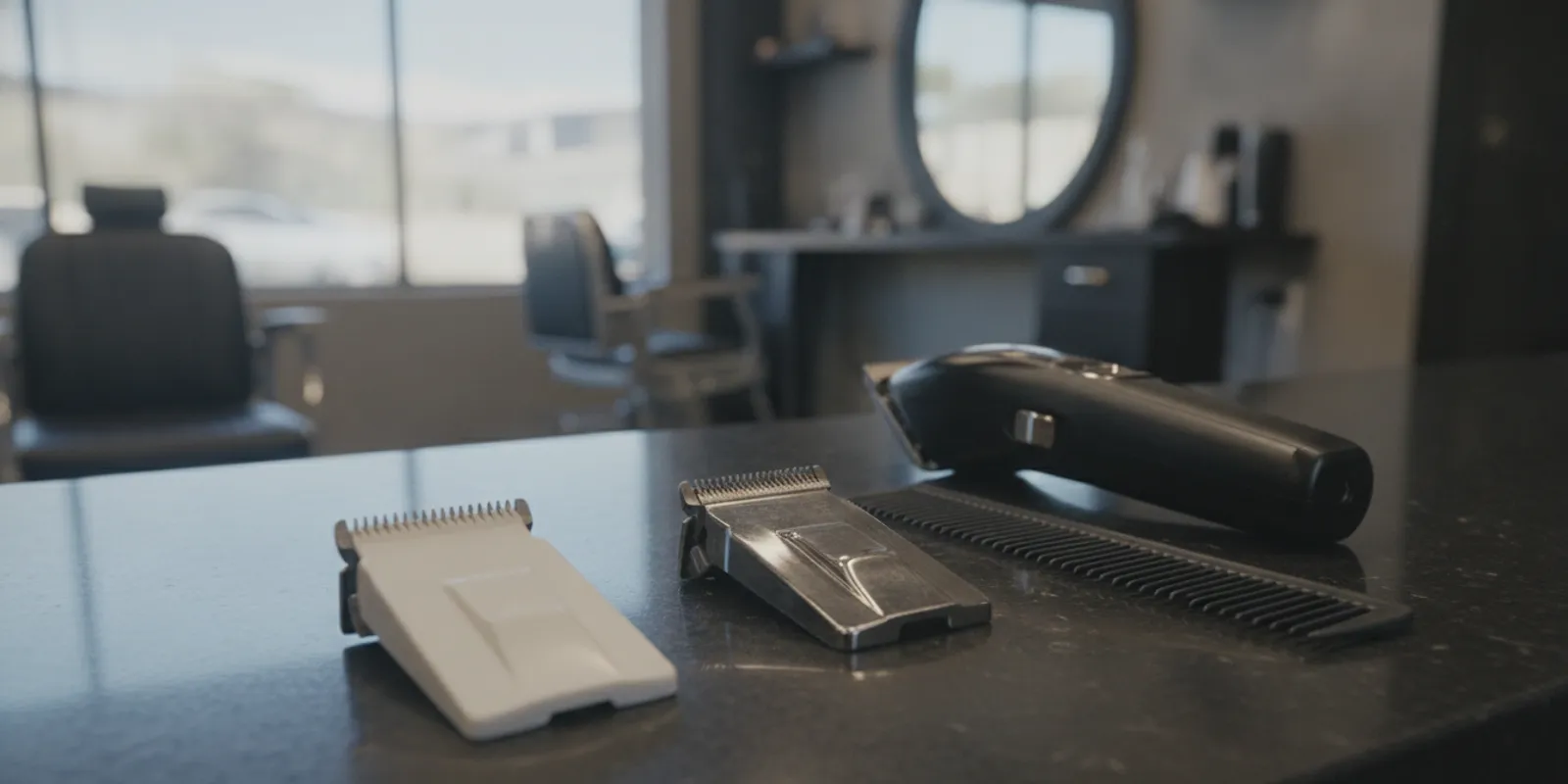
Ceramic vs steel clipper blades are not a simple choice between a better and worse material. The right setup depends on how the clipper is built, how long it runs between breaks, the cuts you perform, and whether you prioritize heat behavior, toughness, or easy maintenance. For barbers, a blade that suits the work and is cared for consistently matters more than a material label alone.
Ask The Barber Company about compatible clipper blades
What are the key differences in ceramic vs steel clipper blades?
Answer: Steel blades use metal cutting surfaces and are widely used across professional clippers. Ceramic blades use a ceramic cutting component, often paired with a steel fixed blade in compatible designs. Ceramic may help manage heat at the moving cutter, while steel is generally tougher against impact. Neither material guarantees a closer cut, longer life, or better result on every clipper.
“Ceramic blade” can describe only one part of an assembly, not necessarily every surface that touches hair. Many clipper systems combine a ceramic moving cutter with a steel fixed blade. Others use all-steel blade sets. Always check the exact model and replacement-part description before comparing, because a material name on a listing may refer to the cutter rather than the complete blade set.
The blade’s geometry and condition matter just as much as material. Tooth shape, alignment, tension, sharpness, and compatibility with the clipper all affect how the tool feeds and cuts hair. A well-matched steel blade in good condition can outperform a worn or incompatible ceramic assembly. Conversely, a ceramic cutter cannot compensate for an incorrectly aligned blade, a clogged clipper, or a weak drive mechanism.
It also helps to separate blade material from clipper motor type, blade size, and adjustment. They are related parts of the tool setup but not interchangeable concepts. If you are still choosing a clipper, start with the tasks you perform, then compare compatible models and blades. The Barber Company’s professional hair clipper selection and clipper buying guide are useful next steps.
How do ceramic vs steel clipper blades compare in daily use?
Answer: In daily shop use, ceramic is often considered when managing heat during sustained clipping is a priority. Steel is a familiar, robust choice with broad availability. The actual experience depends on blade design, clipper condition, hair, technique, and work pace, so treat material as one selection factor rather than a performance promise.
| Consideration | Ceramic cutter or component | Steel blade or component | What to check before choosing |
|---|---|---|---|
| Heat during extended use | May feel cooler in some compatible setups, but heat still builds and must be monitored. | Can warm during repeated work; temperature depends on the whole clipper and working conditions. | Check the manufacturer’s specifications and take breaks or inspect blade temperature as needed. |
| Impact tolerance | Hard cutting material can be more vulnerable to chipping if dropped or struck. | Generally more tolerant of everyday knocks, though teeth can bend, nick, or become damaged. | Protect either blade from drops and inspect it before use. |
| Maintenance | Still needs cleaning, proper lubrication where specified, and careful handling. | Needs routine cleaning, lubrication where specified, and rust prevention as appropriate. | Follow the exact clipper and blade instructions; do not assume material eliminates maintenance. |
| Replacement and compatibility | Available only for compatible clipper models and blade systems. | Broadly used, but blade shapes and mounts still vary by model. | Match the manufacturer, model, attachment, and part number. |
| Best decision basis | Consider when its design and heat characteristics fit the workload. | Consider when toughness, familiarity, and a suitable model-specific option fit the workload. | Choose for the job and tool, not the material name alone. |
This table is a selection aid, not a promise that every blade in a material category behaves identically. Blade design, quality, wear, clipper alignment, and maintenance can outweigh the material difference. If a clipper feels hot, inspect and clean it, confirm the blade is installed correctly, and follow the tool maker’s care directions. Do not keep working with a blade that is uncomfortably hot, damaged, or pulling hair.
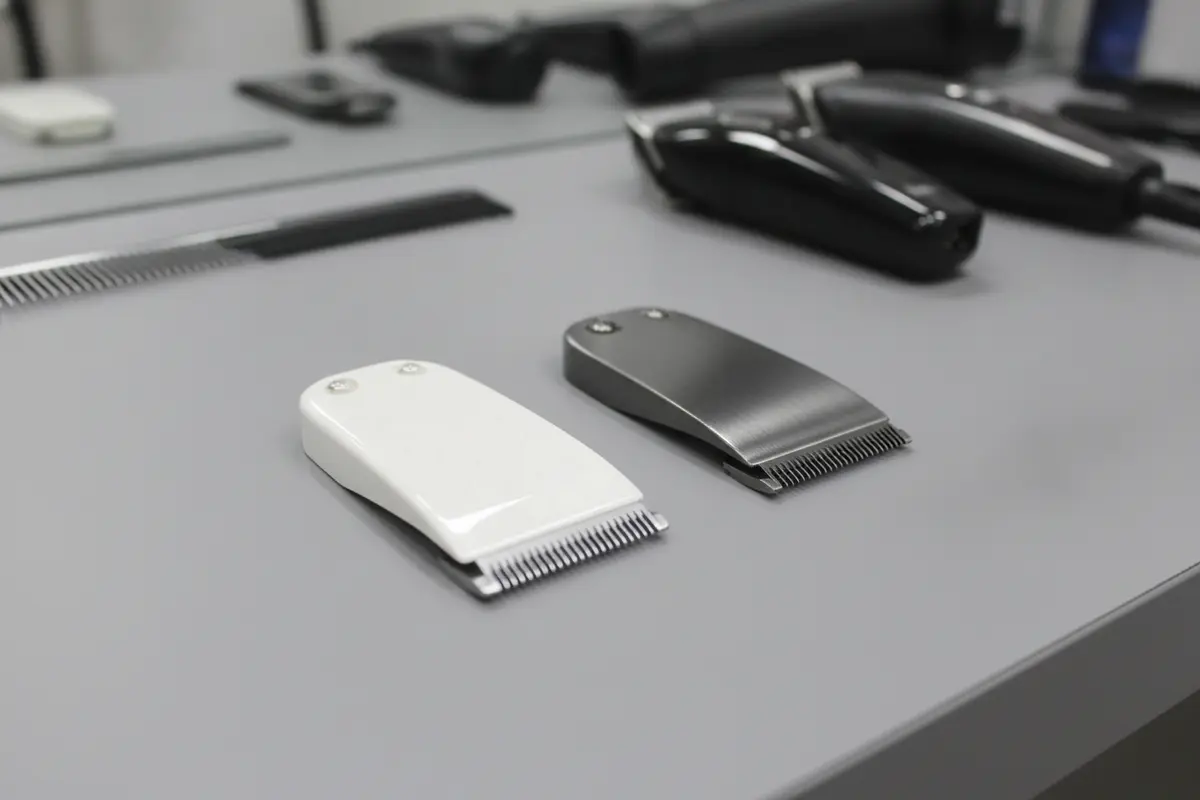
For a barber moving through a full appointment book, a useful comparison is not just “which material stays cooler?” It is “what is the blade doing at the pace and in the conditions I actually work?” A clipper used continuously for debulking may warm differently from a detailer used for brief outlines. Dust, product residue, a tight or misaligned assembly, and a motor that needs attention can also affect temperature. Compare equivalent tasks and give the tool the same cleaning and inspection routine before deciding that material explains the difference.
At home, the buying question may be different. A consumer who uses a clipper for a short self-cut every few weeks may care most about finding a replacement that fits, is easy to maintain, and performs predictably. The possible heat behavior of a ceramic cutter may matter less than the ease of locating the exact replacement part. In either setting, the practical comparison begins with the clipper model and continues with the complete assembly, not a generalized claim about ceramic or steel.
Choose ceramic for its heat behavior, with handling in mind
Answer: Consider a ceramic cutter when the blade system is approved for your clipper and you value its potential heat-management characteristics during sustained work. It can be a sensible choice for a busy station, but it is not automatically a longer-lasting or safer blade. Correct fit, careful handling, and routine care remain essential.
Barbers who move continuously through appointments may notice blade temperature more than someone using a clipper briefly at home. In a compatible system, a ceramic moving cutter may be worth considering as one part of a strategy for managing heat. Do not interpret that as permission to skip temperature checks, cleaning, or breaks. The entire cutting assembly and clipper generate friction; the material alone does not control every factor.
Think carefully about the environment, too. A clipper that is dropped onto a hard floor or knocked against a station can damage either type of blade, and ceramic parts may be less forgiving of impact. If tools travel between stations or are frequently packed for mobile work, protective storage and careful handling matter. A robust case and a consistent setup routine can help protect the cutting edge regardless of material.
Before buying, confirm that the blade is compatible with the exact clipper model and that the maker permits the combination. Check whether the product is a complete blade set or a cutter component, whether it uses the existing fixed blade, and how it should be installed. The Barber Company carries professional brands including Gamma+, Wahl Professional, and Andis; confirm part compatibility before selecting any replacement.
A practical example: suppose a clipper runs through many bulk cuts in a shift and the blade feels warm sooner than you would like. First check the blade for buildup and confirm that it is aligned and lubricated as the manufacturer specifies. Then compare a compatible ceramic cutter if the model supports one. Keep the rest of the routine constant and monitor the result on actual work. If the blade still heats excessively, stop and investigate the clipper or assembly rather than assuming the ceramic option should eliminate heat.
For a mobile barber, impact protection may outweigh a possible heat advantage. A ceramic component can be a sound fit when the tool is packed securely and handled carefully, but a case that lets the clipper rattle against other equipment undermines that choice. Think through the whole travel sequence: power down, let the tool cool as directed, clear loose hair, cover or protect the blade, and secure the clipper so it cannot strike hard objects. That is a more dependable decision than choosing by material in isolation.
Steel remains a practical, familiar option
Answer: Steel can be the practical choice when you want a familiar, durable blade option that fits your clipper and working routine. It is not immune to damage, wear, rust, or heat. A steel blade still needs correct installation, cleaning, lubrication when specified, and inspection to deliver a consistent cut.
Steel blades are common in professional tools, which gives barbers many model-specific options. That does not mean all steel blades are interchangeable. A replacement must match the clipper’s blade mount and intended use. If you want to compare brand-specific equipment, review options from BaByliss Pro and StyleCraft, then verify the blade part number and manufacturer guidance for your particular clipper.
Steel may also suit a work setting where tools are handled frequently, provided the blade is stored and maintained correctly. It can still chip, bend, corrode, or lose its edge. Hair products and debris left in the teeth can interfere with performance, while moisture and poor storage can contribute to corrosion. Make inspection part of closing and opening routines rather than waiting for the clipper to start pulling hair.
If you already own a clipper with a steel blade that cuts cleanly and stays properly maintained, there may be no practical reason to switch simply because ceramic is available. Consider a change when you have a repeatable concern to solve, such as heat behavior, a damaged cutter, or the need for a compatible replacement, and evaluate the complete setup rather than assuming a material upgrade will fix the underlying issue.
Steel’s familiarity can also simplify stocking and tool rotation, but only if you track the exact part numbers. A shop that keeps spare blades for several clipper models should label each replacement by brand, model compatibility, and component type. A drawer marked only “steel blades” invites mix-ups because material does not identify the mounting pattern or cutting geometry. Before opening a replacement package, compare its model information with the clipper in hand and retain packaging or part details for future ordering.
Do not confuse toughness with indestructibility. A steel blade may tolerate routine handling better than a brittle component, yet a fall can still deform teeth or shift alignment. A damaged blade can snag hair or irritate skin even when damage is difficult to see at a glance. Inspect the cutting edge under good light, look for uneven tooth spacing or a nick, and stop using it if its condition is uncertain. Avoid trying to straighten teeth casually; follow manufacturer repair guidance or consult a technician.
Which blade material is better for fades and detail work?
Answer: Neither ceramic nor steel is inherently better for fades or detail work. A clean result depends on blade design, tooth configuration, clipper control, lever technique, and the blade’s condition. Choose a compatible blade suited to your cutting approach, and keep adjustments conservative enough to preserve control and client comfort.
For fades, barbers often rely on a repeatable progression through guards, lever positions, and detail passes. The blade material does not replace that technique. A blade that is aligned incorrectly or has damaged teeth can leave lines or snag hair, regardless of whether its cutter is ceramic or steel. Inspect the blade and confirm smooth movement before putting the tool into service.
For close detailing, avoid treating “closer” as an automatic benefit. Any adjustment that brings cutting edges closer can increase the risk of irritation or cuts if the blade is set improperly. Follow the tool maker’s adjustment instructions, test carefully, and do not assume a different material makes an aggressive setting safe. If you need a blade adjusted, The Barber Company offers a professional zero-gapping service for compatible clippers.
Choose based on your results at the station. If the clipper feeds hair cleanly, remains comfortable to handle, and is compatible with your routine, keep the setup consistent. If it leaves lines, pulls, or heats unusually, diagnose the blade condition, alignment, cleanliness, and clipper operation before changing material. These symptoms may point to maintenance or repair rather than a ceramic-versus-steel issue.
Think of material as separate from the design features that directly shape the cutting action. Blade tooth spacing and profile, the fixed and moving blade relationship, and any manufacturer-approved adjustment all influence how the clipper engages hair. A barber who prefers a particular feed or tapering feel should compare compatible blade designs and test them carefully, rather than expect ceramic or steel by itself to create a certain fade. Keep a note of the clipper model and setup that gives a dependable result so replacements can match it.
For detailing around the hairline, sideburns, or neckline, client comfort is a useful check alongside visual results. Do not make an aggressive blade adjustment simply to chase a closer finish. Confirm the tool is clean, stable, and correctly assembled; use a light touch; and stop if there is unusual heat, pulling, or irritation. A material change will not make an unsafe adjustment safe. If you are unsure about zero-gap settings, have a technician assess the clipper rather than experimenting on a client.
Care routine for either blade material
Answer: Both ceramic and steel blades need regular cleaning, inspection, and the maintenance specified by the clipper and blade manufacturers. Remove hair and product buildup, use only approved care products, and protect the blade from moisture and impact. Ceramic does not mean maintenance-free, and steel care should not be postponed until cutting quality drops.
- Power down and follow the manual. Switch off or unplug the clipper before removing a blade or cleaning around moving parts. Follow the manufacturer’s instructions for disassembly and safe handling.
- Clear hair and residue. Use an appropriate brush and method for the blade design. Do not force debris deeper into the assembly or use a tool that can scratch or bend the teeth.
- Clean and disinfect appropriately. Use products and procedures suitable for the tool and local shop requirements. Cleaning and disinfection are not the same task; follow the product label and your sanitation procedures.
- Dry and inspect. Look for chipped, bent, worn, or misaligned teeth and check that the blade is securely attached. Stop using a damaged blade.
- Lubricate as directed. Apply clipper oil or another approved lubricant only as instructed for that model. Avoid assuming that ceramic needs no lubrication or that more oil is always better.
- Store safely. Keep the clipper clean and dry, protect the cutting edge from knocks, and avoid leaving tools where they can fall or collect residue.
For an expanded routine, see the professional clipper maintenance guide and learn how to prevent clipper blade rust. If a blade is pulling hair or leaving an inconsistent finish, use a structured check rather than immediately changing blade material. The guide to diagnosing a clipper that pulls hair can help identify common maintenance and condition issues.
In a busy shop, care is easier to sustain when the routine is tied to the workday. Before a shift, check that blades are clean, attached securely, and moving normally. Between clients, remove hair and residue using the approved procedure and keep the tool from contacting contaminated surfaces. At closing, complete the deeper cleaning and storage steps required for the specific clipper. Assigning tools to a station or barber can also make it easier to notice a change in sound, temperature, or cutting feel.
For a home user, the same principles apply at a slower pace. Clean the clipper after use instead of leaving hair packed between the teeth until the next haircut. Store it dry and protected, keep the manual or model number nearby, and use only the lubricant and cleaning products the maker permits. If you share equipment, follow appropriate sanitation guidance between users. Do not immerse a clipper or blade unless the instructions explicitly allow that method.
Pay attention to what the maintenance check reveals. A small amount of hair trapped near the moving cutter may call for cleaning; visible corrosion, damaged teeth, looseness, or repeated pulling calls for a closer assessment. A blade that warms more quickly after a change in routine could be dirty, improperly fitted, or affected by another mechanical issue. Record when the symptom appears and what was checked. Those observations help a technician diagnose the problem without guessing based on material alone.
A model-first checklist for choosing blades
Answer: Start with the exact clipper model and the work you need it to do, then compare only compatible blade assemblies. Weigh heat concerns, handling, maintenance habits, replacement availability, and cut quality in your own routine. If the symptoms point to damage or a mechanical fault, seek service instead of expecting a material change to solve it.
- Identify the clipper. Record the brand and model number. Do not choose a blade based only on a similar-looking tool or a broad brand name.
- Define the problem. Are you replacing a worn part, seeking a compatible alternate cutter, managing heat, or buying a clipper for a particular task? A clear reason makes comparison more useful.
- Check the complete blade system. Confirm whether the proposed replacement is a full assembly or one component, and check compatibility, fitting instructions, and warranty guidance.
- Compare care requirements. Consider how the blade should be cleaned, lubricated, stored, and adjusted. Choose a routine your shop or home setup can consistently maintain.
- Test results safely. After installation, verify secure fit and normal operation before cutting. Stop if the blade snags, makes an unusual sound, becomes excessively hot, or appears damaged.
- Consider repair. A worn drive part, alignment issue, or electrical problem may be mistaken for a blade-material problem. The Barber Company provides in-store clipper repair and information about its repair drop-off process.
To make the comparison concrete, use a simple test plan. Write down the clipper model, the blade assembly and part number, the type of service being performed, and the condition of the tool before the test. Compare compatible options on similar work, with the same guards and normal technique. Note whether hair feeds cleanly, whether the blade warms unusually, whether cleaning is straightforward, and whether the result is consistent. Change one factor at a time; switching blade, clipper, and technique together makes it hard to identify what improved.
For professional shops in the Las Vegas valley, product availability is only one part of the decision. The Barber Company offers free local delivery on orders over $50 throughout the valley, including Las Vegas, Henderson, and North Las Vegas. Review the local delivery information if convenient replenishment is part of your shop’s workflow. Professional accounts can ask directly about wholesale options rather than assuming a blade material has a fixed price or availability.
When comparing blade life, avoid relying on a universal replacement timetable. Wear depends on use, care, material, and the specific design. The article on how long clipper blades last explains why condition and performance are better guides than a one-size-fits-all schedule. Keep basic records for heavily used clippers: when the blade was installed, what maintenance was performed, and when cutting performance changed. This helps distinguish gradual wear from a sudden alignment or equipment fault.
If you are a barber student or have recently added a new clipper, avoid buying several alternative blades before verifying compatibility. Read the model documentation, retain the original blade information, and ask a knowledgeable supplier to confirm the part. For a shop with multiple stations, make a small compatibility list and keep each replacement labeled. That modest bit of organization can prevent downtime and reduce the chance of fitting a blade that looks right but is not designed for the clipper.
Contact The Barber Company for blade compatibility and service help
Frequently Asked Questions
Answer: These quick answers cover common questions about blade materials, replacement, and care. Always defer to the instructions for your specific clipper and blade; similar-looking components may not fit or behave the same way. Use the exact model and part number when checking a replacement, and stop using a blade if it appears damaged or operates abnormally.
Do ceramic clipper blades stay cool?
A ceramic cutter may help manage heat in some compatible blade systems, but no material guarantees a cool blade. Friction, blade condition, alignment, clipper use, and maintenance all influence temperature. Check the blade during work and follow the clipper manufacturer’s guidance.
Are ceramic blades sharper than steel blades?
Material alone does not tell you which blade will cut more cleanly. Edge design, manufacturing, condition, alignment, and compatibility matter. Compare the exact blade assembly and choose one suited to the clipper rather than relying on a general material claim.
Can I put a ceramic cutter on any clipper?
No. Ceramic cutters and blade sets are model-specific. Confirm the exact clipper model, attachment, replacement part, and installation instructions before purchasing. A part that looks similar may not fit or operate safely.
Does a ceramic blade need oil?
Follow the care directions for your clipper and blade. Do not assume ceramic means oil-free; moving cutting components may still require the specified maintenance. Use only an approved lubricant and the method described in the product instructions.
Should I replace a blade that pulls hair?
Not always. Pulling can result from buildup, wear, alignment, installation, or a clipper fault. Clean and inspect the tool according to its instructions, then stop using it if the blade is damaged or the problem continues. A qualified technician can assess whether the blade or another component needs attention.
Ready to choose a blade setup?
Answer: The best blade is the compatible one that cuts reliably for your work and that you can maintain correctly. Compare the complete blade system, not just the material, and get help if you are unsure about fit, adjustment, or a clipper fault. The Barber Company serves professional barbers and the general public, with knowledgeable product guidance and technical services in Las Vegas.
For blade, clipper, or service questions, contact The Barber Company or visit the Las Vegas barber supply store. The shop is at 4700 Meadows Ln #110, Las Vegas, NV 89107, and can be reached at (702) 900-9972. Find updates on Instagram at @barbercompanylv. Hablamos español. Bring your clipper’s make and model when asking about a compatible blade or repair.