
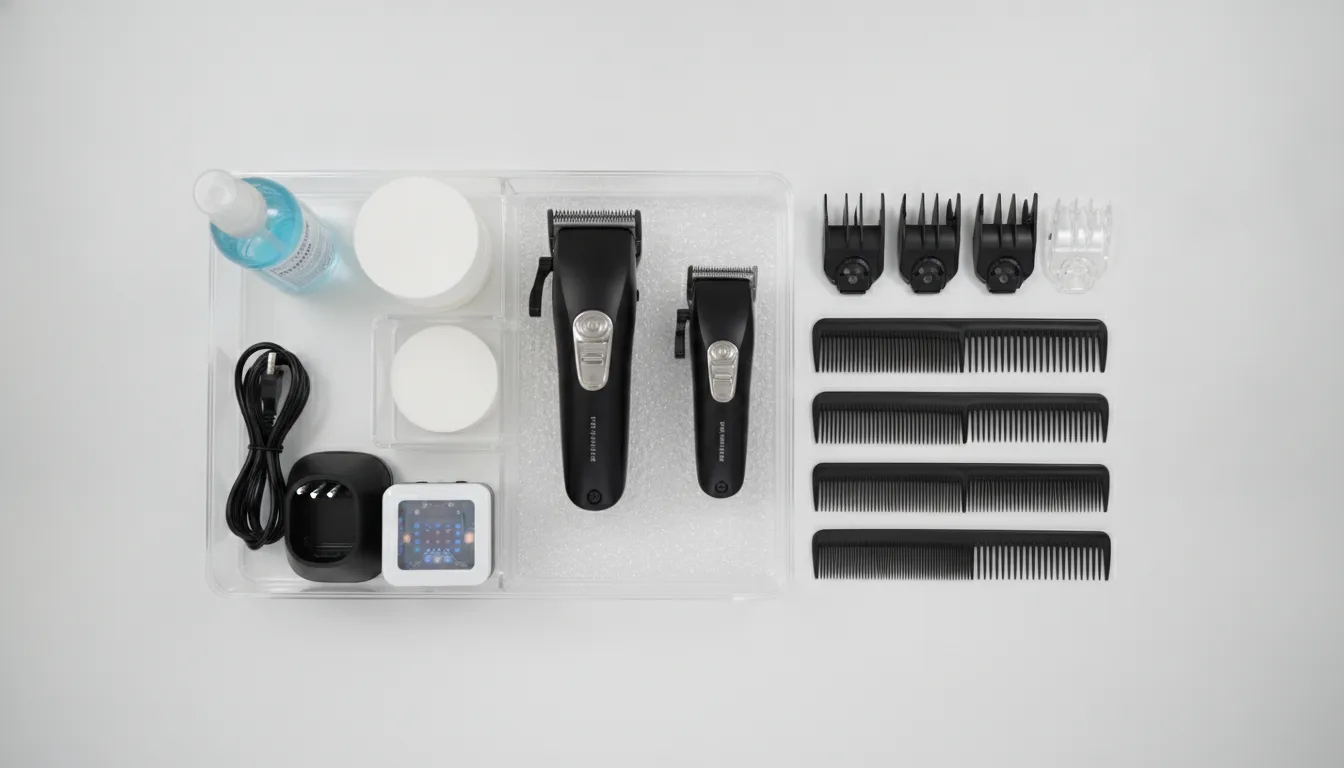
Working away from a fixed shop changes what dependable barbering looks like. Every tool must earn space in your case, stay protected between appointments, and remain ready when a client needs a clean, consistent service in an unfamiliar setting. A practical mobile setup is less about carrying everything and more about controlling your workflow.
Call The Barber Company for mobile barber equipment guidance.
Good mobile barber equipment combines portable clippers and trimmers, organized accessories, sanitation supplies, power planning, and a maintenance routine that prevents avoidable downtime. Choose tools by motor, blade, ergonomics, and model-specific battery requirements, then pack them so clean, used, charged, and replenishment items stay easy to manage.
The right kit should support the full appointment, from setup and tool changes to cleanup and the next day’s restock. Start by defining the essentials that belong in your case, then build outward around how you actually work on the road.
What Belongs in a Mobile Barber Equipment Kit?
A dependable mobile kit combines the tools needed to complete the service, the supplies needed to reset the workspace. And enough backup capacity to avoid stopping when one item needs cleaning, charging, or service. Unlike a fixed station, every piece must earn its space, protect the workflow in transit, and remain easy to reach during a client appointment.
Start with the cutting tools
The core usually includes a clipper for bulk removal and taper work. A trimmer for outlining and detail, and a foil shaver when the service requires a close finish. Add guards, combs, shears, brushes, a mist sprayer, and the products required for the techniques you perform most often. A razor holder can keep straight-razor accessories secure rather than loose in a case.
Do not treat every tool as interchangeable. Motor behavior, blade system, balance, grip, and serviceability affect how comfortably you can work away from a permanent station. Choose equipment around your actual service menu, then verify each model’s manufacturer specifications instead of assuming that all cordless tools have the same performance or runtime. Our guide to cordless clippers for mobile work can help organize that comparison.
Pack for continuity, not excess
Portability does not mean carrying one of everything. It means carrying the primary tools, a practical backup for a failure-prone or appointment-critical item, and the accessories that keep those tools usable. A second trimmer or clipper may be more valuable than duplicate specialty products when a full day of appointments depends on consistent cutting performance. Keep chargers, compatible cords, guards, blade oil, and a small tool for adjustments together so they are not left behind in a separate drawer.
Separate clean equipment from used tools and consumables during transport. A structured organizer or compartmented case reduces setup time and prevents blades, cords, and loose accessories from becoming one tangled bundle. The Barber Company’s proprietary organizers and tools are part of its broader barber supplies and locally made organizers and tools selection, while the wider essential barber supplies guide can help identify overlooked basics.
Build in a reset and service routine
Client turnover requires more than cutting tools. Pack covered containers or pouches for clean equipment, disinfectant and cleaning materials appropriate to your workflow, neck strips, towels, gloves, waste bags, and paper products. Keep the reset supplies accessible, not buried beneath the tools they support. At the end of the day, inspect blades, remove debris, oil as directed, and confirm that every item returns to its assigned place. Use the clipper maintenance checklist to make that reset repeatable, and arrange sharpening, zero gapping, or repair before a small defect becomes a missed appointment.
How Do You Choose Clippers and Trimmers for Mobile Work?
For mobile barber equipment, choose tools by the work they must perform, the way you will transport them, and how you will keep them powered between appointments. A reliable setup balances motor performance, blade control, grip comfort, cleaning access, charging options, and a practical backup plan. Compare each model’s manufacturer specifications rather than assuming every cordless tool offers the same runtime or cutting behavior.
Match the motor and blade to the service
A clipper for bulk removal should feel steady through the type of hair and service you perform most often. A trimmer needs precise control around edges, beards, and detail work. Consider the motor design, blade adjustment range, blade material, available guards, and whether the tool can be cleaned and oiled without disrupting your workflow. A compact foil shaver may complete the finishing step, but it should complement your clipper and trimmer rather than replace them.
Weight and balance matter more when every tool travels from one location to another. Hold the tool in your normal cutting position and check whether the housing, switch, lever, and charging port are easy to use without changing your grip. A tool that is technically capable but awkward in repeated use can slow down a mobile setup and make precise work less comfortable.
Plan cordless use as a system
Cordless tools simplify on-location setup, but they still need a deliberate power workflow. Record the exact model numbers in your kit and check the manufacturer’s stated battery, charging, and operating specifications for each one. Do not apply one tool’s runtime to another model. Pack the correct chargers, identify compatible spare batteries where the manufacturer supports them, and charge tools before leaving rather than relying on a partially charged case.
Keep one dependable backup option for the service that would be hardest to complete if your primary tool failed. That backup might be a second clipper, a trimmer, or a corded tool, depending on your services and access to outlets. Store it where it can be reached without unpacking the entire case. For a deeper comparison of motor, blade, ergonomics, and battery planning, review this guide to cordless clippers for mobile work.
Before each appointment, inspect the blade, guard set, charge indicator, switch, and cable. Afterward, clean and oil the tool according to the manufacturer’s instructions, then return it to a protected compartment. That small reset keeps your next mobile setup predictable and makes it easier to identify a tool that needs sharpening. Adjustment, or service before it affects a client appointment.
Build the Portable Station Around Workflow, Not Just Storage
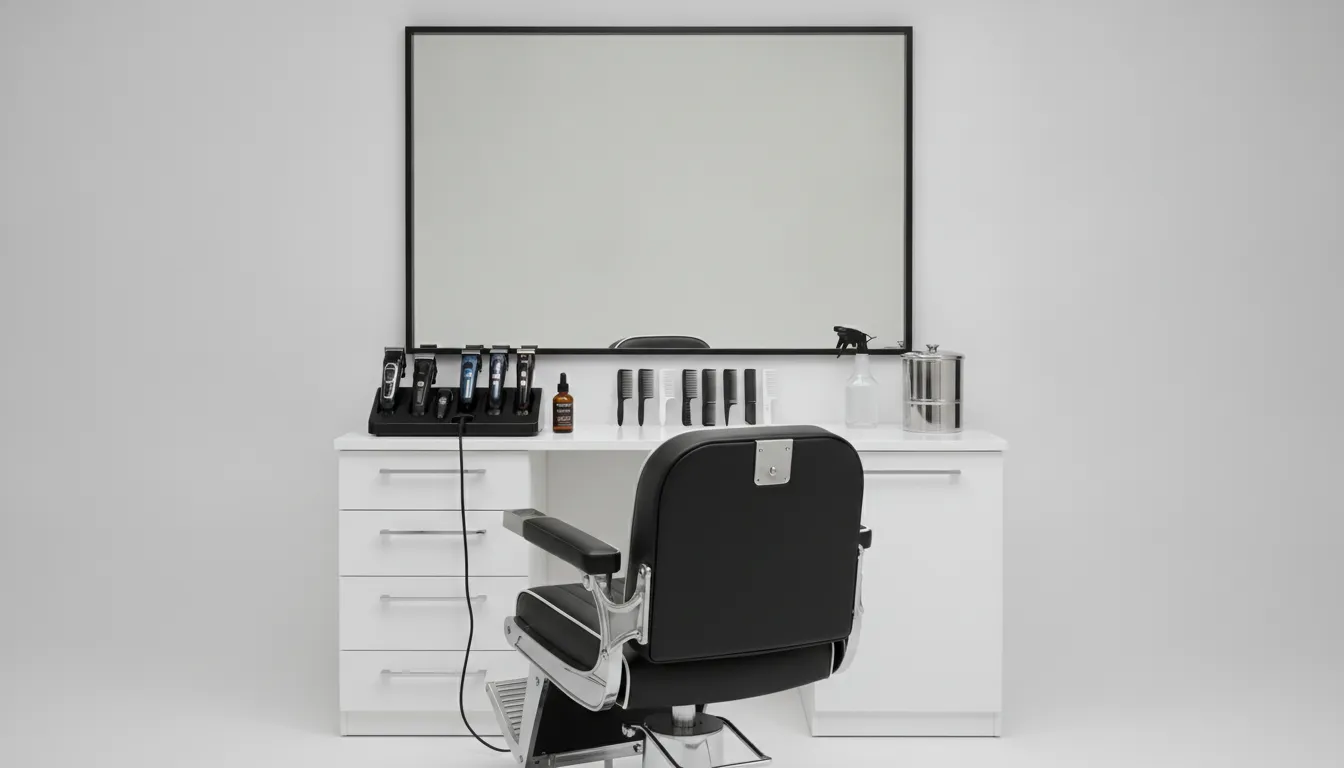
A portable station should make each service easier to perform, not simply hold more equipment. Plan the case around the order of work: clean tools ready before the appointment. Active tools within reach, used tools isolated after service, and consumables accessible without unpacking everything. This workflow reduces searching, protects equipment during transport, and makes teardown more consistent.
Start with a case or rolling bag that protects tools from impact and stays stable when opened. Use compartments for clippers, trimmers, foil shavers, guards, combs, shears, cords, and small accessories. Leave enough room to remove one item without disturbing the rest. Overpacking creates the same problem as poor storage: tools become stacked, cords tangle, and the station takes longer to reset.
Create clean and used zones
Keep unused or disinfected tools in a covered, protected compartment. During the service, place tools that need cleaning in a separate section or container rather than returning them to the clean side. That separation gives you a clear reset point when the appointment ends and prevents a used item from being mistaken for a ready item at the next location.
Build the layout around your working reach. Clippers and trimmers should be easy to pick up and return without crossing over water, chemicals, or loose cords. A small mirror can support client checks and finishing work, while a portable light is useful when the location has inconsistent illumination. Choose compact equipment that solves a real visibility problem, rather than adding items that make the case heavier.
Make setup and teardown repeatable
At the appointment, open the case in the same direction and place your primary tools in the same positions. Keep chargers and spare guards together, and route cords away from the cutting area. Before leaving, inspect the work surface, separate used tools, secure blades and accessories, and confirm that every essential item is back in its assigned compartment. A repeatable sequence is more valuable than a larger bag.
For a deeper look at tool placement, reach, and reset routines, review this professional barber station setup guide, then adapt the layout to each client’s space and your transport limits.
Sanitation Is Part of the Equipment Plan
A mobile setup is not ready when the tools are packed. It is ready when clean and used implements have separate paths, disposable supplies are replenished, and every container can support the sanitation workflow. California guidance provides a useful reference sequence, but rules vary by jurisdiction, so mobile barbers must confirm Nevada and local requirements before working at a location.
- Remove visible debris first. After a service, clear hair and product residue from clippers, guards, combs, shears, and other reusable tools. A brush can help reach seams and teeth, but do not place visibly soiled implements directly into disinfectant and assume the process is complete.
- Wash, rinse, and dry the tool. The California Board of Barbering and Cosmetology sequence calls for washing with soap or detergent and water. Rinsing in clean water, and drying with a new, clean paper towel. Cleaning first matters because debris can interfere with the disinfectant. Drying also helps prevent the solution from being diluted.
- Disinfect according to the product label. Use an EPA-registered disinfectant according to the manufacturer’s directions. California’s guidance specifies total immersion for tools that require immersion. Do not invent a universal contact time or dilution ratio. The product label and the rules that apply to your location control the procedure. Review the California government disinfection guidance for the referenced sequence, not as Nevada legal advice.
- Separate single-use items from reusable equipment. Neck strips, cotton pads, and other items that cannot be disinfected should be discarded after use where the applicable rules require it. Used towels, sheets, and gowns should not return to the clean side of the kit. Carry a dedicated bag or sealed compartment for laundry and waste so clean guards and tools stay protected.
- Store disinfected tools in a clean, covered place. Mark the area or container as clean or disinfected, and keep it separate from used implements. The California guidance says a pouch, holder, or container used for disinfected tools must itself be capable of being disinfected. That makes wipeable, nonporous storage a functional part of mobile barber equipment, not merely a case-design preference.
- Reset the station before the next client. Check that the disinfectant container is covered and maintained according to its label. Replace paper towels, gloves, disposable neck strips, and other consumables. Keep a simple clean-versus-used checkpoint in your setup routine. Before offering services across Las Vegas or elsewhere in Nevada, verify current state, county, city, and venue requirements. California and Virginia rules should not be presented as Nevada law.
This workflow also protects the equipment itself. Separate storage reduces cross-contamination risk. A repeatable reset makes it easier to notice a missing guard, damaged cord, dull shear, or tool that needs service before the next appointment.
What Should You Pack for Power, Consumables, and Client Turnover?
Power planning and consumable control determine whether an on-location service feels deliberate or improvised. Pack each cordless tool with its model-specific battery system and compatible charger, then confirm the charging method before leaving. Battery capacity, charge time, and compatibility vary by model, so use current manufacturer specifications rather than relying on a generic runtime estimate. A corded clipper or trimmer is also valuable as a fallback when a battery is depleted or a charger fails.
For a deeper look at battery planning, motor selection, and backup tools, review this guide to cordless clippers for mobile work.
| Tool or supply. | Mobile-work role. | Planning check. |
|---|---|---|
| Clipper. | Bulk removal and taper work. | Motor, blade, guards, charge, backup. |
| Trimmer. | Outlining and detail work. | Blade control, grip, cleaning access. |
| Foil shaver. | Close finishing when required. | Service fit, protection, charge plan. |
| Sanitation kit. | Cleaning and client turnover. | Label directions, clean and used separation. |
Build a power and tool backup layer
Keep chargers, spare batteries when approved for the tool, and any required adapters together in a protected compartment. Pack the guards that match your service menu, plus a duplicate of the most-used guard sizes if space allows. A missing guard can interrupt a finished look just as quickly as a dead battery. Inspect cords, charger connections, and battery housings before departure, and keep loose metal tools separated from charging equipment.
Do not treat a power bank as a universal substitute for a manufacturer charger. Check the tool’s input requirements and charging instructions first. A simple pre-trip test can confirm that every clipper, trimmer, foil shaver, and charger starts and functions before the kit leaves your workspace.
Pack consumables for clean turnover
Consumables should support the complete cycle from one client to the next. Carry an appropriate disinfectant, clean neck strips, towels, disposable gloves, and clean paper towels. Bring enough of each for the appointment schedule, with a reserve for spills or unexpected changes. Keep clean items sealed and dry. Pack a separate disposal container or lined bag for used neck strips, gloves, paper towels, and other waste, and follow the requirements that apply to your work location.
Use two clearly separated bins or compartments: one marked clean for unused supplies and disinfected tools, and one marked used for items awaiting laundering, disposal, or cleaning. Never return a used guard, towel, or tool to the clean side during turnover. That physical separation makes the reset routine visible and reduces accidental cross-contamination. The essential barber supplies guide can help you build a replenishment list without confusing a fixed shop inventory with a portable kit.
At the end of the day, empty the used bin, restock the clean side, and check tools for hair, moisture, or damage. Follow the clipper maintenance checklist before the next service day so consumable shortages and equipment problems are found before you are working curbside, in a hotel, or at a client’s home.
A Mobile Barber Maintenance and Replenishment Routine
Consistent maintenance keeps a mobile kit dependable between appointments, while a simple replenishment system prevents small supply gaps from interrupting a full day. Reset the kit after every route, inspect tools on a regular schedule, and restock before essential items become emergency purchases.
Reset the kit at the end of every day
Separate used tools from clean tools as soon as the final service ends. Remove hair and visible debris from clippers, trimmers, guards, combs, and foil shavers. Clean and oil each tool according to its manufacturer instructions, then allow it to dry before placing it in a covered, organized compartment. Wipe down the case, organizer, cords, and frequently handled surfaces as well.
During the reset, check that every guard, blade accessory, charger, and backup tool has returned to its assigned location. A dedicated organizer can make missing equipment easier to spot before the next departure. For a recurring schedule covering daily through monthly care, use this clipper maintenance checklist.
Inspect tools and consumables before the next route
Look for loose screws, damaged cords, unusual heat, inconsistent power, blade movement, and changes in cutting performance. Confirm that cordless tools and backup batteries are charged according to their model requirements. Do not rely on a generic runtime assumption. Manufacturer specifications differ, and the actual workload, tool condition, and charging routine all affect planning.
Then count the consumables that support client turnover: neck strips, towels, gloves, disinfectant, paper towels, blade oil, and disposal bags. Set a minimum quantity for each item based on your typical route, and add replenishment to the same weekly planning block as inventory inspection. For a broader supply review, see the guide to essential barber supplies.
Know when maintenance should become service
Cleaning and oiling cannot correct every performance problem. Persistent pulling, unusual noise, overheating, poor battery behavior, damaged components. Or a blade that will not hold adjustment are reasons to stop relying on the tool and have it assessed. The Barber Company offers blade sharpening, clipper repair, zero gapping, and oiling support. Use its professional clipper repair service when a tool needs technical attention rather than repeated troubleshooting on the road.
For Las Vegas barbers, planned replenishment can also reduce unnecessary supply runs. The Barber Company offers free local delivery on orders over $50 throughout the Las Vegas valley. Professional customers can also review wholesale barber equipment supplies, or browse the barber supplies and locally made organizers and tools for the next kit reset.
When Should You Replace or Service Mobile Barber Equipment?
Service mobile barber equipment when performance changes can be traced to maintenance, adjustment, or a worn component. Replace a tool when repeated faults, unsafe operation, poor battery condition, or an unsuitable design keeps disrupting your mobile workflow. Start with a practical diagnosis instead of treating every performance issue as a reason to buy new equipment.
Begin with the simplest checks. Remove hair and product buildup, inspect the blade, confirm the guard seats correctly, and verify that moving parts are properly oiled according to the manufacturer’s instructions. Check the charger, power connection, and battery indicators as well. A tool that works inconsistently may have a maintenance problem rather than a failed motor.
Sharpening or zero gapping
If a clipper or trimmer still runs normally but cuts unevenly, pulls, leaves lines, or requires repeated passes, inspect the blade system. Do this before replacing the device. Dull or damaged blades can change the result even when the motor is functioning. Professional sharpening can restore a serviceable blade. Precision zero gapping may help when the adjustment is the issue. Check any close-cut adjustment for safe blade alignment before the tool returns to client use.
Keep a record of which tool shows the problem, when it appears, and whether cleaning, oiling, blade adjustment, or a replacement blade changes the result. That simple record helps separate a recurring equipment fault from a consumable that has reached the end of its useful condition. The clipper maintenance checklist can help structure that recurring inspection.
When repair makes more sense than replacement
Consider repair when the tool has a sound body and ergonomics, the fault is specific, and the equipment remains appropriate for the services you perform on location. Excessive noise, intermittent power, damaged switches, charging problems, or motor concerns deserve inspection rather than guesswork. Remove any tool from service if it becomes unsafe, overheats, exposes damaged wiring, or cannot maintain reliable operation.
The Barber Company offers blade sharpening, clipper repair, zero gapping, and oiling support. For a local evaluation, review the professional clipper repair service and explain the symptoms, tool model, and mobile-work demands. Model-specific battery, motor, and blade claims should be checked against current manufacturer documentation, not assumed from another tool in the same category.
When replacement is the more dependable choice
Replacement becomes more practical when failures continue after appropriate service or parts are unavailable. It may also make sense when the tool no longer supports your required cutting work or its charging and transport demands create repeated problems. A replacement should solve a defined workflow issue, such as unreliable power or poor ergonomics. Do not simply add another device to an already crowded case. Keep a tested backup when one failure could cancel or compromise an appointment.
Call The Barber Company before your next route for product, delivery, or equipment service support.
Frequently Asked Questions
What equipment does a mobile barber need?
A practical kit usually includes a clipper, trimmer, foil shaver, guards, combs, shears, a mirror, sanitation supplies, chargers, and disposable items such as neck strips and paper towels. Choose tools around your services and pack them in a secure, cleanable organizer with separate areas for clean and used equipment.
How do mobile barbers keep tools clean?
Follow the rules that apply where you work. As a general workflow, remove visible debris, wash the tool with soap or detergent and water, rinse, dry, then use an EPA-registered disinfectant according to its label. California guidance also says disinfected tools should be stored in a clean, covered place and not in a pouch or holder that cannot itself be disinfected. Review the California disinfection guidance, then verify Nevada and local requirements.
Are cordless clippers enough for mobile work?
Cordless clippers can simplify setup, but they are not automatically enough for every schedule. Check each model’s published runtime, charging time, battery condition, and compatibility with your workload. Carry the correct charger, a backup power plan, and a corded or charged backup tool when a dead battery could interrupt service.
Where can Las Vegas barbers replenish supplies?
The Barber Company supplies professional clippers, trimmers, foil shavers, combs, accessories, sanitation products, and locally made barber tools to professionals and the public. Las Vegas professionals can ask about wholesale supply, local delivery on qualifying orders, maintenance, blade sharpening, zero gapping, and clipper repair by calling (702) 900-9972.
Ready to Keep Your Mobile Barber Equipment Working?
A reliable mobile setup depends on having the right tools, replenishing essential supplies, and addressing clipper or blade issues before they disrupt your appointments. Call The Barber Company for equipment guidance, wholesale replenishment questions, local delivery information, or maintenance and repair support.
Shop The Barber Company for professional barber supplies. Follow @barbercompanylv on Instagram. Visit 4700 Meadows Ln #110, Las Vegas, NV 89107, or call (702) 900-9972.
Author: The Barber Company.