
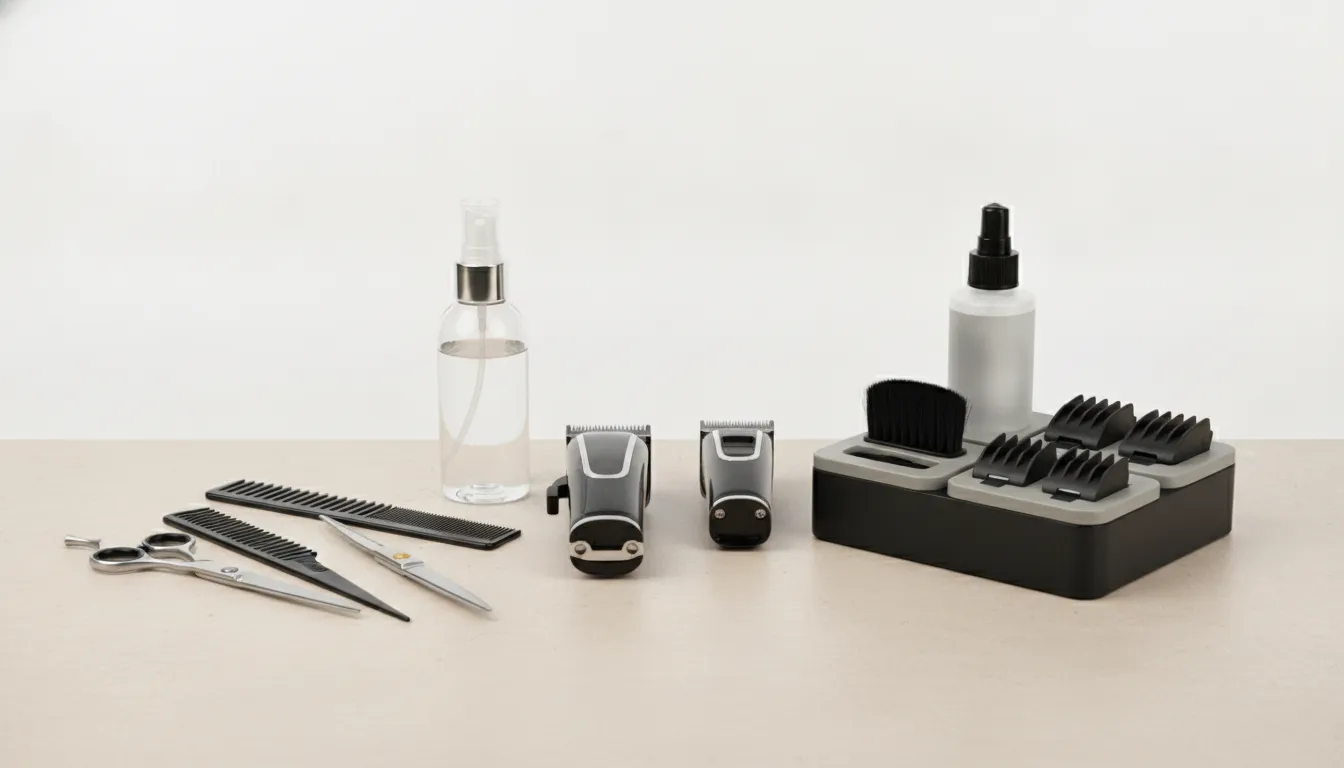
Opening a barbershop in Las Vegas is not simply a matter of filling stations with equipment. The order you buy, the tasks each tool must handle, and the support available when a blade needs attention can affect how reliably your first services run. A procurement plan helps you avoid buying attractive tools that do not match your menu, staffing, or maintenance routine.
The best barber shop startup equipment las vegas plan starts with the services and number of active stations. Then prioritizes dependable cutting tools, sanitation and storage essentials, replenishment items, and a clear maintenance path. Local sourcing can also make it easier to compare professional brands, ask about wholesale options, and arrange support before a small equipment issue interrupts work.
Start by separating must-have tools for your first working station from equipment that can wait until demand and staffing justify expansion. That decision begins with matching your opening service menu to the tools your barbers will use most.
How to Plan Barber Shop Startup Equipment in Las Vegas
Answer: Start with the equipment that supports your actual service menu and daily station flow. Define the cuts you will perform, count active stations, then buy reliable core tools, sanitation supplies, storage, and maintenance support before adding specialty equipment or extra inventory.
A new shop does not need every barbering product on the first order. It needs a dependable operating base that lets each active station complete the services you plan to sell. Begin with the menu: traditional cuts, skin fades, beard work, lineups, razor services, or a combination. Each service changes the tool mix. A shop built around fades may prioritize clippers, trimmers, guards, combs, and foil shavers. A beard-focused menu may require additional detailing and razor-service supplies. Do not buy according to a generic list if your barbers will not use the equipment.
Next, count active stations rather than the number of chairs you hope to fill later. Your first purchase should cover the barbers working on opening week, with a practical backup plan for a failed battery, damaged blade, or tool that needs service. This does not mean duplicating every item immediately. It means identifying the tools that would stop production if one went down, then deciding which deserve a backup before expansion.
Map the station workflow before choosing accessories. A barber should be able to move from cutting to detailing, sanitation, storage, and charging without crossing clean and used tools. Keep frequently handled items within reach, give guards and combs a defined home, and separate equipment awaiting disinfection from ready-to-use tools. A professional barber station setup guide can help refine that layout; this section is about deciding what enters the shop first.
Use a buy-first and buy-later split. Buy first: the core clipper and trimmer set for each active station, guards and combs matched to the menu. Sanitation and storage essentials, replacement blades or other failure-prone components where appropriate, and the products barbers will apply during scheduled services. The Barber Company carries professional tools from Gamma+, Wahl, BaByliss Pro, StyleCraft, and Andis. So you can compare tool roles and ergonomics instead of forcing every station into one brand.
Buy later: specialty tools for services you have not launched, excess styling inventory, duplicate equipment for future stations, and accessories chosen only because they look useful. Reassess after the first operating cycle. Track usage, replenishment needs, and workflow delays. Then expand with evidence. Review the opening-day barbershop equipment checklist as a companion.
Core Cutting Tools by Barbering Task
Core cutting tools should be assigned by task: clippers for bulk work and blending. Trimmers for outlines, foil shavers for close finishing, and shears for longer or scissor-led services. Guards, combs, sprayers, backups, and charging storage complete the station without adding equipment that does not support the menu.
A dependable station needs tools matched to the service, not simply the most expensive tools available. Clippers handle bulk removal and blending, trimmers define edges, foil shavers finish skin-close areas, and shears shape longer sections. Guards, combs, spray bottles, backups, and organized charging support that workflow without slowing the barber down.
Bulk cutting and blending
Start with a professional clipper suited to the shop’s most common services. Use it for bulk removal, taper work, scissor-over-comb support, and blending. The important evaluation points are the clipper’s motor design, blade system, adjustment range, ergonomics, corded or cordless configuration, and access to replacement parts. Do not choose a model based on a generic runtime claim. Check the manufacturer’s specifications for the exact model and consider how it feels during a full day of repeated use.
A second clipper can protect the workflow when the primary tool needs cleaning, adjustment, or service. The Barber Company carries professional options from Gamma+ Professional, Wahl Professional, and other established barber-tool brands. Compare models according to the services you actually plan to offer rather than building every station around one brand.
Outlining and finishing
Use a dedicated trimmer for crisp lines, necklines, beard edges, and detail work. Look for a blade that can be adjusted appropriately, a housing that supports precise control, and an operating feel that remains comfortable around the ears and facial contours. Keep a spare trimmer or a backup blade assembly available if lineups are a major part of the service menu.
Foil shavers serve a different role. They refine short stubble after the clipper has removed the bulk and create a clean finish on suitable skin areas. They should not replace a trimmer or clipper. Teach the team to use the right tool for each stage, then clean and store the shaver according to the manufacturer’s instructions.
Shears, guards, and combs
Shears expand the station beyond clipper-only cuts. Select professional shears that fit the barber’s hand and cutting technique, then pair them with cutting and taper combs that move smoothly through the hair. Guards should cover the lengths used in the shop’s core services, with a clearly identified place for each size. Missing or mixed guards create avoidable delays and inconsistent results.
Keep a continuous mist sprayer available for controlled dampening during shear work and finishing. A well-maintained StyleCraft professional tools selection can complement stations that rely on dedicated clipper and trimmer setups, while Andis professional clippers and trimmers provide another supported brand family to evaluate. Choose by task, hand feel, service menu, and maintenance access.
Backups, charging, and storage
Plan a charging location that keeps cords away from wet areas and separates ready-to-use tools from equipment awaiting cleaning or service. Label chargers and accessories when several stations share the same models. Store guards, combs, shears, and shaver foils where they remain protected but easy to reach. A backup does not need to duplicate every tool immediately, but the shop should have a realistic response when a primary clipper or trimmer is unavailable. This small layer of redundancy protects appointments and gives the team time to arrange repair, blade sharpening, or precision adjustment instead of making an emergency purchase.
How Do You Choose Equipment for Each Station?
Choose each station’s equipment by the services it must perform, then match every task to a primary tool, an evaluation point, and a backup decision. This method keeps startup buying focused. It also makes later expansion easier because new stations can follow a documented tool and maintenance pattern.
Choose station equipment by the services that station must perform, not by brand name or an attractive package. Map each task to a primary tool, identify the specification that affects the result, and decide where a backup prevents a service interruption. This approach keeps a Las Vegas startup purchase practical and expandable.
| Task | Equipment and startup decision |
|---|---|
| Bulk removal and length control | Equipment: Professional clipper, guards, and combs. Evaluate: Motor feel, blade adjustment, guard range, balance, and power setup. Startup decision: Buy one dependable primary clipper per active station. Add a shared backup before expanding the menu. |
| Outlining and detail work | Equipment: Professional trimmer and detail blades. Evaluate: Line visibility, blade geometry, grip, heat management, and service comfort. Startup decision: Prioritize a trimmer that matches the shop’s finishing style rather than duplicating the clipper. |
| Fades and close finishing | Equipment: Foil shaver or close-cutting tool. Evaluate: Skin comfort, foil availability, cleaning requirements, and service role. Startup decision: Add it when close finishing is a regular service. Do not buy it only because it appears in a starter kit. |
| Scissor-over-comb and texture work | Equipment: Professional shears, cutting combs, and texturizing tools. Evaluate: Shear size, tension, ergonomics, comb stiffness, and technique. Startup decision: Match the set to actual demand and the barber using it. One well-selected set is better than mismatched pairs. |
| Daily station turnover | Equipment: Disinfection supplies, brush, sprayer, organizer, and replacement consumables. Evaluate: Clean and used-tool separation, access during service, refill frequency, and storage footprint. Startup decision: Build sanitation and organization into every station from opening day. |
Corded versus cordless is a workflow decision, not a universal quality ranking. Corded equipment can suit a fixed station with predictable outlet access and continuous use. Cordless equipment can reduce cable movement and make repositioning easier, but the station must support charging, battery rotation, and a clean process for identifying ready tools. Do not budget from a generic runtime claim. Check the exact manufacturer’s specification for the model, then consider how your team actually works between services.
Plan coverage at the service level. If a station performs clipper cuts, fades, outlines, and close finishing, its primary clipper should not be expected to cover every failure mode. A second clipper, a reliable trimmer, and the appropriate finishing tool create role separation. For a smaller launch, a shared backup can be sensible if it is accessible, charged when applicable, and compatible with the guards and blades your team uses.
Brand pages can help narrow the search, but the final decision should follow the station’s hands-on demands. Compare professional Gamma+ clippers and trimmers, Wahl professional clippers, trimmers, and shavers, and Andis professional clippers and trimmers by role, service volume, maintenance access, and replacement-part availability. For broader planning, review barber supplies and professional shop equipment in Las Vegas before you finalize the station list.
Finally, record each station’s tool assignments and backup plan. This inventory makes replenishment easier and shows where maintenance matters. The Barber Company offers clipper repair, precision zero gapping, and blade sharpening. Include serviceability in every equipment decision.
Sanitation, Storage, and Station-Control Essentials
Station control depends on clear clean and used-tool zones, safe razor storage, organized accessories, and a repeatable reset routine. These controls help barbers identify what is ready, what needs attention, and what must stay out of service. They also make replenishment visible before supplies interrupt a working day.
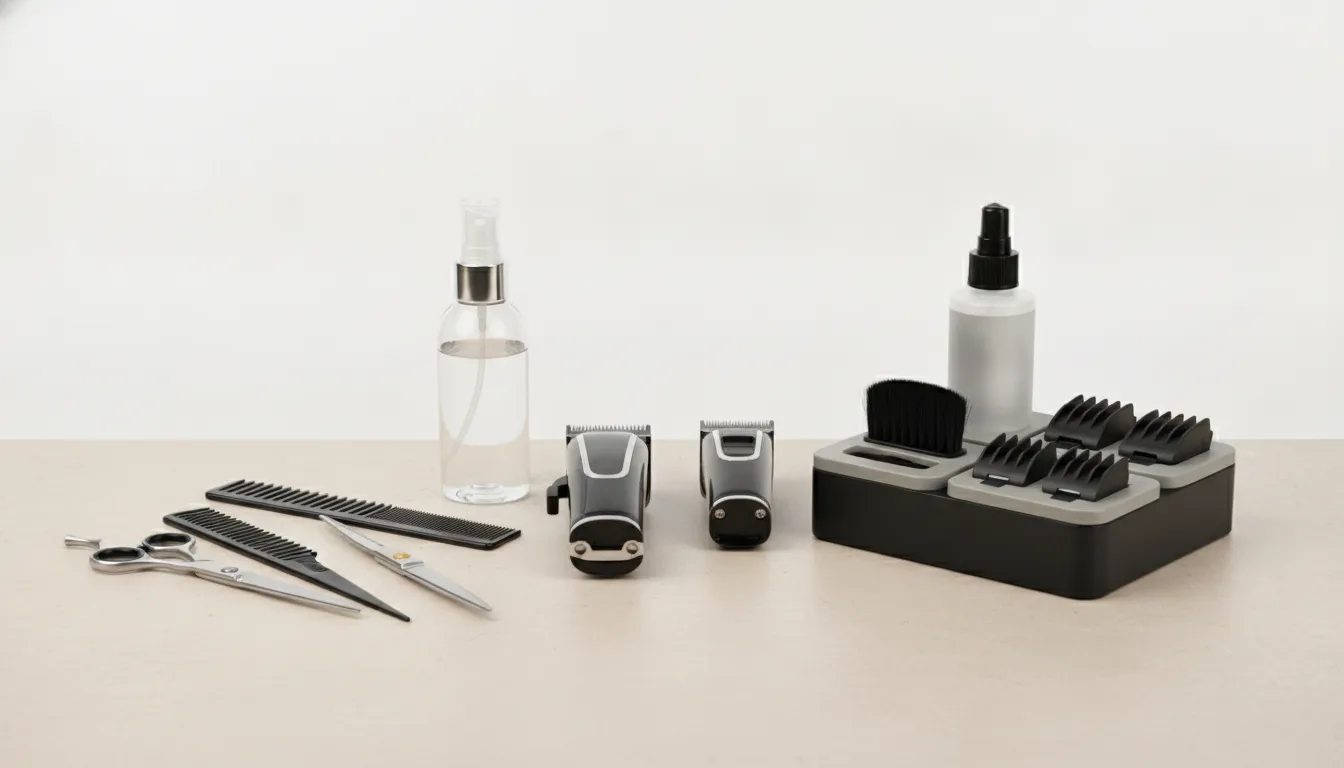
A controlled station keeps clean tools protected, used tools isolated, and daily replenishment visible. Build each station around separate clean and used zones, a safe razor location, organized spray and styling accessories, and a reset routine that can be repeated between clients. This is operational equipment, not decoration: it reduces searching and makes gaps easier to catch.
Separate clean tools from used tools
Start with a defined clean side and a used-tool side. Clean guards, combs, shears, and other ready-to-use items should not share an open tray with tools waiting for cleaning or disinfection. Use containers that are easy to identify and wipe down. The exact sanitation process should follow applicable regulations and the product instructions for the disinfectant you use. The key station-control principle is simple: a barber should be able to tell what is ready, what needs attention, and what must not return to service yet.
A Barber Station Organizer can keep frequently handled tools upright and accessible instead of scattered across the work surface. Give each item a consistent location. Clippers and trimmers can remain within reach, while spare guards, shears, combs, and small accessories stay grouped by task. That layout helps a new shop owner standardize the station across multiple chairs without forcing every barber to improvise.
Make razor safety and accessories deliberate
Razors need their own controlled location. The Professional Razor Holder – Ultra Exposed gives the razor a designated home rather than leaving it loose beside cords, towels, or product containers. Keep disposable blades and other sharps managed according to applicable safety requirements, and do not let a used blade return to a clean-tool area.
Spray and styling tools should also have assigned positions. The Barber Works Continuous Mist Sprayer should be easy to reach during wet-hair work without occupying the clean-tool zone. Store styling products and accessories so caps stay closed and spills are visible. A Barber Works Taper Comb – Hybrid Ceramic can stay with the taper and detailing tools it supports, while styling powder and other consumables remain grouped separately from cutting instruments.
Reset the station before supplies become a problem
At the end of a service block, return tools to their assigned locations. Remove used items from the clean area, wipe down surfaces as directed, and check consumables. Look for low stock in blades, guards, disinfectant, neck strips, gloves, spray supplies, and styling products. Record items that need replenishment before they become an opening-day emergency. For a broader purchasing plan, review barber supplies and professional shop equipment in Las Vegas. Organize the next order by station role rather than by impulse. This makes expansion easier because every new chair can follow the same controlled setup.
Local Sourcing, Wholesale Support, and Delivery in Las Vegas
A Las Vegas supplier can support startup decisions beyond the first transaction. Local product guidance, wholesale conversations, replenishment planning, delivery questions, bilingual service. And technical support can help a new shop build an equipment plan that remains practical after opening day.
A local supplier gives a new shop more than a place to purchase tools. It gives you a practical way to confirm product fit, check replenishment needs, ask technical questions, and keep your equipment plan connected to the work you actually perform. In Las Vegas, The Barber Company supports both professional buyers and members of the public. Making it possible to build a professional setup without requiring a professional license to shop.
When you are comparing barber supplies and professional shop equipment in Las Vegas, start with your service menu and station workflow. A local conversation can help you separate essential cutting tools from accessories that can wait until the shop has steady demand. The Barber Company carries professional clippers, trimmers, foil shavers, accessories, and grooming products from brands such as Gamma+, Wahl, BaByliss Pro, StyleCraft, and Andis. That range allows you to compare tool families by the work they need to handle rather than choosing a model from a generic list.
Local availability also matters after opening day. Clippers, trimmers, guards, blades, combs, disinfecting supplies, and styling products become operating inventory, not one-time purchases. A supplier you can visit or contact directly makes it easier to identify substitutes when a preferred item is unavailable and to build a replenishment routine around actual consumption. Ask which items should be kept as backups, which products are appropriate for your services, and whether a replacement is compatible with the rest of your station setup. These questions are especially useful for independent barbers who do not have a purchasing department.
Wholesale support is another reason to source locally. If you are opening multiple stations, managing a growing team, or purchasing recurring supplies, contact The Barber Company directly about current wholesale options and account requirements. Wholesale terms are not a universal package, so confirm the details for your shop rather than assuming that a particular discount, bundle, or price applies. The wholesale barber supplies and wholesale account inquiry page is a useful starting point for that conversation. Bilingual customer service also helps Las Vegas professionals and shop owners get product guidance in the language they use most comfortably.
Delivery can reduce unnecessary supply runs once your shop is operating. The Barber Company describes local delivery throughout the Las Vegas Valley. Confirm current eligibility, coverage, and order requirements with the store before building your purchasing schedule around it. Delivery is most useful when it supports a planned replenishment order, such as replacing consumables, adding backup tools, or restocking products used across several stations.
A local supplier can also support the equipment after the sale. The Barber Company offers clipper repair, blade sharpening, and precision zero-gapping services, so maintenance can be considered alongside purchasing instead of treated as an emergency. Before placing a large order, identify which tools require regular care, where service questions should go, and how you will keep a working backup available. That approach makes your startup plan more resilient while keeping the focus on reliable service for every client.
Build Maintenance Into the Startup Equipment Plan
Maintenance belongs in the startup plan because blades, motors, housings, and adjustment points affect daily cutting quality. Set station care routines, record tool condition, identify local repair and sharpening support, and keep a realistic backup for essential services before equipment problems become appointment problems.
Maintenance should be part of the equipment plan before the first station opens, not an emergency response after a tool fails. Set a routine for cleaning and oiling, track blade condition, identify local service support, and keep a documented backup plan. This protects cutting consistency and helps a new shop control downtime without relying on unsupported promises about service speed.
Assign a care routine to every station
At the end of each service block, remove hair from clipper housings, guards, and blade areas according to the manufacturer’s instructions. Apply clipper oil where the model requires it, and avoid treating oil as a substitute for cleaning. A tool that is visibly clean can still have friction, heat, or alignment issues if lubrication and inspection are neglected. Keep clean tools separate from used tools, and give each station a defined place for brushes, oil, disinfectant, guards, and charging equipment.
Record the condition of blades and cutting edges during routine checks. Watch for pulling, uneven cutting, excess heat, unusual noise, or a change in the feel of a trimmer against the skin. These signs should prompt inspection before the tool affects multiple services. A barber clipper maintenance checklist can help turn those checks into a repeatable daily, weekly, and monthly process.
Plan professional service before equipment fails
Some maintenance belongs with a qualified technician. Build a service intake process for clippers that need diagnosis or repair, blades that need sharpening, and tools that need precision zero gapping. Zero gapping is an adjustment, not a universal setting. It should be evaluated in relation to the blade, the tool’s intended use, and the risk of irritation or an uncomfortable cutting edge.
Keep a simple service record for each item: station number, brand and model, serial number when available, issue reported, date submitted, service requested, and the result after return. When a blade no longer produces a clean, consistent cut, use The Barber Company’s professional blade sharpening service as part of the maintenance plan. For electrical, motor, housing, or performance concerns, document the symptoms before using the Las Vegas clipper repair service.
Protect the workflow during downtime
Backups should match the services each station actually performs. A shop does not need an identical duplicate of every tool, but it should have a practical replacement for its most important clipper, trimmer, or shaver roles. Label backup equipment, keep it cleaned and charged as appropriate, and check it during the same station audit as active tools. This prevents an emergency purchase from becoming the first time anyone evaluates the backup.
Finally, document equipment by station rather than storing one undifferentiated inventory list. Note which tools belong to cutting, detailing, shaving, sanitation, and shared backup use. That record supports consistent care, clearer service intake, and faster handoffs when a tool leaves the shop for sharpening, repair, or precision adjustment.
A Staged Buying Plan for Your First Las Vegas Shop
A staged purchase begins with launch services and active stations, then adds core tools, station controls, backups, replenishment supplies, and scheduled maintenance. This sequence lets a new shop open with a usable workflow while postponing specialty equipment until demand and staffing justify the next investment.
A staged buying plan keeps a new shop operational while you build toward a complete setup. Start with the services you will perform and the stations you can actively staff. Then prioritize dependable cutting tools, station controls, consumables, backup equipment, and maintenance support in an order that matches daily workflow rather than a generic shopping list.
- Confirm your services and station count. Write down the services you will offer at launch, such as clipper cuts, fades, lineups, beard work, shaves, or shear work. For each service, identify the tool categories and support supplies required. Then match that list to the number of stations you expect to operate. A station that will not be staffed immediately does not need a complete duplicate kit on day one. This first pass also exposes gaps in your service menu, such as needing a foil shaver for finishing or a dedicated shear setup for scissor-focused work. Keep the Barbershop Equipment Checklist for Opening Day nearby as a companion, but use your service map to decide what belongs in the first purchase.
- Acquire core tools and station controls. Equip each active station with the primary clipper, trimmer, guards, combs, shears, and finishing tools that support its assigned services. Compare professional options from brands such as Gamma+, Wahl, BaByliss Pro, StyleCraft, and Andis according to the work each barber performs, not simply brand familiarity. At the same time, establish station controls: designated clean and used-tool areas, organized cord or charging locations, and a repeatable place for guards, combs, razors, and sprays. Organization is part of production control because it reduces searching and makes reset between clients more consistent.
- Add backups and finishing tools. Once every active station can perform its core services, add the equipment that protects continuity. A backup clipper or trimmer can keep a station working when a primary tool needs cleaning, charging, adjustment, or repair. Add foil shavers, detail tools, extra guards, and specialized combs only where the service menu calls for them. This is also the right stage for station accessories such as the Barber Station Organizer. Professional Razor Holder – Ultra Exposed, Barber Works Continuous Mist Sprayer, or Barber Works Taper Comb – Hybrid Ceramic. Select accessories that improve handling and reset time, rather than filling drawers with items that will not enter the workflow.
- Establish consumable replenishment. Create a simple replenishment list for disinfectant, blade oil, neck strips, razor blades, towels, gloves, cleaning brushes, and other supplies your services consume. Assign one person to check the list on a regular schedule and record which items are approaching reorder level. Keep unopened stock separate from active station supplies. For local sourcing, review barber supplies and professional shop equipment in Las Vegas, and confirm current delivery eligibility before relying on delivery for a time-sensitive restock.
- Schedule a maintenance review. Before opening and at regular operating intervals, inspect blades, cords, batteries, guards, and moving parts. Decide which work your team can safely complete and which jobs should go to a technician. The Barber Company offers Las Vegas clipper repair and zero-gapping service and professional blade sharpening. Build those options into your operating plan before a tool failure interrupts service, and review the setup again as staffing, services, and station count change.
Frequently Asked Questions
These questions cover the decisions most likely to affect a new Las Vegas shop’s first equipment order: what to buy first. Where to source it, how delivery works, and how to protect tools through maintenance. Confirm current availability and service terms directly with The Barber Company.
What equipment should I buy first for a new barbershop?
Start with the tools required for the services you will offer immediately: professional clippers, trimmers, guards, combs, shears. A foil shaver if your menu requires it, and the sanitation and storage items that keep each station organized. Add backups after you understand daily usage and workflow.
Where can I buy barber shop startup equipment in Las Vegas?
The Barber Company serves professional barbers, shop owners, students, and the public, so you do not need a professional license to shop. You can compare professional brands and ask about wholesale options, availability, and local delivery through the Las Vegas barber supply store.
Can I get local delivery for a startup equipment order?
The Barber Company describes local delivery throughout the Las Vegas Valley. Confirm current eligibility, service area, and order requirements before placing a time-sensitive shop order, especially if you are coordinating delivery with an opening schedule.
How should I plan maintenance for new barber tools?
Build maintenance into the buying plan from the beginning. Keep blades clean and properly lubricated, monitor cutting performance, and use professional support when equipment needs clipper repair, blade sharpening, or precision zero gapping. The Barber Company offers these technical services, with pricing and turnaround confirmed directly by the store.
Visit The Barber Company for professional barber equipment and local startup support.
Find professional tools and equipment at The Barber Company store. Follow The Barber Company on Instagram for local updates. Visit 4700 Meadows Ln #110, Las Vegas, NV 89107, or call (702) 900-9972 for current assistance.
Contact Us About Your Las Vegas Startup Plan
Once your station count and service menu are clear, The Barber Company can help you discuss professional equipment and current wholesale options. You can also ask about local sourcing, delivery questions, and maintenance support. A direct conversation is the best way to confirm availability and terms for your specific startup plan.
Once you know your stations, tools, and maintenance needs, call The Barber Company. Discuss current wholesale options and available professional equipment. The team supports practical sourcing for new and independent barbershop operators. Technical guidance is available when your tools need attention.
Call The Barber Company at (702) 900-9972 to discuss your equipment plan.