
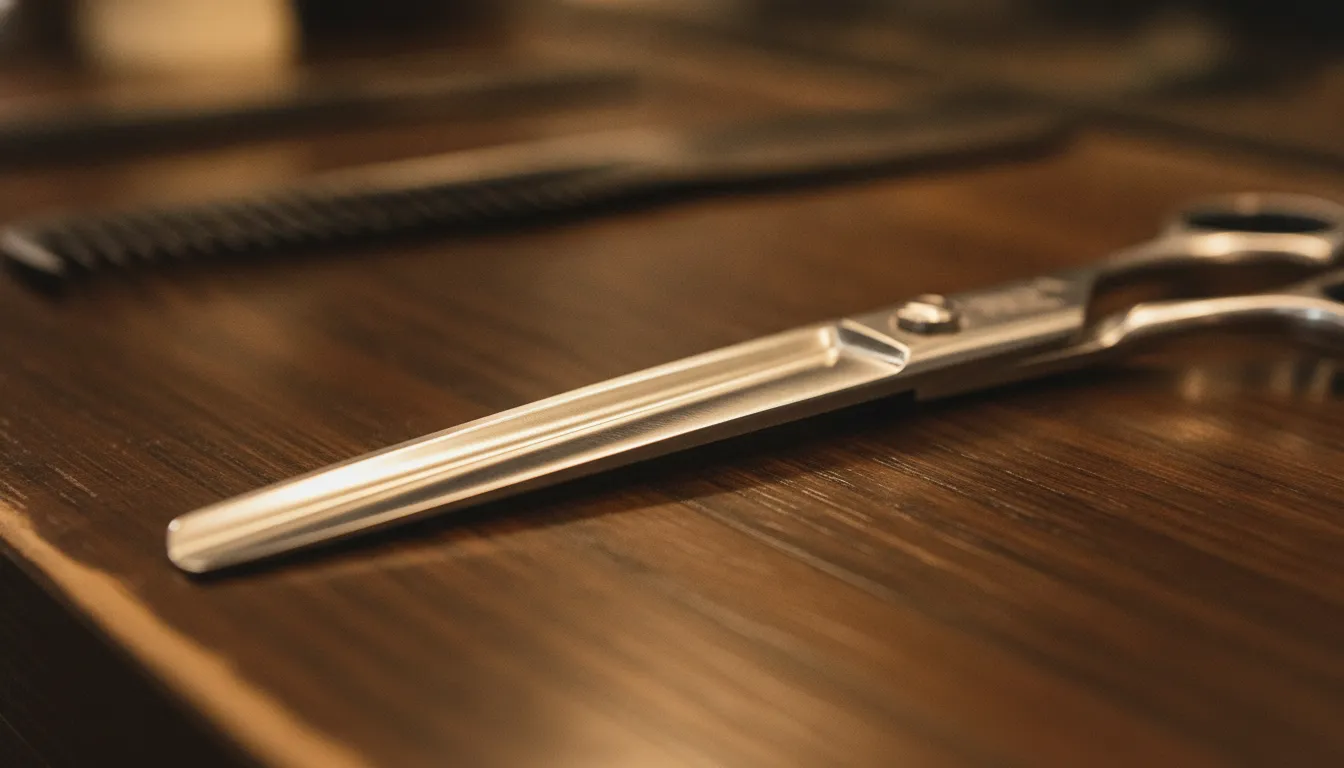
Convex edge shear sharpening is a geometry job, not a generic scissor job. A convex blade curves from the spine down to a fine cutting line. A beveled blade meets on a flatter, visible angle. If a flat wheel wipes that curve into a straight facet, the shear can feel sharp for a day and then cut like a different tool.
Ask about professional shear sharpening in Las Vegas
The useful question is not which edge is better. It is which edge is on the pair in your hand, and whether the next service will keep that shape. Slide cutting, blunt cutting, and daily shop work all put different pressure on the same steel, so name the edge before anyone grinds it.
What Convex Edge Shear Sharpening Has to Preserve
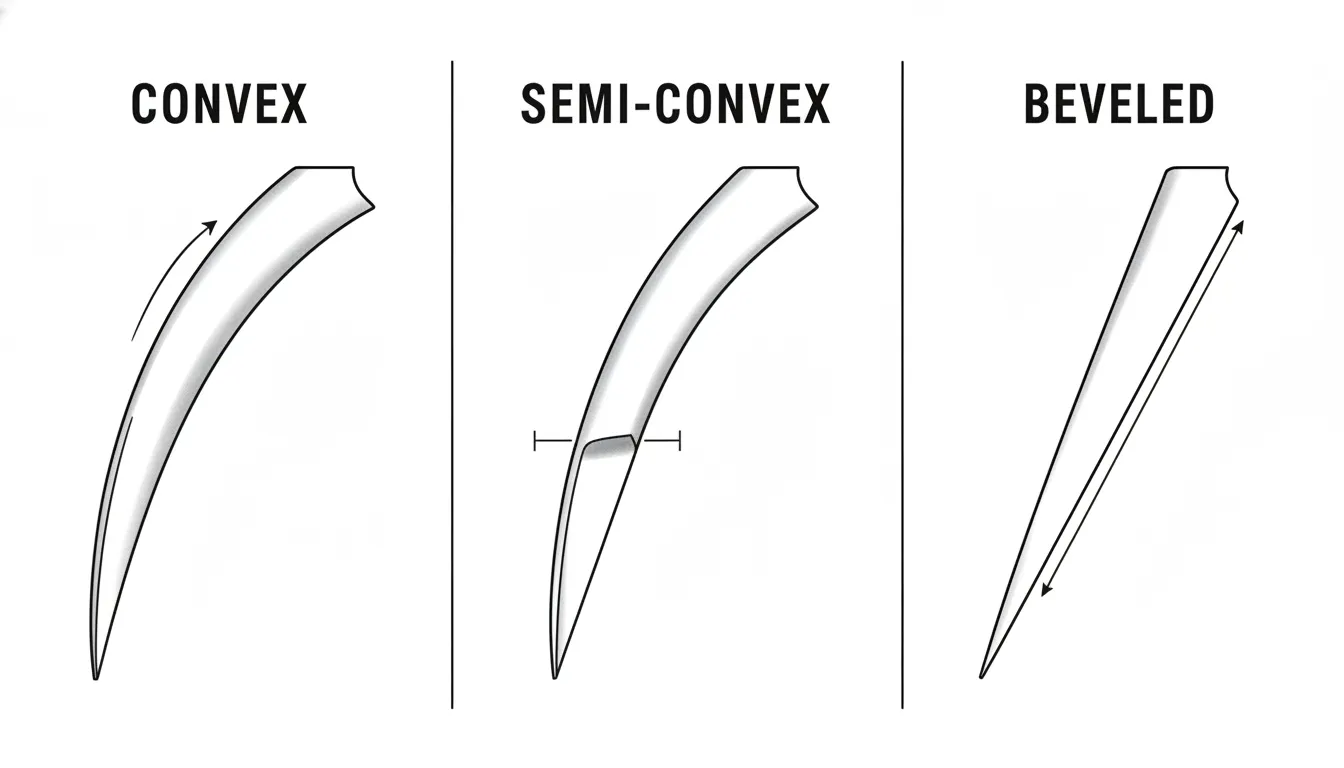
The outside face of the blade is the part a sharpener can change in one pass. On a convex edge, that face is a continuous curve, often called a hamaguri or clamshell grind. There is no flat line behind the cutting edge. Light rolls across the steel instead of breaking at a corner.
A beveled edge uses the opposite plan: a flat angle ground into the blade, often visible as a bright line under a lamp. A semi-convex edge sits between those shapes, with part of the face curved and a short flat still in place. ScissorPedia treats those three shapes as different cutting tools, not as three grades of the same shear.
That difference is why convex edge shear sharpening cannot be a flat pass with a sharper result promised at the end. A fresh edge can hide a changed shape for the first few haircuts. The slide then starts to push, or the tips feel scratchy, because the curve that let the blade glide is gone.
Look at the face before you trust the stamp on the blade. Some shears are marked convex after an earlier service has already flattened them. If you can see a hard facet, treat the pair as beveled until a technician says the curve can be rebuilt. Pretending the old label is still true leads to the wrong instruction at the counter.
Read the Face Before You Name the Edge
Use a bright lamp and the outside of one blade. Rest the spine on your finger so the cutting line points away from you, then rock the steel slowly. Watch the highlight move. Do not hunt for a brand logo.
On a convex blade the highlight travels as one soft band from spine to edge, and the steel gets thinner in a steady arc. You should not see a second line where a flat suddenly starts. If a coworker can see a stripe that stays put while you rock the blade, that stripe is a facet.
On a beveled blade the facet is the point. The bright line sits just behind the cutting edge and breaks the reflection. Wider facets usually mean more steel has already been ground away. A very wide, thin facet can feel sharp and still chip, because there is little metal left to support the line.
A semi-convex blade is easier to misread because the curve is real and a short flat then takes over near the edge. Rock it twice: if the highlight rolls and then stops on a small plane, write down semi-convex. A single glance usually names whichever edge you hoped to see.
Check both blades, because a repair can leave one blade curved and the other flat after a tip nick was ground out on only one side. The pair will still close, but the cut feels different at the tips than at the heel. That mismatch is more useful than a single word on the drop-off ticket.
How Each Edge Behaves in a Real Cut
A convex edge is built for a light close. The fine line meets the hair with less crush, which is why many barbers like it for slide cutting and soft texture. It can also feel quick on a blunt line when the tension is right. The tradeoff is that the curve is easy to flatten, and a nick takes more care to blend back into the arc.
A beveled edge bites with a clearer angle, and it is common on workhorse barber shears used for blunt cuts, dry cutting, and long days of scissor-over-comb. The flat facet is simpler to restore on ordinary sharpening equipment, so a normal service is less likely to invent a new shape. It can feel firmer through thick hair, and some barbers prefer that feedback.
A semi-convex edge is the compromise: it slides on damp hair better than a hard bevel, and it is less fragile than a full curve. It still needs the sharpener to know where the curve stops. Grinding the whole face flat turns a hybrid into a bevel, even if the box still says semi-convex.
None of these labels tells you the shear is sharp, balanced, or the right length. Handle offset, blade length, and tension answer different questions. If you are still choosing a first pair, start with the guide to picking barber shears and test the close in your hand before you worry about the service route. Handle shape is its own choice, covered in the offset versus straight shear comparison. Texture work belongs on thinning shears, not on a sharpened cutting edge.
Match the Edge to the Sharpening Hand-Off
Tell the technician the edge type, the cut you use most, and what changed, because “it feels dull” is not enough. A convex pair that pushes on a slide may still cut a dry blunt line. A beveled pair that folds hair may have a tension problem rather than a dead edge, and those clues change the work.
Ask two plain questions before you leave a convex pair. Can you sharpen a convex edge without flattening the curve? How will you check that the curve is still there? A sharpener who only describes a flat wheel and a standard angle is describing a bevel service. Clipper Care Sharpening puts the risk in one line: the first flat-wheel pass on a convex scissor is the last time it cuts like a convex scissor.
| Edge | What you should see | What to say at drop-off | What a bad service changes |
|---|---|---|---|
| Convex | Smooth curve, no flat line behind the edge | Keep the curve. I use this pair for slide cutting. | A new flat facet. The slide starts to push. |
| Semi-convex | A short curve with a small flat near the edge | Do not grind the whole face flat. | The hybrid face becomes a full bevel. |
| Beveled | A visible angled facet under the light | Restore this angle. I use it for blunt shop work. | An over-thinned edge that chips or folds. |
Bring the pair in the condition you actually cut with. Wipe loose hair so the face is visible, but do not oil it so heavily that the facet disappears. If the shear was dropped, say so. Impact can bend a tip or nick a curve, and grinding over that damage makes the next repair harder.
The Barber Company offers shear sharpening for professional shears. Ask the store which brands and edge types the current service covers before you drop a pair off, because coverage can depend on the model. The verified store address is 2580 S. Decatur Blvd, Suite 1A-1C, Las Vegas, NV 89102, and the phone is (702) 900-9972. For the local service path, use the Las Vegas shear sharpening guide rather than this comparison. The wider shop floor is the Las Vegas barber supply store, and same-day local needs sit on the where to buy supplies today page.
Check the Edge Before You Accept the Pickup
Do this in the shop light before you put the shear back in a case. You are looking for the same face you dropped off, plus a clean cut, not trying to sharpen anything yourself.
- Hold the outside face under a lamp and rock it. A convex face should show one moving highlight, not a hard bright stripe.
- Look just behind the cutting line, because a new flat facet on a convex shear means the curve was ground away.
- Close the blades slowly and confirm they meet along the length without a gap at the tip or a scratchy spot in the middle.
- Cut a clean section of hair, then try the technique you actually use, so a slide still glides and a blunt cut does not fold the ends.
- Check the pivot feel, since sharpening should not leave the handles stiff or floppy and tension is a separate adjustment.
If the highlight test fails, stop using the shear for the cut that needed the old edge. Another “make it sharper” pass will remove more steel. Ask what wheel or hone was used, and whether the original curve can still be restored. Two or three flat passes can shorten the working life of a premium pair.
A rough hinge, a loose screw, or hair that folds on every close may not be an edge problem at all. The barber shear tension adjustment guide covers that check. If the blades are nicked, rusty, or suddenly loud, use the signs you need shears sharpening before you blame the grind.
When Convex Edge Shear Sharpening Is the Wrong Flat Fix
A beveled workhorse can take a standard angle and go back to the chair, while a convex finishing shear often cannot. The wrong service is most expensive on the pair you bought for a specific feel, because you cannot file the curve back on once the facet is wide.
Semi-convex shears get caught in the middle because they look close enough to a bevel that a busy sharpener may flatten them without comment. Write the edge on your drop-off note, and if you own both types, do not send them through as one batch with one instruction.
Home stones, sandpaper, and foil are the wrong tools for this decision. They can scratch a face or roll an edge, and they do not let you see whether a curve survived. Clipper blades are a different job with a different risk, which is why the clipper blade DIY versus pro guide stays on clippers. Motor, cord, and housing problems belong with Las Vegas clipper repair, not with a shear edge.
Daily care still matters between services. Clean hair and product off the blades, dry them, and keep a light oil at the pivot. Do not cut foil, tape, or paper with hair shears. Those habits protect the edge you just paid to keep. They do not replace a service that understands the grind.
Set a Shop Routine That Keeps Each Edge Intact
A one-chair barber can remember which pair slides and which pair chops, but a busy shop cannot. Put the edge in the case, on the pouch, or in the team book the day you buy the shear. The note should be one line, such as convex slide shear, semi-convex damp texture, or bevel blunt work. Future you will not remember the feel after six months of fades.
Keep the pairs apart when several barbers drop tools on the same day. A shared bag with three unmarked shears invites one instruction for three geometries. Clip a name to each pair and add the symptom in plain words. Pushes on slide, folds a blunt line, and ticks at the tip are three different jobs.
Rotate the work when you can by using the convex pair for cuts that need the glide and letting the beveled pair take the repetitive blunt work. That split does not replace service, but it does stop you from wearing the fragile curve down on every scissor-over-comb pass. Students who own one pair should learn the face they have before they copy a slide-cut video made for a different grind.
After pickup, cut the same test section you used before the service: a clean section of dry hair, then a damp section if you slide. Write whether the highlight still rolls. If the shear is worse on the second service than the first, stop, because repeating the same hand-off will only widen the flat.
Call (702) 900-9972 if the shear is an unusual model or it was bent in a drop, and confirm the current drop-off details for 2580 S. Decatur Blvd, Suite 1A-1C, Las Vegas, NV 89102. You can also reach the team through the contact page. This page is about the edge you need preserved. The service page is where you confirm scope for that visit. If the chair kit is the real question, start from barber supplies in Las Vegas instead of a sharpening note.
Review blade sharpening at the Las Vegas store
Frequently Asked Questions
Can any sharpener do convex edge shear sharpening?
Not safely. Convex edge shear sharpening has to follow the curve, and a flat wheel can leave a sharp bevel while it erases the clamshell face. Ask how the curve will be preserved before you hand the pair over.
How do I tell a convex edge from a beveled edge?
Rock the outside face under a light and watch the reflection. A convex edge shows a smooth moving highlight and no flat line, while a beveled edge shows a distinct angled facet just behind the cutting line. A semi-convex edge has a shorter curve and a small flat.
What should I say when I drop off a convex shear?
Name the edge, the technique, and the symptom in one note, such as “convex, used for slide cutting, now pushes hair.” Also mention any drop or nick. Leave process and timing questions to the service counter.
Will a sharpened convex shear feel different right away?
A correct service should cut cleanly and still slide. If the first haircut feels sharper but the slide pushes, check for a new flat facet, because sharp and convex are not the same result.
Should I tighten the screw if the shear feels off after pickup?
Not as a first move. Confirm the edge face, then test tension separately, since forcing the screw can mask a flattened edge or a bent tip. If the close is uneven, take the pair back for another look.