
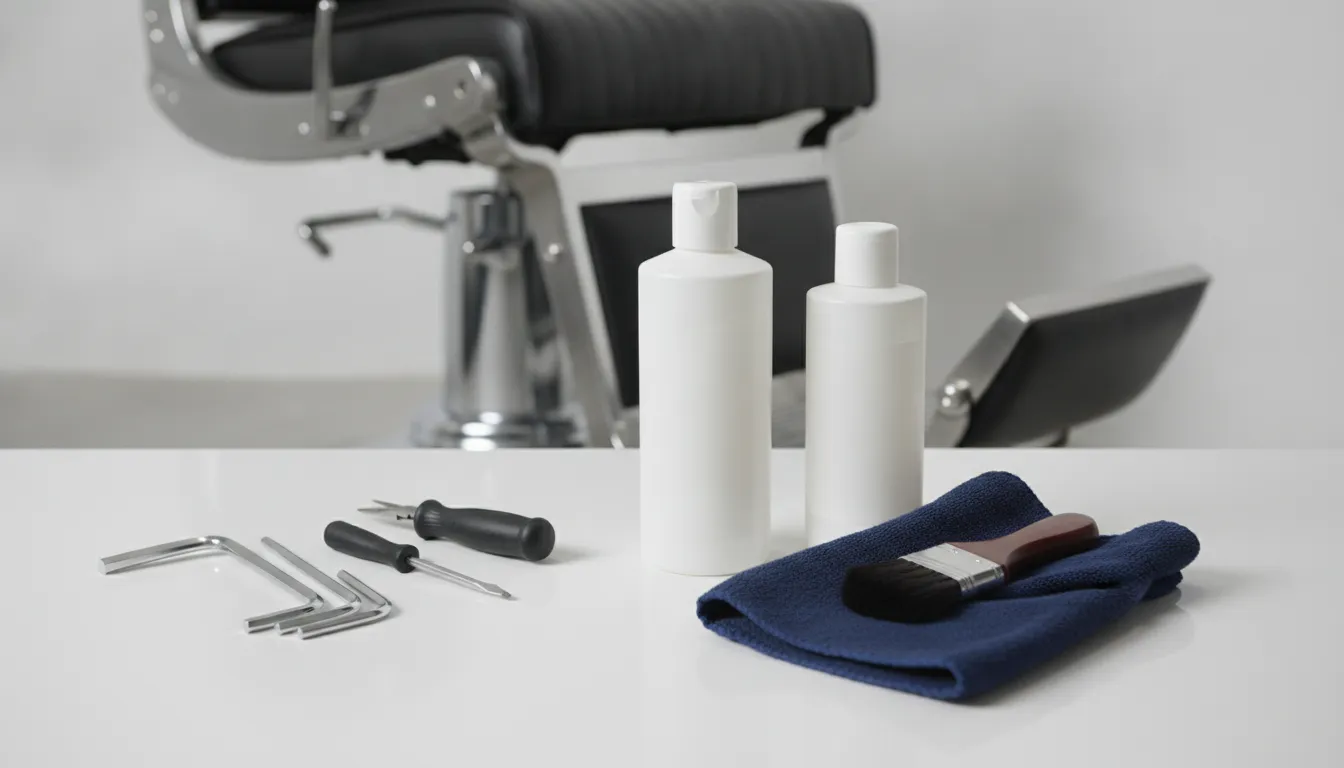
A barber chair is part of the shop’s working equipment, not just part of the decor. Clean surfaces, controlled inspections, and clear manufacturer limits help protect customer comfort while reducing avoidable downtime. The right routine starts with the chair’s manual. Upholstery materials, approved cleaners, lubricants, hydraulic components, and inspection intervals vary by model.
The best barber chair maintenance supplies are selected by function: a manufacturer-approved surface cleaner. Compatible material protection, inspection tools, spill-response items, and only those repair consumables the chair maker authorizes. Keep chair care separate from clipper oiling or blade service, and stop using the chair if you notice instability, structural damage, or a suspected hydraulic fault.
That approach gives shop owners a practical kit without guessing at chemical compatibility or ordering parts that may not fit. Begin by separating everyday cleaning and inspection needs from model-specific maintenance requirements, then build the supply list around those boundaries.
What Belongs in a Barber Chair Maintenance Supplies Kit?
A functional kit should cover five jobs: surface cleaning, material protection, visual inspection, spill response, and only manufacturer-approved mechanical maintenance. The chair manual controls the exact products and procedures. A generic barber supply list is not enough because upholstery, finishes, hydraulic systems, and replacement parts vary by model.
A functional kit brings together the supplies needed to clean surfaces, protect approved materials, inspect wear, respond to spills, and handle only manufacturer-approved maintenance work. The exact cleaner, protectant, lubricant, replacement part, and procedure should come from the chair manufacturer’s manual. A generic barber-shop checklist is not enough.
| Function | Check first |
|---|---|
| Cleaning | Manual and label |
| Protection | Material compatibility |
| Inspection | Manual method |
| Repairs | Exact specification |
Surface cleaning and material protection
Start with the chair maker’s approved cleaning method. Apply it to the upholstery, armrests, headrest, footrest, base, and other exposed surfaces as directed. Keep the approved cleaner and application tools together. This helps staff avoid harsh substitutions and excess moisture. If the manual specifies a protectant for a particular material, store that product with its instructions and record the chair model it applies to.
Do not assume that a product safe for vinyl, leather, coated metal, or plastic is safe for every chair component. The kit is useful only when its contents match the chair materials and finish.
Inspection and spill response
Include a bright inspection light, clean disposable cloths, gloves appropriate for the cleaning product, and a simple inspection record. These items support a visual check of upholstery, seams, fasteners, the footrest, the base, and visible hydraulic components. They do not authorize disassembly.
For spills, keep the response supplies accessible rather than buried in a back room. Remove residue using the manufacturer’s approved process, dry the affected area as directed, and document anything that remains discolored, loose, cracked, or difficult to move. Documentation helps separate a cleanable surface issue from a developing equipment problem.
Approved repair consumables only
Replacement fasteners, lubricants, hydraulic products, and other repair consumables belong in the kit only when the chair manufacturer identifies them for that model. Do not add generic hydraulic fluid or lubricant based on a product label alone. If the manual is unavailable, pause any mechanism-related maintenance and contact the manufacturer or a qualified chair technician.
Keep chair-care supplies separate from clipper oils, blade products, and other barber-tool materials. The Barber Company’s barber station maintenance workflow can help organize those different work zones without treating clipper maintenance products as chair-care products.
How Do You Choose Chair-Safe Cleaners and Protectants?
Choose chair-care chemicals by starting with the chair manufacturer’s manual, not a generic supply list. Confirm the approved cleaner, protectant, application method, and material restrictions on the label and chair documentation. Test the product in a hidden area before applying it across upholstery, vinyl, painted surfaces, or metal.
Match the product to the chair material
Separate products by function and surface. A cleaner intended for one upholstery material may not be appropriate for another. The same caution applies to painted finishes, chrome, plastics, seams, and exposed hardware. If the manual does not identify a compatible product, do not assume that a household cleaner, disinfectant, solvent, oil, or protectant is suitable.
Read the label for application directions, ventilation requirements, contact instructions, and warnings. Keep the original product information with your shop’s barber supplies in Las Vegas purchasing records so the team can verify what was used. Do not combine chemicals or transfer them into an unmarked container.
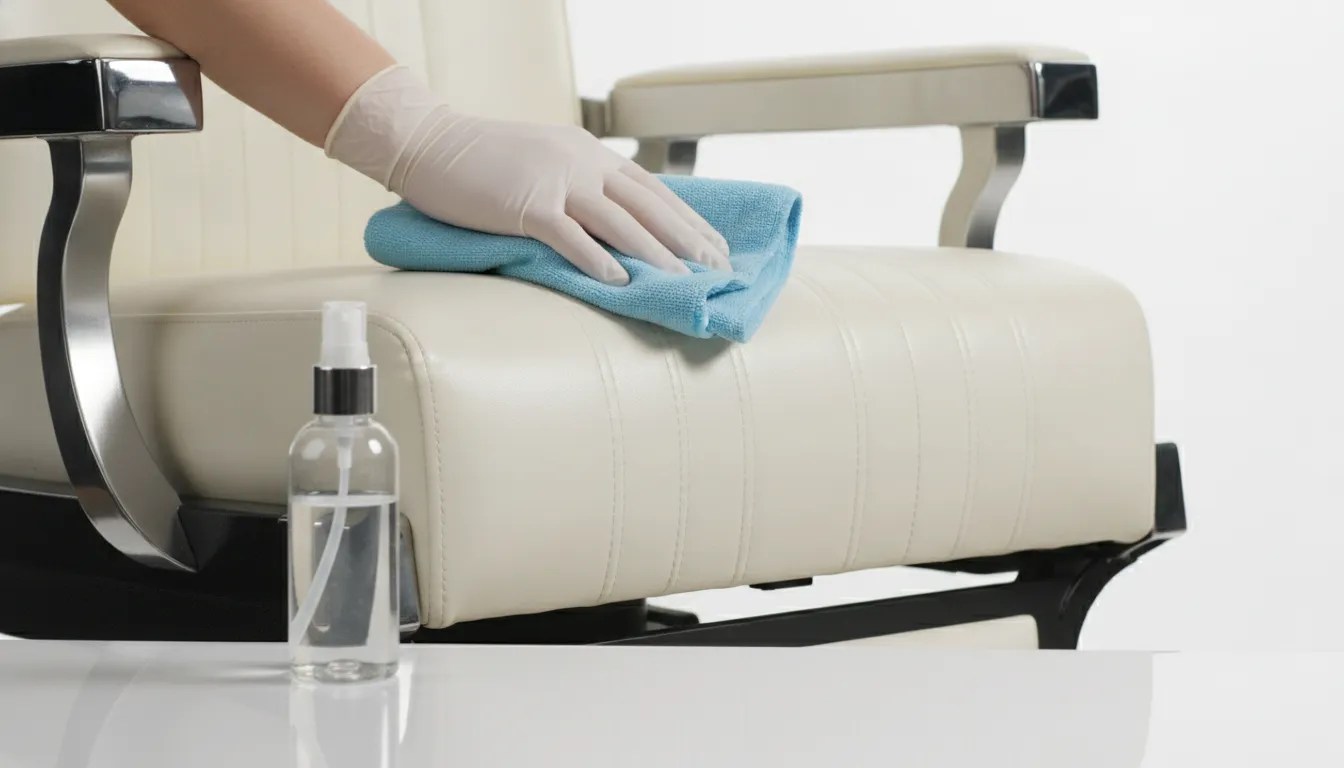
Use a controlled test before routine cleaning
Apply a small amount to a concealed area using the manufacturer’s recommended method. Allow the test area to dry, then check for discoloration, tackiness, cracking, swelling, residue, or a change in finish. A product that appears acceptable on one chair may still be unsuitable for another material or model. So record the chair model and approved product in your maintenance notes.
Protectants also require restraint. Use one only when the chair maker’s documentation permits it, and follow the stated amount and application method. If the manual is missing or the surface reacts during testing, stop and contact the manufacturer or a qualified chair technician before continuing. The Barber Company’s documented maintenance services cover clippers and blades, not barber-chair chemical compatibility or chair repair.
Build a Repeatable Barber Chair Care Routine
A repeatable chair-care routine combines approved cleaning, visual inspection, written observations, and manufacturer-defined service intervals. It gives every team member the same process without turning general advice into a universal maintenance schedule or encouraging unapproved cleaners, lubricants, hydraulic products, or repairs.
A repeatable chair-care routine keeps cleaning, inspection, and manufacturer-specific maintenance from becoming improvised tasks between appointments. Use the chair manual as the authority for approved products, procedures, and service intervals. The goal is consistent upkeep without applying a cleaner, lubricant, or hydraulic product that the chair maker does not approve.
- Set up the approved supplies before opening. Keep the manual-approved surface cleaner, approved protectant if specified, disposable wiping materials, and a small inspection light in a designated location. Separate cleaning supplies from any consumables intended for mechanical service. If the manual does not identify a product as compatible, do not assume that a general-purpose item belongs in your barber chair maintenance supplies kit.
- Remove visible debris and clean the contact surfaces. At the opening or closing point defined by your shop workflow, clear hair and residue from the seat, back, armrests, headrest, footrest, and nearby base surfaces. Cleaning removes soil; it is not automatically the same as disinfection. Follow the product label and chair manual for application, dwell time, wiping, ventilation, and material limitations. Do not saturate seams, controls, or mechanisms unless the manufacturer specifically permits that method.
- Inspect the chair while it is clear and dry. Look over upholstery, seams, stitching, cushions, armrests, the base, footrest, fasteners, and visible controls. Note new tears, separation, looseness, unusual movement, fluid evidence, or changes in stability. A short written log with the chair location, date, observation, and action owner makes recurring problems easier to spot without inventing a universal weekly or monthly schedule.
- Review movement and service requirements against the manual. Use only the manufacturer’s documented inspection and service intervals. If the instructions call for a particular lubricant, hydraulic product, adjustment, or replacement part, verify the exact specification before proceeding. Generic advice about oiling clipper blades does not apply to chair mechanisms, and a clipper-care product should never be repurposed for that job.
- Escalate defects before the next service. Remove a chair from use if inspection identifies a suspected structural, stability, or hydraulic fault. Record the symptom and contact the manufacturer or a qualified chair technician for guidance. Keep chair issues separate from documented tool services. The Barber Company can help with services such as clipper repair, but that does not establish chair repair capability.
For a broader station-level sequence, compare this routine with the barber station maintenance workflow. It can help your team assign cleaning, inspection, and supply-restocking responsibilities without treating chair-specific instructions as interchangeable.
When Should You Stop Using a Barber Chair?
Remove a barber chair from service when it rocks, sinks, tilts, leaks, loses support, exposes sharp hardware, or shows structural damage. Isolate the chair, record the symptom, and follow the manufacturer’s instructions or contact a qualified chair technician. Cleaning supplies cannot correct a stability, hydraulic, or load-bearing fault.
Stop using a barber chair when a fault could affect stability, support, or a client’s contact with the chair. A suspected hydraulic problem, loose fastener, damaged base, structural crack, torn upholstery with exposed hardware, or sharp edge is a safety issue, not a routine cleaning task. Isolate the chair, document what you observed, and follow the manufacturer’s manual or contact a qualified chair technician.
Hydraulic and stability warning signs
If the chair will not rise, sinks unexpectedly, tilts, rocks, or moves differently from its normal operation, do not keep testing it with a client seated. A hydraulic symptom may have several causes, and generic advice about adding fluid can be wrong for the model. Check only the non-invasive items permitted by the manufacturer’s instructions, then arrange qualified service.
Also stop use if the base shifts, the footrest no longer supports weight correctly, or the chair rotates or locks inconsistently. Mark it out of service so another barber does not assume it is ready. Do not substitute a lubricant, hydraulic fluid, connector, or replacement part unless the chair maker identifies it as compatible.
Structural, upholstery, and fastener faults
Inspect the frame, mounting points, seams, upholstery, arm supports, footrest, and visible fasteners. A crack, bent component, separation at a joint, missing fastener, exposed screw, split seam near a load-bearing area, or sharp metal edge warrants removing the chair from service. Cosmetic wear can be monitored, but damage that exposes hardware or changes support should not be treated as cosmetic.
Record the chair model and the exact symptom, and keep the manufacturer’s documentation available for the technician. The Barber Company’s documented technical services focus on clippers, blades, and related tool maintenance, not barber-chair repair. For supplies and equipment guidance that does not require a chair-specific diagnosis, contact the store at (702) 900-9972.
Why Won’t My Barber Chair Rise? Safe Troubleshooting Boundaries
If a barber chair will not rise, limit troubleshooting to visible, non-invasive checks allowed by the manufacturer’s instructions. Look for an obstruction or obvious damage, but do not add generic hydraulic fluid, force a control, substitute parts, or disassemble the mechanism. Remove the chair from service when movement or stability is abnormal.
If a barber chair will not rise, limit troubleshooting to non-invasive checks and the chair manufacturer’s documented instructions. Confirm that nothing is obstructing the base or lift path, look for visible damage, and stop using the chair if it appears unstable or structurally compromised. Do not guess at fluids, lubrication, or internal repairs.
Start with external checks
Clear loose tools, cords, mats, or other objects that could interfere with the base, pedal, lever, or lifting path. Check whether the control moves as described in the manual, without forcing it. Look for visible leaks, cracked components, detached upholstery, bent hardware, or unusual movement. These observations can help a manufacturer or qualified chair technician understand the problem, but they do not confirm a diagnosis.
Use the model’s manual to determine whether the symptom is consistent with a hydraulic control issue, a blocked movement path, or a structural fault. If the manual does not authorize a user-level check, stop there. A hydraulic chair can contain pressurized or load-bearing components, so disassembly, part substitution, and generic hydraulic-fluid recommendations are not appropriate maintenance advice without model-specific documentation.
Know when to remove the chair from service
Take the chair out of use when it rocks unexpectedly, drops, shows a suspected leak, has damaged structural hardware, or cannot support a client confidently. Mark it clearly for the shop team and contact the manufacturer or a qualified chair technician. Do not keep testing it with customers seated in the chair.
The Barber Company’s documented technical services cover clipper repair, blade sharpening, and clipper zero-gapping or oiling. Those services are for barber tools, not barber-chair repair. The distinction matters when selecting barber chair maintenance supplies: use the chair maker’s documentation for chair-specific products and service limits, and seek a qualified chair specialist when the fault goes beyond an external inspection.
Keep Chair Care Connected to the Rest of the Station
Chair upkeep works best as part of the station workflow, not as an isolated supply hunt. Keep chair instructions separate from tool-care advice, connect cleaning and inspection to the shop’s opening and closing process. And route chair-specific faults to the manufacturer or qualified chair technician instead of substituting unverified products.
A clean, inspected chair supports the same professional standard as organized tools, controlled sanitation, and equipment ready for the next service. The Barber Company’s barber station maintenance workflow can help your team define where cleaning supplies, inspection notes, and service tools belong without assuming that a product is safe for every upholstery, finish, or hydraulic system.
For a broader opening and maintenance review, use the barbershop equipment maintenance checklist. Assign chair checks alongside the rest of the station equipment, then record who owns follow-up when a tear, loose fastener, unusual movement, or spill appears.
Keep chair supplies separate from tool-maintenance supplies
Do not substitute clipper oil, blade products, or generic workshop fluids for a chair-approved product. Chair cleaner, protectant, lubricant, hydraulic fluid, replacement parts, and service intervals must be selected according to the chair’s documentation. If the manual is unavailable, identify the chair model and contact the manufacturer or a qualified chair technician before applying an unfamiliar chemical or opening a mechanism.
The Barber Company can still support adjacent equipment needs. The documented in-store clipper repair service is for clippers, not barber chairs. Similarly, professional blade sharpening service addresses blades and shears, not chair hydraulics, frames, upholstery, or fasteners. Keeping those boundaries clear prevents a tool-service intake from being mistaken for chair repair.
Use local sourcing for verified shop needs
For general station equipment, tools, and documented services, review the company’s barber supplies in Las Vegas resource. Bring the chair model, manual, or a clear description of the issue when asking for guidance. If the chair shows instability, structural damage, or a suspected hydraulic fault, stop using it and seek chair-specific technical support rather than trying to solve the problem with an unverified supply.
Frequently Asked Questions
Why won’t my barber chair rise?
First, stop using the chair if movement is abnormal, unstable, or accompanied by leaking fluid or unusual noise. Check only the non-invasive items allowed by the chair manufacturer’s instructions, such as visible obstruction or a loose control connection. Do not add hydraulic fluid or disassemble the mechanism based on generic advice. Contact the manufacturer or a qualified chair technician for diagnosis.
What barber chair maintenance supplies should I keep on hand?
Build the kit by function rather than by a generic product list: a manufacturer-approved surface cleaner. Approved material protectant, inspection tools, spill-response materials, and any repair consumables specifically permitted in the chair manual. Confirm chemical compatibility and application instructions before using anything on upholstery, seams, metal, the base, or hydraulic components.
How often should I inspect a barber chair?
Use the inspection interval in the chair manufacturer’s documentation instead of adopting a universal schedule. Each review should cover upholstery and seams, the base, footrest, fasteners, hydraulic movement, and signs of instability. Record findings so a shop team can identify changes early and remove a chair from service when a safety concern appears.
Can a local barber supply store repair my barber chair?
Confirm the service scope before dropping off equipment. The Barber Company’s documented technical services include clipper repair, blade sharpening, and clipper zero-gapping and oiling. Those services are separate from barber-chair repair. For a chair’s hydraulic, structural, or stability problem, contact the chair manufacturer or a qualified chair technician.
Ready to Keep Your Shop Equipment in Working Order?
The Barber Company can help you choose documented barber equipment supplies and separate routine care from issues that require qualified technical attention. For clipper, blade, and zero-gapping service guidance, call the store or visit the Las Vegas location.
Call The Barber Company at (702) 900-9972 for equipment guidance and documented tool services.
Shop The Barber Company’s professional barber supplies, or visit the store at 4700 Meadows Ln #110, Las Vegas, NV 89107. Follow @barbercompanylv on Instagram for store updates. HABLAMOS ESPANOL.