
x. Y.
When several clippers begin pulling hair, cutting unevenly, or heating up during a busy week, replacing every tool is rarely the first decision a shop owner should make. A clear intake process helps separate motor problems from dull blades, alignment issues, lubrication needs, or tools that are no longer practical to repair.
Call The Barber Company at (702) 900-9972 to discuss your shop’s repair needs.
A barber shop clipper repair service las vegas shop owners can use should assess each unit. Identify the actual failure, and match the tool with repair, sharpening, zero gapping, oiling, or replacement guidance. The Barber Company supports professional barbershops, salons, and the public across Las Vegas, Henderson, and North Las Vegas.
For a multi-unit drop-off, label each clipper and note the symptoms, model, and urgency before arriving. You can review the Clipper and Blade Sharpening Services in Las Vegas page, then confirm assessment requirements and current turnaround directly with the store. The workflow below shows how to organize a bulk repair request without guessing about cost or completion time.
Bulk Clipper Repair for Barber Shops: How It Works
Bulk repair begins with a labeled inventory and an individual assessment for every clipper or trimmer. The right next step may be repair, sharpening, zero gapping, oiling, or replacement review. Confirm current intake instructions with the store so your shop can plan coverage around the equipment that leaves service.
For a shop with several tools showing uneven cuts, snagging, noise, or inconsistent power, bulk repair starts with organized intake. It is better than a rushed replacement decision. The Barber Company provides clipper repair in Las Vegas, along with blade sharpening, zero gapping, and oiling. Each tool can then be assessed for the service it actually needs.
A multi-unit drop-off should be planned as a small equipment workflow. Before arrival, contact the store to confirm current assessment requirements, drop-off instructions, and turnaround details. This helps a manager coordinate coverage without assuming that every clipper has the same fault or that every repair follows the same path.
1. Prepare and label every tool
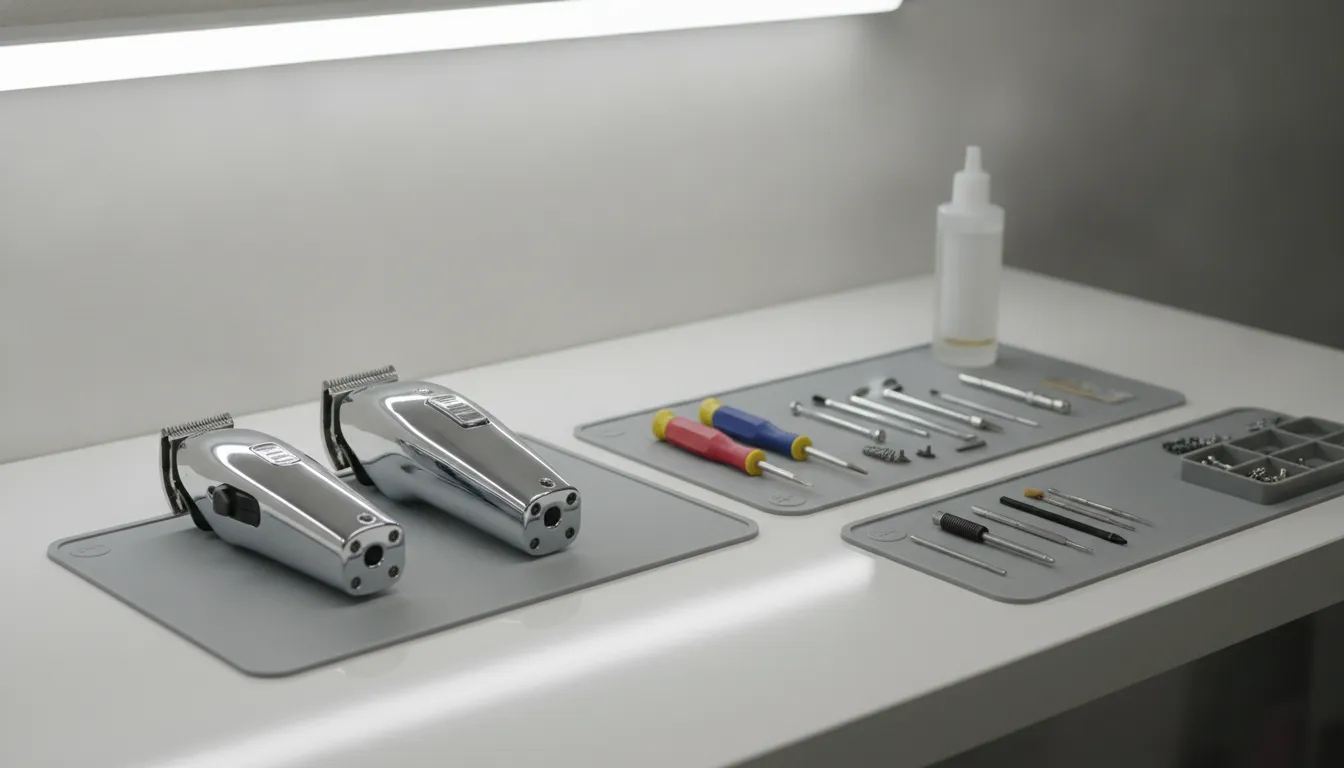
Bring the clippers or trimmers together and label each one with a simple identifier, such as the barber’s name, station number, or inventory code. Note the symptom beside that identifier: motor noise, weak power, heat, snagging, uneven blending, or a blade that no longer cuts cleanly. Include the charger, cord, lever, guards, or other components that are relevant to the problem.
Separating tools by owner or station also makes the return process easier. A shop can match each item to its original user, verify the reported problem, and decide which tools should remain in rotation while the assessment is underway. This is practical downtime planning, not a substitute for the technician’s inspection.
2. Separate repair from blade service
Not every poor result means the motor needs repair. Dull blades can make barbering harder and compromise work quality, while poor maintenance can contribute to uneven cuts or hair snagging. A blade-focused problem may call for professional blade sharpening rather than electrical or motor work.
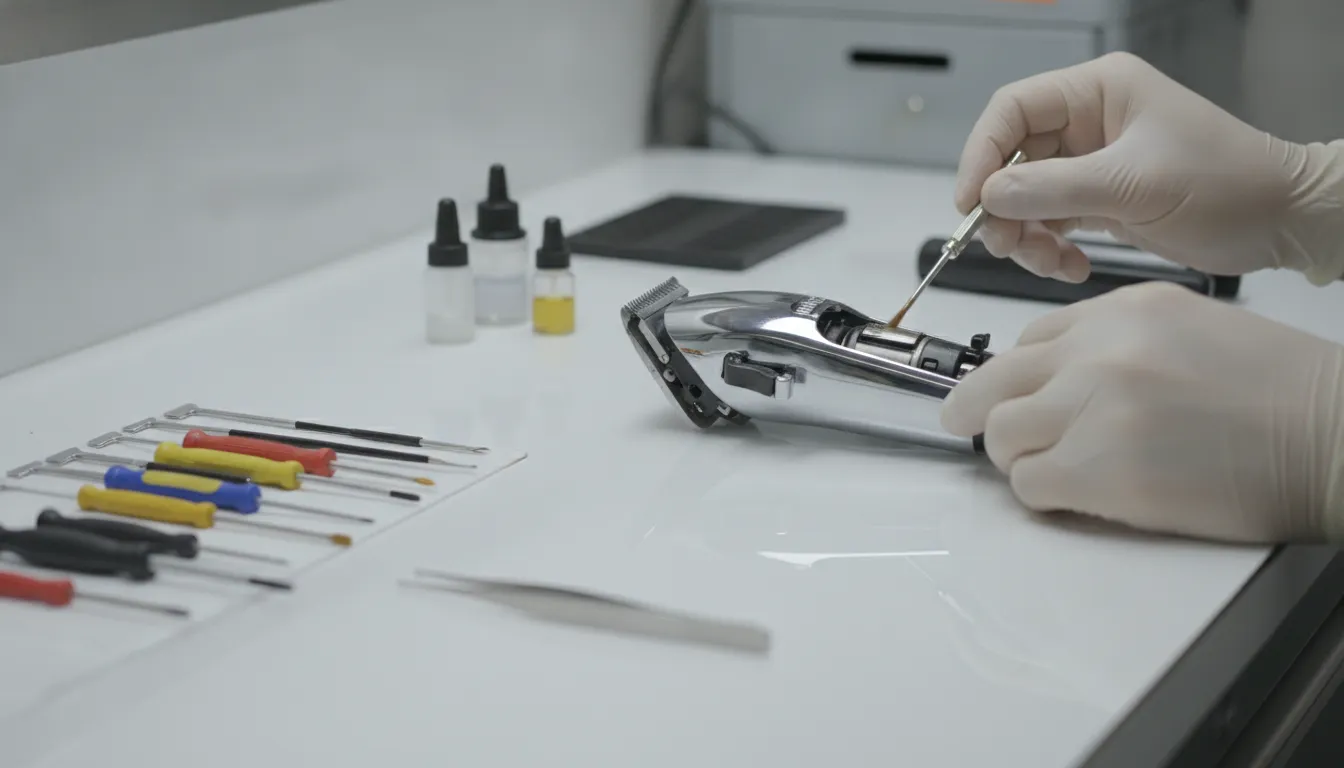
Other tools may need adjustment or maintenance. The Barber Company’s technical services include clipper repair, blade sharpening, zero gapping, and oiling. Zero gapping tunes the blade position for a closer, more consistent cut, while oiling supports smooth movement after the tool has been cleaned and assessed. These services should be selected based on the condition and intended use of each clipper.
3. Review the assessment before authorizing work
Ask for the technician’s assessment of each labeled tool and clarify whether the recommended path is repair, sharpening, zero gapping, oiling, or replacement consideration. If a motor problem is suspected, review the available clipper motor replacement options before retiring the equipment. The goal is to restore reliable shop performance and reduce avoidable downtime, not to apply one solution to every unit.
For a local clipper and blade sharpening service in Las Vegas, call or visit The Barber Company with the labeled inventory and symptom notes. Confirm the current drop-off process and next steps directly with the store before sending equipment out of service.
How Many Clippers Can You Drop Off at Once?
There is no safe unit limit to assume without checking current store instructions. Call before bringing a multi-unit batch, then prepare a labeled inventory with each tool’s brand, symptoms, station, and urgency. That information helps the intake conversation stay organized without turning a symptom list into a diagnosis.
There is no useful one-size-fits-all unit limit to assume for a shop drop-off. If you are bringing several clippers or trimmers from a Las Vegas, Henderson, or North Las Vegas operation, call The Barber Company first. Confirm current intake requirements, assessment details, and how the store wants multi-unit service organized.
A short call before arrival helps prevent an avoidable trip, especially when several barbers are depending on the same equipment. Ask what information the team needs for each tool and whether any current drop-off instructions apply to repair, sharpening, zero gapping, or oiling. Requirements can change, so confirm them rather than relying on an older conversation or a general assumption.
Build a simple inventory before you leave the shop
Prepare a list that matches every tool you plan to bring. Record the brand, model if known, and the barber or station using it. Note the problem in practical terms, such as snagging hair, uneven cutting, excessive noise, weak performance, or a blade that no longer delivers the expected finish. If you are unsure whether the issue is a repair problem or a dull blade, write down the symptoms instead of diagnosing the cause yourself.
Label each clipper and trimmer so the tool can be matched to the right notes. A removable tag or clearly marked case can help distinguish equipment from different stations. Keep accessories with the correct tool when they matter to the assessment. Make a separate note for anything that is missing, intermittent, or only fails under working conditions.
Separate urgent tools from routine maintenance
Sort the list into two practical groups before drop-off. The first group should contain tools that are affecting appointments now. The second can include routine sharpening, oiling, alignment checks, or equipment that is still usable but showing early performance problems. Tell the store how you have prioritized the items, then ask how the technician wants that priority reflected during assessment. Do not assume that urgent means guaranteed completion by a specific time.
For a larger shop intake, bring the inventory list with the equipment and keep a copy for your own rotation log. The Barber Company serves professional barbershops, salon professionals, and the public, so shop owners can explain their operating context directly and ask about the most appropriate next step. If blade condition is the main concern, review the professional blade sharpening service before deciding which tools belong in the repair batch.
Call (702) 900-9972 before arrival to confirm the current drop-off process. A technician must assess each individual tool before the repair path, service scope, and timing can be determined.
Priority Turnaround for Shop Accounts: Minimizing Downtime
Shop owners can reduce disruption by triaging tools, rotating backups, and assigning one person to manage communication. Assessment findings, tool condition, current workload, and the required service affect timing. Confirm the current turnaround directly instead of scheduling appointments around an unverified promise.
For a multi-chair shop, priority service starts with an accurate assessment, not a promised completion time. The Barber Company describes its maintenance support as fast, but current workload, tool condition, and the work required can affect timing. Confirm the present turnaround, drop-off process, and assessment details directly before planning your repair rotation.
Build the schedule around keeping chairs operational. Begin by listing every clipper and trimmer that needs attention, then mark each tool as active, degraded, or unusable. A clipper that runs but pulls hair or produces an uneven cut may deserve attention before it fails during a full appointment book. Dull blades can also make barbering harder and compromise work quality. Route those tools into service based on operational risk, not simply the order in which they were noticed.
Rotate tools instead of taking a whole station offline
Do not send every unit from one chair into service at the same time unless the shop has a verified backup plan. Rotate one or two tools at a time, using clean, tested backups while the technician assesses the equipment. Keep backup clippers charged, fitted with suitable blades, and assigned to a specific station. Label each item with the barber or chair, the symptom, and the date it was removed from use. This prevents a working tool from being confused with one that needs diagnosis.
Triage should separate a mechanical problem from a maintenance or blade issue. Motor symptoms may justify reviewing clipper motor replacement options. Cutting performance may point toward professional blade sharpening or a precision zero gapping service, depending on the assessment. The Barber Company lists clipper repair, sharpening, zero gapping, and oiling among its technical services, but the correct path depends on the individual tool.
Make communication part of the repair plan
Assign one owner or manager to coordinate the intake. Provide the symptoms, brand and model when available, recent maintenance, and whether the tool is needed for a scheduled service. Ask what the technician needs at drop-off, whether the tool requires an assessment first, and when the shop should check back. The related guide on Las Vegas clipper repair turnaround covers factors that can affect timing, but it should not replace a current conversation with the store.
Repair planning is valuable because it restores reliable shop performance and reduces avoidable downtime. Keep a simple rotation log after each intake, then update it when a tool returns and passes a working test. That record helps managers spot repeat failures, schedule maintenance before peak periods, and decide when replacement assessment is more practical than another repair.
Wholesale Service Pricing for Shop Owners: Get a Custom Quote
A custom quote should follow an assessment because a dull blade, alignment issue, motor concern, and routine maintenance need different work. Group tools by symptom, label them, and ask which service applies. The Barber Company can confirm current scope and pricing after reviewing the individual equipment.
Repair pricing depends on what each clipper or trimmer actually needs. A technician must assess the tool before confirming the recommended service and cost. For shop accounts, the practical approach is to group tools by symptom, identify the action required, and confirm current drop-off and assessment details with The Barber Company.
| Service | Typical symptom or action | Shop owner’s next step |
|---|---|---|
| Clipper repair assessment | The tool runs poorly, cuts unevenly, snags hair, or has an unidentified fault. | Label the tool, describe the issue, and request an assessment before approving work. |
| Blade sharpening | Blades feel dull, pull through hair, or make detailed work harder. | Separate blades that need sharpening and ask about the current professional blade sharpening service. |
| Precision zero gapping | The clipper needs closer blade alignment and controlled blade tuning. | Identify the tool and intended use, then request the precision zero gapping service. |
| Motor replacement assessment | A persistent motor problem raises the question of repair versus replacement. | Bring the affected unit for evaluation and review the available clipper motor replacement options. |
| Routine maintenance | The tool needs cleaning, oiling, inspection, or a planned care reset before performance declines. | Record the unit, explain its maintenance history, and use the barber clipper maintenance checklist to plan recurring care. |
The Barber Company provides clipper repair, blade sharpening, zero gapping, and oiling for professional barbers and shops. These services can address different failure points, so treating every unit as the same job can lead to the wrong decision. A dull blade may need sharpening, while a motor concern requires a separate diagnosis.
Custom pricing is confirmed after assessment, not assumed from the symptom alone. Before bringing multiple tools, call or visit to confirm current intake requirements, drop-off instructions, and turnaround expectations. For a broader shop-supply conversation, review the available barber supplies and maintenance products alongside your service list.
Setting Up a Recurring Maintenance Schedule for Your Shop
A recurring schedule combines daily cleaning and checks with weekly inspections and a monthly review of repeat failures. Use a rotation log to track each tool, its station, symptoms, and next action. Escalate persistent problems for assessment before they create avoidable downtime during appointments.
A recurring maintenance schedule keeps cleaning, lubrication, blade checks, and repair decisions from becoming last-minute problems. Daily, weekly, and monthly checkpoints help a busy shop catch dull blades, snagging, uneven cuts. And developing equipment faults early, while a simple rotation log shows which tools need attention before they affect appointments.
Daily: clean, disinfect, and check each tool.
At closing, brush loose hair and visible debris from the blade set, housing, and guard areas. Follow the equipment manufacturer’s instructions for products and disassembly, and keep liquid away from electrical components unless the tool documentation allows it. The CDC defines cleaning as removing foreign material, normally with water and detergent or an enzymatic product. Its guidance also explains that dried soil is harder to remove and can make later disinfection less effective. Manual cleaning depends on friction and fluid movement, not simply spraying over buildup: review the CDC cleaning guidance.
After cleaning, use the disinfectant and contact time appropriate for the tool and product label. The CDC lists ethyl or isopropyl alcohol at 70-90 percent for low-level disinfection of smooth, hard surfaces. Follow the manufacturer’s instructions and your shop’s sanitation procedure: see the CDC surface-disinfection methods. Dry the tool as directed, apply the correct amount of clipper oil to the blade contact points, and run the clipper briefly if the manufacturer recommends it.
Before returning each clipper to service, look for loose screws, damaged guards, excess heat, unusual noise, a weak motor response, or blades that pull instead of cutting cleanly. A dull blade can make barbering harder and compromise work quality, while poor maintenance can contribute to uneven cuts or snagging hair. Those are service signals, not problems to hide until the next busy weekend.
Weekly: inspect the working set and rotate tools.
Choose one day for a closer inspection of every active clipper and trimmer. Check blade alignment, fasteners, cord or charging contacts, guards, and the condition of the cutting edges. Separate tools that need sharpening from tools that need a deeper assessment. Use a labeled rotation log with the tool name, assigned station, date checked, observed symptom, cleaning and oiling completed, and next action. Rotating equipment through the schedule prevents the same heavily used unit from carrying every appointment.
Keep maintenance supplies organized with your barber supplies and maintenance products, and use the barber clipper maintenance checklist as a repeatable reference for daily, weekly, and monthly tasks. Proper care can help extend the working life of expensive tools.
Monthly: review patterns and escalate early.
At month-end, review the log for repeat failures, frequent blade dulling, overheating, recurring snagging, or tools that require repeated adjustment. Escalate a unit when cleaning and correct lubrication do not resolve the symptom. When the blade remains dull or damaged, alignment cannot be maintained, or the motor, power, or housing appears compromised. The Barber Company provides professional blade sharpening service, clipper repair, zero gapping, and oiling. If a technician needs to assess the tool, confirm drop-off requirements and current turnaround with the store before bringing in multiple units. Regular care is the first line of defense, but a clear escalation point protects service quality and reduces avoidable downtime.
What Should Shop Owners Ask a Barber Shop Clipper Repair Service in Las Vegas?
Ask how the provider assesses each unit, separates blade work from motor repair, handles your brands, communicates findings, and manages multi-tool drop-offs. Also ask which maintenance services are available and how timing is confirmed. Clear answers help a shop choose the next step without assuming a repair outcome.
Shop owners should ask how each tool will be assessed, which repair and maintenance services are available, what brands the technicians handle, and how drop-off communication works. A capable provider should understand multi-unit shop workflow, distinguish blade service from motor repair, and confirm current timing and next steps rather than promise an outcome before inspection.
Start with the assessment process. Explain whether the clipper is overheating, pulling hair, making unusual noise, losing power, or producing an uneven cut. Include the tool’s brand and model, the symptoms, and how it is used in the shop. The technician can then determine whether the issue calls for repair, cleaning and oiling, blade work, or a replacement discussion. A provider should not treat every performance problem as a motor failure.
Ask about the full service scope. The Barber Company lists clipper repair, professional blade sharpening, zero gapping, and oiling among its technical services. That matters when a shop has several tools with different needs. A dull blade may need professional blade sharpening, while a clipper that has lost power may call for an assessment of clipper motor replacement options. For a close, consistent finish, ask whether a precision zero gapping service is appropriate for that specific tool.
Brand familiarity is another practical question. Ask whether the technicians regularly work on the brands in your stations, including Wahl, Andis, BaByliss Pro, Gamma+, and StyleCraft. Brand experience does not remove the need for an individual assessment, but it helps the conversation stay specific to the equipment your barbers rely on.
Clarify the shop workflow before leaving a box of tools at the counter. Ask whether units should be labeled, whether accessories or chargers are needed for diagnosis. How the shop will be contacted with findings, and whether the provider can discuss multiple tools together. The Barber Company specifically advises customers to confirm assessment, drop-off requirements, and current turnaround directly with the store. Do not rely on a fixed completion promise, especially when several tools require different work.
Finally, ask how the service fits into ongoing maintenance. If dull or poorly maintained blades are already causing harder cutting, snagging, or uneven results, combine repair decisions with a rotation plan. Repair is a practical way to restore reliable shop performance and reduce avoidable downtime, but the technician must evaluate each tool before recommending the next step. Owners who need supporting supplies can also review barber supplies and maintenance products for the shop.
Open a Shop Service Account: Call (702) 900-9972
A shop service conversation is most useful when you bring a labeled equipment list and explain which tools affect current appointments. The Barber Company supports professional shops across the Las Vegas Valley and can discuss assessment, drop-off, repair, sharpening, and related equipment needs directly.
For a shop with several clippers, trimmers, or blades needing attention, a service-account conversation helps organize the next step. The Barber Company serves professional barbershops, salon professionals, and the public, with local support for equipment assessment, repair intake, and related maintenance across the Las Vegas Valley.
Before calling, prepare a short equipment list. Note each tool’s brand and model, the problem you are seeing, and whether the issue is intermittent or constant. Useful details include motor noise, heat, failure to start, snagging, uneven cutting, battery concerns, or a blade that no longer performs cleanly. If a tool has already been opened or adjusted, mention that as well. Clear information helps the store understand what needs to be assessed when you discuss a clipper repair service in Las Vegas.
Label each unit with the barber or station it belongs to, then keep detachable blades, guards, cords, and chargers with the correct tool. A simple intake sheet can record the reported symptom and the date it was removed from service. This is especially useful when multiple people are contributing equipment to one drop-off. The technician still needs to assess each item individually, so treat your list as an operational aid rather than a diagnosis.
What to confirm during the call
Ask about the current assessment process, drop-off requirements, and expected turnaround for the specific items you are bringing. These details should be confirmed directly with the store because they can depend on the tool and the current service queue. You can also ask whether a unit appears better suited for repair, professional blade sharpening, precision adjustment, or replacement review. The Barber Company’s technical support includes clipper repair, blade sharpening, zero gapping, and oiling, but no fixed price or completion time should be assumed before assessment.
Wholesale support can make the conversation useful beyond one repair visit. Explain whether you manage an independent barbershop, salon, mobile operation, or school program, and whether you need help maintaining working equipment or sourcing replacement supplies. The Barber Company uses a dual-access model, so professional accounts and public customers can receive guidance without the process being limited to licensed professionals. For related equipment and maintenance products, browse the barber supplies and maintenance products available locally.
Service support covers Las Vegas, Henderson, North Las Vegas, and the surrounding Las Vegas Valley. If Spanish is more comfortable for your team, ask for bilingual assistance. HABLAMOS ESPANOL.
Visit The Barber Company online for store information and professional equipment, or contact the team at (702) 900-9972. The approved customer contact details are: 4700 Meadows Ln #110, Las Vegas, NV 89107, phone (702) 900-9972, and Instagram at @barbercompanylv on Instagram.
Frequently Asked Questions
These answers cover the practical questions shop owners ask before sending clippers or trimmers for assessment, including repair versus sharpening, supported brands, pricing, and sanitation. Because tool condition and current service requirements vary, confirm the details with The Barber Company before arranging a multi-unit drop-off.
How do I know whether my clipper needs repair or sharpening?
Start with the symptom. A motor that will not start, cuts out, runs inconsistently, or sounds abnormal needs a technical assessment. Dull blades, uneven cutting, or hair snagging may point to sharpening, alignment, or maintenance instead. The Barber Company can assess the tool and identify whether repair, blade sharpening, zero gapping, or oiling is the appropriate next step.
Can you repair Wahl clippers and other professional brands?
Bring the clipper or trimmer in for assessment, and identify the brand and model if you know it. The technician needs to evaluate the individual tool before confirming the available repair path. For a shop handling several brands, label each unit with its owner, problem, and preferred contact so the intake conversation stays organized.
What does clipper blade sharpening cost?
There is no responsible single answer without reviewing the blade and the service required. Condition, construction, and the requested work can affect the assessment. Ask The Barber Company for current pricing after the tool is reviewed. Do not confuse product delivery offers with repair intake or return logistics.
Should barbers disinfect clippers between clients?
Yes. Remove hair and visible debris first, then follow the disinfectant label and the applicable shop protocol. Cleaning and disinfection are separate steps, and thorough cleaning should precede disinfection. Keep tools maintained as well, since poor maintenance can contribute to uneven cuts or snagging during appointments.
Ready to Discuss Your Shop’s Repair Needs?
A direct assessment can help your team decide which clippers and trimmers need repair, sharpening, zero gapping, or further evaluation before drop-off. Have your equipment list and the main issues ready so the conversation stays focused on your shop’s workflow. Contact The Barber Company to discuss bulk repair assessment and current drop-off options.
Call The Barber Company at (702) 900-9972