
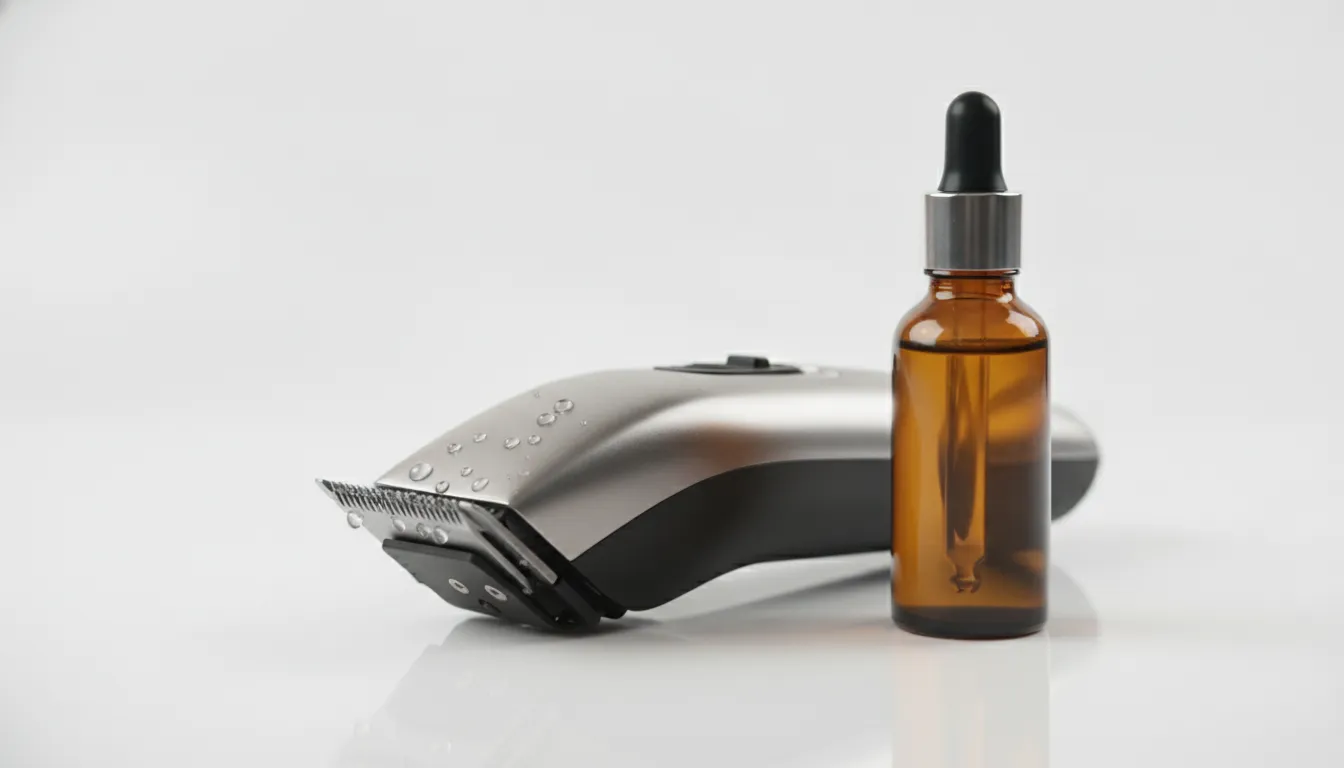
Clipper oil is a small purchase that protects an expensive, revenue-producing tool. The right formula reduces friction between moving blades, helps control heat during long service sessions, and limits the moisture that can lead to corrosion. For Las Vegas barbers, choosing a professional oil also means getting practical guidance from a local supplier that understands daily shop demands. Stop by The Barber Company in Las Vegas to choose the right clipper oil for your tools.
The best oil for clipper blades is a lightweight, non-gumming lubricant formulated for fast-moving metal blades, typically with a mineral oil base. It should spread between the blade surfaces, reduce friction and heat, and leave minimal residue that can trap hair or dust. Clean the blades before applying it.
The difference between a professional formula and a generic substitute becomes clear when you examine viscosity, heat tolerance, residue, and corrosion protection. Those details are part of a good blade-care routine, including proper clipper maintenance procedures, and they start with what the oil must do at the blade surface.
Best Oil For Clipper Blades: What Makes a Good Clipper Blade Oil?
The best oil for clipper blades is a lightweight, non-gumming lubricant that spreads through the tight contact points between moving blades. A reliable formula uses a mineral oil base, tolerates heat from high-speed operation. Limits friction, and leaves a protective film that helps resist corrosion without trapping hair and dust.
Clipper oil has a demanding job. It must reach the sliding surfaces while the blade assembly operates at high speed, then remain stable through repeated cutting sessions. A thin, purpose-formulated oil is better suited to that environment than a general household oil because it can move into narrow clearances without creating a heavy residue.
Mineral oil is the standard base
Professional clipper oils commonly use a refined mineral oil base because it provides smooth lubrication without the sticky behavior associated with cooking oils. The formula should be light enough to flow between the moving cutter and stationary blade, but substantial enough to maintain a lubricating film. That balance supports consistent blade movement and helps reduce metal-on-metal wear.
Before applying any lubricant, remove hair and debris from the blade surface. The University of Tennessee’s hair clipper maintenance guide warns that oil applied over impacted hair can cause the hair to clump and become trapped between the sliding blades. Its maintenance guidance explains why cleaning comes before lubrication, not after it.
Viscosity and heat tolerance matter
Barber clippers can drive their blades at roughly 5,000 to 7,000 RPM, so viscosity affects how quickly oil reaches the contact points through capillary action. Oil that is too thick may drag on the blade or collect debris. Oil that is too thin may not maintain enough coverage during a long service. The right viscosity lets the blades glide while preserving a consistent film.
Friction generates heat, especially during back-to-back cuts. A high-heat-tolerance formula helps the lubricant remain effective as the blade warms, reducing friction that can contribute to overheating and dulling. By protecting the cutting edge from unnecessary wear, proper lubrication can help preserve sharpness between professional sharpenings.
Look for non-gumming and corrosion-inhibiting protection
A good oil should dry cleanly and avoid a tacky residue that attracts hair dust. It should also leave a light protective barrier against moisture, helping limit rust and corrosion on exposed metal. These properties are practical indicators of a professional formula: the blade stays cleaner, moves freely, and is less likely to develop abrasive buildup over time.
For the broader cleaning, alignment, and lubrication routine, follow proper clipper maintenance procedures. If you are comparing product types, the best oil for clipper blades is ultimately the one that matches these mechanical requirements, not simply the cheapest bottle on the shelf.
Professional Clipper Oils vs. Generic Alternatives: Key Differences
Professional clipper oil is the best oil for clipper blades because its low-viscosity formula is designed for rapid metal-to-metal contact, heat, and corrosion control. Household substitutes may seem convenient, but they can evaporate, oxidize, gum up, or hold debris against the blade, reducing cutting performance and shortening service life.
Clippers operate under conditions that ordinary household oils are not designed to handle. A professional formula reaches the contact surfaces between moving blades, stays stable during high-speed operation above 5,000 RPM, and leaves a clean film rather than a sticky coating. The goal is controlled lubrication, not simply making the metal look wet.
| Type | Lubrication Quality | Rust Prevention | Gumming Risk | Safe for 5000+ RPM | Verdict |
|---|---|---|---|---|---|
| Professional clipper oil | Consistent, low-viscosity film for blade contact | Designed to help protect clean metal surfaces | Low when applied correctly | Yes | Use as the primary blade lubricant |
| WD-40 | Short-term displacement, not long-term blade lubrication | Temporary protection only | Low at first, but leaves the wrong service film | No | Do not use as clipper oil |
| Olive or other cooking oil | Too unstable for repeated blade friction and heat | Unreliable | High as the oil oxidizes and thickens | No | Avoid; it can gum up the blades |
| Baby oil or 3-in-1 oil | Not specifically balanced for clipper blade clearance | Inconsistent | Moderate; can attract hair dust and debris | Not recommended | Use a purpose-made formula instead |
| Sewing machine oil | May lubricate, but lacks clipper-specific formulation | Variable | Moderate if overapplied | Not recommended without manufacturer approval | Choose professional clipper oil |
Why WD-40 is not a substitute
WD-40 is primarily a solvent and water-displacing product, not a dedicated long-term lubricant for clipper blades. It can make a blade feel slick immediately, but that effect does not provide the durable, controlled film needed during repeated cutting. As the solvent evaporates, the blades are left without the lubrication your motor and blade set require.
Why cooking oils and generic mineral oils cause problems
Olive oil and other cooking oils oxidize over time. As they break down, they become tacky and can gum the blade teeth, making cleaning more difficult. Generic mineral oils may lubricate in a broad sense, but they can attract hair dust and debris, especially when a barber applies too much. That contamination increases drag and can interfere with precise blade movement.
Professional clipper oils are typically non-toxic, non-staining, and formulated with the viscosity needed for high-speed blade contact. Apply only the amount recommended by the clipper manufacturer, then wipe away excess. A clean, thin film protects performance; a heavy coating gives hair and dust more surface area to cling to.
Top Professional Clipper Oils Available at The Barber Company
The right oil depends on your clipper workload, blade system, and buying priorities. Wahl is a dependable everyday standard, Andis keeps routine maintenance economical, Oster suits barbers who prefer a classic blade-care option, and Gamma+ gives professionals a premium choice. The Barber Company stocks these professional options locally for Las Vegas pickup and delivery.
Professional clipper oil should be light enough to reach the sliding surfaces. Stable during repeated heat cycles, and clean enough to avoid leaving a tacky film that traps hair. The product name matters less than matching the oil to the tool and applying only what the blade needs. Clean impacted hair first, then lubricate. The University of Tennessee’s maintenance guidance warns that oil applied over debris can cause hair to clump between the moving blades: review the university’s clipper maintenance guidance for the underlying care principle.
Wahl Clipper Oil: the dependable shop standard
Wahl Clipper Oil is a practical default for barbers maintaining Wahl clippers, trimmers, and mixed-brand stations. The manufacturer lists a 2 oz bottle for its clipper and trimmer blade oil, which is a useful size for a station drawer or mobile kit. The brief lists the local price at approximately $4.99. Choose it when you want a familiar, straightforward oil for regular blade lubrication rather than a specialty treatment. Its narrow applicator also makes controlled drops easier during a busy service day.
Andis Clipper Oil: economical professional maintenance
Andis Clipper Oil is the budget-conscious professional option, listed in the brief at approximately $2.89. It fits barbers who oil multiple tools every day, outfit several stations, or want a spare bottle in a travel case without spending more than necessary. It is a sensible match for Andis equipment, but it can also serve compatible professional blades when the application instructions for the tool allow it. The advantage is simple: dependable routine lubrication at a lower shelf price.
Oster Blade Lube: an all-around blade-care choice
Oster Blade Lube is listed at approximately $3.59 and is a strong all-purpose choice for barbers who work with Oster equipment or want a recognizable professional blade lubricant. It belongs in the daily-care category, not the cooling-spray category. Use it after brushing away hair and cleaning the blade, then wipe away excess so the remaining film protects the metal without becoming a dust magnet.
Gamma+ and Barber Works options for a local setup
Gamma+ Oil is the premium option in this roundup and makes sense for professionals who prioritize a higher-end brand match across a Gamma+ station. The Barber Company carries authorized professional brands including Gamma+, Wahl, and Andis, giving shoppers access to expert guidance instead of guessing from a generic shelf. Its local barber supply store also carries proprietary Barber Works maintenance products and tools. The verified Barber Works range includes accessories such as the Continuous Mist Sprayer, while oil availability can be confirmed with the team before you visit.
The Barber Company serves both working professionals and retail customers, so you do not need a professional license to buy pro-grade maintenance supplies. For shop owners, immediate local availability is the practical difference. Stop in for same-day inventory, ask about wholesale needs, or combine oils with other station supplies. Free local delivery is available on orders over $50 throughout the Las Vegas valley. Product prices and stock can change, so contact the store at (702) 900-9972 or visit in person for current availability.
How Much Oil Is Too Much? Application Tips from Professionals
For most clipper blades, one or two drops applied after cleaning is enough. Use a small amount at the blade corners and along the teeth, let the clipper distribute it briefly, then wipe away the excess. Too much oil attracts hair and debris, creating the buildup you are trying to prevent.
Good oiling is controlled lubrication, not soaking. A thin film should remain between the moving blades, while the outside of the blade should feel clean rather than wet. This routine supports smooth blade movement and helps limit the friction and heat that develop during long service sessions.
- Clean the blades first. Turn the clipper off and remove loose hair with a fine brush. If hair is impacted between the blades, remove it before applying lubricant. The University of Tennessee’s maintenance guidance warns that oiling dirty blades can cause hair to clump and become trapped between the sliding surfaces. Keep blade-wash solution away from the clipper housing, and follow the product’s safety directions. This cleaning-first sequence is a core part of proper clipper maintenance.
- Apply one or two drops. With the blade installed, place a small drop at each corner and a light drop along the teeth. Run the clipper at low speed while applying the oil so it can reach the contact line without splashing. The goal is coverage across the moving blade, not a visible pool of lubricant. This measured approach works whether you are using the best oil for clipper blades for a professional shop or maintaining one tool at home.
- Let the blade run briefly. Allow the clipper to run for a few seconds so the oil can spread across the sliding surfaces. Listen for a smoother motor and blade sound, but do not treat noise alone as a diagnosis. Persistent heat, pulling, or grinding can indicate dull, damaged, or misaligned blades that need inspection.
- Wipe before the next service. Use a clean, lint-free cloth to remove oil from the blade exterior and any excess around the teeth. A wet blade picks up hair and dust quickly, and that debris can work back between the cutting surfaces. The finished blade should be lubricated internally but nearly dry to the touch.
For a professional using clippers throughout the day, oil before the first service and after the final service. During continuous work, reapply after roughly two or three haircuts, or sooner if the blade begins to run hot or sound dry. Home users should follow the same principle and oil whenever the tool is cleaned or used regularly, rather than waiting for visible corrosion.
Keep the sequence consistent around other blade work. Follow the recommended oiling clipper blades before sharpening, and review the shop’s clipper oiling requirements when a precision zero-gap adjustment is being performed. Correct quantity protects the blade; it cannot compensate for a damaged edge or motor problem.
Clipper Oil vs. Cooling Spray: Do You Need Both?
Answer: Yes, most barbers benefit from both products because they perform different jobs. Cooling spray lowers blade temperature and helps remove residue during a service, while clipper oil provides lasting lubrication and a protective barrier against moisture. Spray can support your workflow, but it cannot replace oil.
Cooling spray, also called coolant or lubricant spray, evaporates quickly after it is applied. That rapid evaporation is useful when a clipper becomes hot between clients or when you need to refresh the blade without waiting through a long cool-down. It may also help dislodge light residue. Once the carrier evaporates, however, very little lasting lubrication remains between the moving blades.
Clipper oil has a different mechanical purpose. It forms a thin film between the metal surfaces, reducing friction that contributes to heat and blade dulling. It also helps create a protective barrier against moisture, which reduces the risk of rust and corrosion on metal blades. The right best oil for clipper blades is formulated to stay where the blade needs lubrication without leaving a heavy, sticky coating.
What is the correct clean, cool, and oil sequence?
Use the products in this order:
- Brush away loose hair. Remove visible debris from the teeth and blade surfaces.
- Wash with blade wash when needed. Turn the clipper off before applying or immersing the blade in wash solution. A university maintenance guide warns that running the blade during washing can draw solution into the housing and damage the motor: clipper cleaning and lubrication guidance.
- Dry completely. Cooling spray or blade wash is not a substitute for drying and lubrication.
- Apply clipper oil. Place a small amount at the blade corners and along the teeth, then run the clipper briefly to distribute it. Wipe away excess before returning to a client.
Some hybrid products, including Andis Blade Care Plus, combine cleaning with light lubrication. They are convenient for quick maintenance, but a combination spray should not fully replace dedicated clipper oil when the blade needs regular friction control and corrosion protection. Think of spray as a temperature and cleaning tool, and oil as the maintenance step that keeps the blade moving smoothly over repeated services.
Frequently Asked Questions
Can you use WD-40 on clipper blades?
WD-40 is not the right routine lubricant for clipper blades. It is formulated primarily as a water-displacing solvent and penetrant, while clipper blades need a light lubricant that stays between fast-moving metal surfaces. Clean the blades, let them dry, and apply purpose-made clipper oil instead.
What is a good substitute for clipper oil?
A purpose-made clipper or trimmer oil is the safest choice because its viscosity is designed for close blade contact and high-speed operation. Avoid olive oil, cooking oils, and other household substitutes. They can become sticky, attract hair and dust, and leave residue that interferes with blade movement.
What kind of oil do you use for trimmer blades?
Use a light, non-gumming clipper oil, typically based on highly refined mineral oil. The oil should spread through the blade teeth without leaving a heavy coating. Professional formulas from brands such as Wahl, Andis, Oster, and Gamma+ are practical options for daily barbering and home grooming.
Should you oil clipper blades before use?
Yes. After cleaning and drying the blade. Place a small amount of oil along the moving blade rail and briefly run the clipper at low speed so the lubricant distributes. Wipe away excess oil before bringing the tool near a client. Too much oil attracts debris and can transfer to hair or skin.
How often should you oil clipper blades?
For a professional barber, oiling after every two or three haircuts is a useful working routine. With additional oil after cleaning or whenever the blade begins to sound or feel dry. Home users can oil after cleaning and before storage. Consistent light applications help limit friction, heat, and premature blade wear.
Ready to Shop Clipper Oil in Las Vegas?
The right oil helps keep clipper blades moving smoothly between services, whether you are maintaining one tool or stocking a full station. Shop clipper oils at The Barber Company and ask about free local delivery on orders over $50. For product guidance or wholesale quantities, call The Barber Company at (702) 900-9972 or visit the Las Vegas store.