
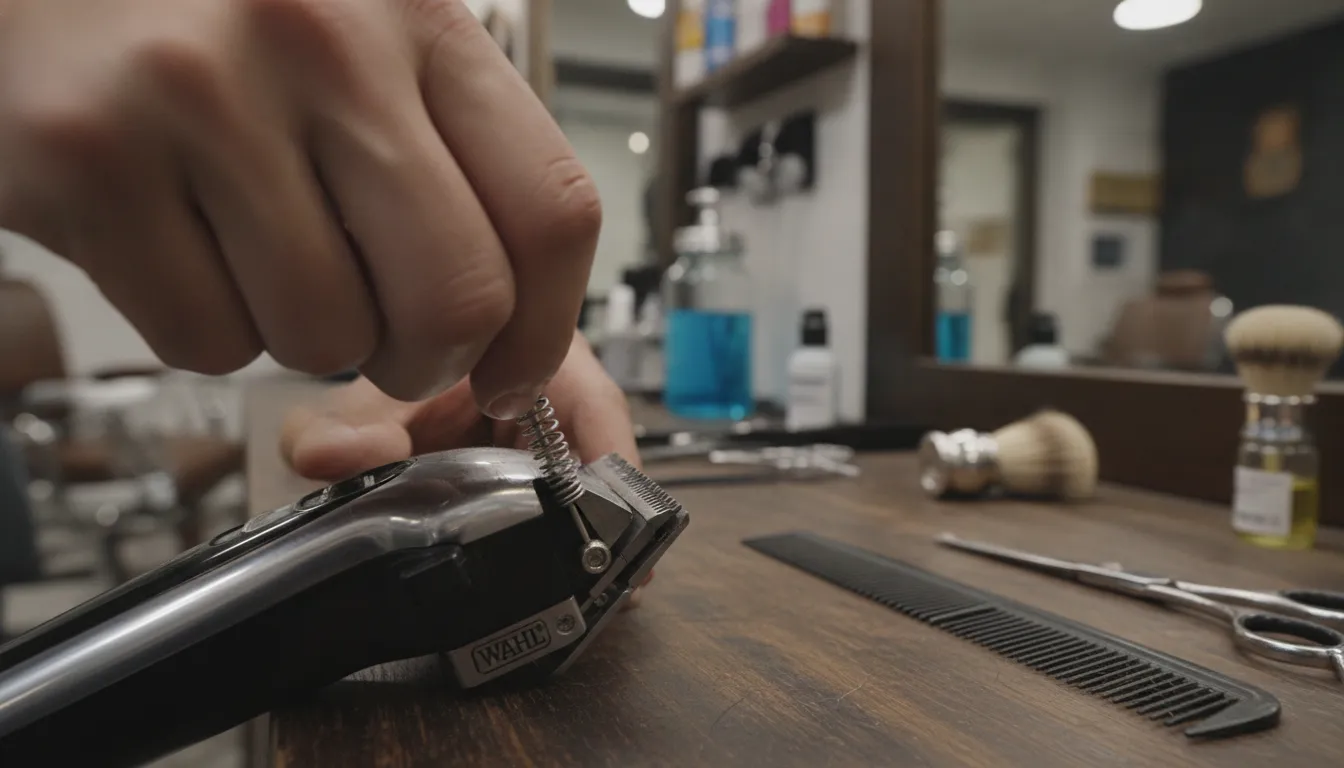
A buzzing clipper that pulls and chews hair during a busy Saturday rush is completely unacceptable. Proper tool care begins with learning how to adjust clipper blade tension. Stop by The Barber Company in Las Vegas today to feel the difference.
How to adjust clipper blade tension is a vital skill that controls how tightly the top blade presses against the bottom blade. The best setup uses the lowest amount of pressure that still cuts hair cleanly, which lowers motor strain and prevents too much heat. If your blades are too loose, they will chew the hair or slip out of place during a busy day in the shop. In contrast, tight blades cause high friction, make the teeth dull fast, and lead to early wear on the clipper motor. You can easily master these steps or find more help in The Complete Guide to Barber Clipper Care and Maintenance.
How do you know if your tension is correct, and what does it do to your clipper? Before you make any changes, you should understand the basics of What Is Clipper Blade Tension and Why Does It Affect Your Cut? The path begins with learning how the blades interact.
What Is Clipper Blade Tension and Why Does It Affect Your Cut?
Clipper blade tension is the exact amount of pressure that the tension spring applies to push the top cutter blade against the bottom blade. Getting this tension right allows the blades to glide smoothly and cut hair cleanly, while incorrect tension leads to extreme blade heat and rapid motor wear.
The spring tension mechanism
To understand how your clipper works, you must look at the blade set. Two steel plates sit on top of each other at the head of the tool. The bottom blade stays still, while the top blade moves fast from side to side to cut the hair.
A metal spring system sits under a small socket held by tight screws. This spring pushes the top cutter down against the bottom blade.
This direct force is what lets the two pieces of metal act like a pair of shears. With the right amount of contact, the teeth can slide back and forth to trim hair without catching. If you want to keep your tools in top shape, you should read The Complete Guide to Barber Clipper Care and Maintenance. It covers how to clean, oil, and set up your gear for long-term use.
Why low tension is best
When you set the pressure on your blades, you must find a careful balance. According to industry tensioning guidelines, proper tension ensures the blades glide smoothly against one another to cut hair cleanly and well. But you do not want to use more force than is needed. The best rule of thumb is to use the lowest amount of pressure that still cuts hair cleanly.
When you keep the tension low, you protect your clipper. Your motor does not have to fight hard friction to move the cutter. This cuts wear on the inner parts and stops the blades from getting hot. A cool blade is much safer for your client’s skin and keeps the steel sharp for more cuts.
The cost of incorrect tension
Many barbers do not check their tension until they run into trouble. If the blades are too tight, the clipper body will get warm in your hand and the high heat can burn a client. Tight blades also blunt very fast, which means you will have to pay for professional blade sharpening more often. Over time, the extra strain can burn out the clipper motor.
On the other hand, loose blades bring their own set of problems. If there is not enough pressure, the blades will fail to cut hair. Instead of slicing the hair, they will fold and chew it, which pulls on the hair and causes pain. In some cases, the top blade can slip out of its slot during a cut and ruin your fade or nick the skin.
How to Tell If Your Blade Tension Is Off
Incorrect blade tension shows itself through specific signs that affect cutting performance and clipper behavior. Recognizing these symptoms early helps you adjust the tension before damage occurs to your tools or your clients experience discomfort.
Signs that tension is too loose
When clipper blade tension is too loose, the blades fail to cut properly. Instead of slicing cleanly through the hair, the teeth will chew, fold, or skip over the hair strands. This tugging motion pulls on the client’s scalp and causes real pain during the cut. A loose blade set can also produce a rattling sound as the top cutter shifts out of position during use. In severe cases, the entire blade assembly can fall out of the clipper head mid-cut, which creates a safety hazard and ruins the haircut.
Signs that tension is too tight
Blades that are too tight create a different set of problems. The motor has to work much harder to drive the cutter against excessive friction. According to Masterclip blade tension guidelines, too much tension causes the clipper to generate extreme heat quickly, blunts the blades prematurely, and accelerates wear and tear on the motor and internal cog. A clipper that feels hot in your hand after ten seconds of running is a clear warning that the tension is set too high. You should also listen for a high-pitched whine from the motor, which signals that the cutter is under too much load.
Without proper care and maintenance, these issues compound over time and cut short the life of professional clippers. Following the complete guide to barber clipper care and maintenance will help you spot these signs earlier.
How to Adjust Clipper Blade Tension: A Step-by-Step Guide
Adjusting clipper blade tension involves finding your clipper’s tension parts, making small quarter-turn changes, and testing the blades. While A5-style clippers rely on an internal leaf spring, larger clippers use an external tension knob. Getting the tension right protects the motor and ensures a clean cut.
Clipper tension parts
Proper blade tension is vital for smooth cutting. Adjusting the tension varies by clipper type. For instance, A5-style clippers use a metal leaf spring underneath the blade. In contrast, larger clippers often have an external tension knob or nut. Some modern trimmers use pre-tensioned blades. These tools do not need manual changes. Knowing your tool type helps you locate the correct parts.
On A5 clippers, the blade set has a hinge socket and a small tension spring. This spring applies pressure to the cutter. In contrast, larger livestock clippers use a long bolt and tension nut. You tighten the nut down fully and then turn it back one and a half turns to set the proper pressure.
The step-by-step adjustment process
To set the correct tension, you must work slowly. Always turn off the tool before you start. Follow these steps to adjust your blades.
- Find the tension part. Locate the spring or knob on your tool. Learn which way to turn the knob: clockwise tightens the blade, while counter-clockwise loosens it.
- Make small turns. Make small, step-by-step changes to the screw or knob. Always use quarter turns to avoid putting too much force on the blade motor.
- Clean and oil the metal. Brush away any hair and dirt from the teeth. You should learn how to properly oil clipper blades to keep the parts moving smoothly.
- Run a quick test. Turn on the clipper to test your work. Check the cutting path on a test strip or arm hair to see how the blades glide.
- Adjust again if needed. Repeat these small steps until the tool cuts cleanly. The blades should cut hair with very little pressure.
Testing and blade oiling
Proper clipper blade tension ensures the blades glide smoothly against one another to cut hair cleanly. The ideal setting is the lowest pressure that still cuts hair well. If you feel any heat or hear a loud hum, stop the tool at once. You may need to loosen the screw slightly to protect the motor from wear.
Keeping your hand tools well-maintained is also key to shop safety. The OSHA safety standards for powered hand tools stress the need for keeping gear in safe working order. Proper maintenance protects both the barber and the client from harm.
Blade Tension vs. Zero Gapping: What Is the Difference?
Clipper blade tension is the physical pressure holding the moving and fixed blades together. In contrast, zero gapping is the alignment of those blades to sit as close as possible. Tension prevents hair pulling and motor strain, whereas zero gapping allows for ultra-close fades and crisp, sharp lines.
The role of blade pressure
When learning how to adjust clipper blade tension, you must focus on the pressure between the two metal surfaces. A spring or screw holds the moving cutter, and if the fit is too tight, the motor works too hard. If it is too loose, the blades will chew the hair. Keeping them clean and oiled is key for hair clipper maintenance to prevent dulling.
Most pro clippers use a metal spring tension system to apply steady force. Over time, these springs can wear out or lose their shape. You can check this by turning the tool on and listening to the motor sound. A high-pitched whine often means the tension is too high, while a loud rattle means it is too loose.
The purpose of zero gapping
While blade pressure controls how the parts glide, zero gapping aligns the blade tips for a closer cut. This alignment sets the moving cutter teeth just below the guard edge, allowing for ultra-close fades and clean lines. But a small error can cause skin cuts, so many local barbers in Las Vegas choose to avoid this risk. They choose a professional zero gapping service at The Barber Company to set their tools to a safe range of 0.1mm to 0.4mm.
While tension is a mechanical pressure, zero gapping is a physical distance. Changing the tension will not change how close the clipper cuts your hair. To get that clean skin fade, the blades must be moved manually and aligned with high precision. This is a delicate task that needs steady hands and pro tools to get the teeth perfectly parallel.
Knowing these differences helps you avoid clipper damage and keep your tools in top shape. The table below outlines how these two settings compare in daily shop work.
| Feature | Blade Tension | Zero Gapping |
|---|---|---|
| Definition | Pressure holding the two blades together | Physical space between the blade tips |
| Purpose | Ensures blades glide smoothly to cut hair cleanly | Allows for ultra-close cuts and crisp lines |
| When It’s Needed | When clippers rattle, pull hair, or run hot | For high-precision fades and skin-close work |
| Who Performs It | Done easily by the clipper user at home | Best done by a pro technician |
| Risk Level | Low risk of skin cuts if set wrong | High risk of skin bites and blade damage |
Expert Tips for Maintaining Proper Clipper Blade Tension
To keep your hair clippers running smoothly, you must look after them between expert tune-ups. Caring for your blades every day stops hair build-up, lowers friction, and keeps your tension correct. These simple tips will help you avoid motor stress and get a clean cut every single time.
The daily cleaning and oiling routine
Hair and dirt build up between your blades during every haircut. This debris creates drag and puts extra stress on the tension spring. You should use a stiff brush to clear out all trapped hair after each client. According to the University of Tennessee Extension, cleaning the blade before applying oil stops hair from clumping inside.
Once the blades are clean, apply two drops of oil to the teeth and one drop to each rear heel. Knowing how to properly oil clipper blades reduces the heat and friction that mimic tight tension. Run the tool for ten seconds to spread the oil before you start cutting hair.
How to avoid over-tensioning dull blades
A common mistake is tightening the tension screw when the blades start to pull hair. Adjusting the tension to force a dull blade to cut will only ruin your tools. This extra pressure strains the motor and wears down the metal parts. It also makes the blades get hot fast, which will burn your client’s skin.
Instead of tightening the screw, check if your blades need a new edge. You should seek out professional blade sharpening to fix pulling issues. Knowing how to adjust clipper blade tension the right way helps you see if the spring is the real issue or if the blades are just blunt.
Weather and seasonal humidity effects
Changes in weather and moisture can affect how your blades run. High humidity in the summer can cause tiny rust spots on metal blades. This rust creates rough spots that increase friction and make the blades feel too tight. During wet seasons, you may need to clean and oil your tools more often to keep the movement smooth.
Cold winter weather can also make the blade oil thick and sticky. This thick oil slows down the cutter, which makes the tension feel too loose or heavy. Always store your clippers in a dry, warm place to keep the metal and oil in top shape.
When to Bring Your Clippers In for Professional Adjustment
While basic clipper maintenance is easy to handle, certain inner issues require professional care. If your clippers suffer from constant tension loss, damaged springs, or misaligned blades, DIY adjustments will not suffice. Bringing your tools to an expert ensures they are set up safely, keeping motor life and cutting quality high.
Persistent tension loss and misalignment
Sometimes, learning how to adjust clipper blade tension on your own is not enough. You might tighten the screw or adjust the spring, but the blade still feels loose or rattles. This constant tension loss often means the inner parts have worn down. When this happens, simple DIY fixes will fail, and you need a pro to look at the tool.
Crooked blades are another common issue that needs expert care. If the guide blade and the moving cutter are not lined up just right, you risk cutting your client’s skin. A small slip of the hand during a DIY alignment can ruin the blade teeth. Trained technicians have the exact tools to align and secure the blades safely.
Damaged tension springs and hardware wear
Inside your clipper, a small tension spring keeps the cutter pressed against the comb blade. Over time, this metal spring loses its strength or breaks. When the spring is damaged, the clipper will chew hair and pull at the scalp. This issue needs a new spring, which can be tricky to fit without training.
Barbers must also watch for general hardware wear on the clipper body. Dust, hair, and rust can build up inside the casing and slow down the motor. A helpful guide on hair clipper maintenance shows that clean, rust-free parts are needed for the tool to work. If you see deep rust or a cracked case, bring it to a shop instead of fixing it yourself.
Professional care and maintenance intervals
To keep your tools in top shape, you should set a regular maintenance schedule. Busy barbers should get a pro tune-up every three to six months. This regular care extends the life of your motor and blades. It prevents sudden breakdowns during a busy workday and keeps your cuts looking sharp.
If you are in Las Vegas, you do not have to handle these issues on your own. The Barber Company offers complete clipper repair and maintenance to keep your gear running. Our skilled team provides professional blade sharpening to bring dull teeth back to life. We also offer expert motor repairs and precision zero gapping from 0.1mm to 0.4mm.
You can call us at (702) 900-9972 or stop by our Las Vegas shop to drop off your gear. We know that good service is key, so our team is proud to offer bilingual support for our local community. Hablamos español to help you find the best care for your shop. Let us handle the hard work so you can focus on giving great cuts.
Frequently Asked Questions
How do you adjust clipper blade tension?
How you adjust clipper blade tension depends on your specific model. For clippers with an external tension knob, turn the dial clockwise to tighten and counterclockwise to loosen. According to the Masterclip blade care guide, you should use the lowest tension that still cuts hair cleanly. Make small, single-turn changes and test the cutter on a hair strip after each turn.
Why are my clipper blades sharp but not cutting?
Your clippers may snag or chew hair even if the metal is sharp. This problem often happens when the blade tension is too loose or if hair and dirt build up between the cutting surfaces. To keep your tools in top shape, you must clean and oil them between cuts. According to Wahl, regular oiling and cleaning are key steps to ensure a smooth, professional cut.
How do you tell if clipper blades are tensioned too tightly?
When blade tension is too tight, your clippers will run very hot in your hand. You will also hear the motor strain because it has to work much harder to move the parts. The Masterclip guide warns that high tension causes heavy friction, which blunts your blades too fast and damages the inner gears.
How is clipper blade tension different from zero gapping?
Blade tension and zero gapping are two different maintenance steps. Tension is the physical pressure that holds the two blades together so they cut. Zero gapping is the alignment of the blade teeth, setting them very close to give you a sharp, clean line. If you need help with these tools, The Barber Company offers expert zero gapping and sharpening services in Las Vegas.
Get Your Clippers Professionally Tensioned in Las Vegas
Ignoring loose or tight clipper blades ruins your expensive tools, causes loud noise, and pulls on your clients’ hair during a busy workday. Bringing your gear to our local Las Vegas shop today keeps your equipment running smoothly and prevents costly motor breakdown. Our expert team will check your clipper parts, oil the blades, and set the perfect tension so you can cut hair with confidence. We also offer bilingual service in Spanish and a professional zero gapping service at The Barber Company to keep your tools sharp.
Ready to improve your cuts? Call (702) 900-9972 to schedule a professional blade tension adjustment or zero gapping service.