
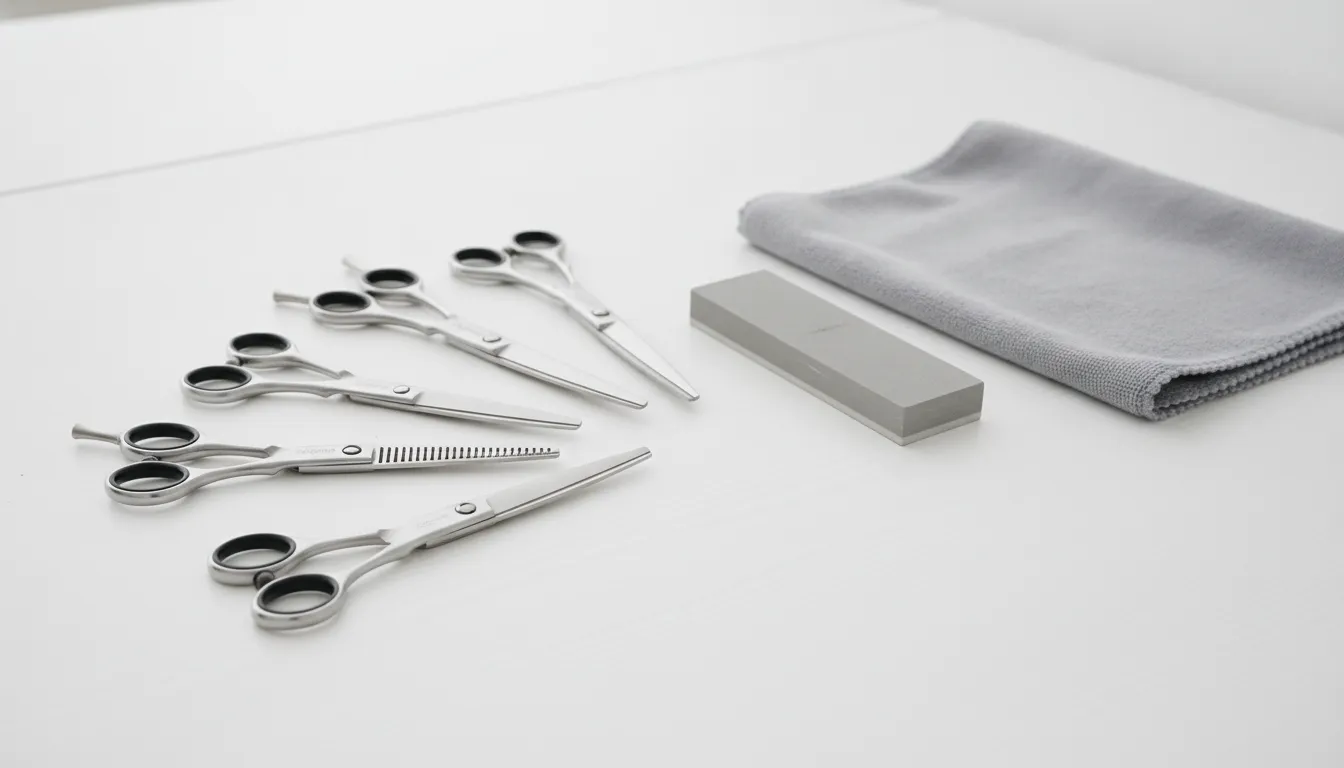
Professional barber shears are precision tools, not household scissors. When the edge, bevel, and tension no longer work together, hair can fold, push, or pull instead of cutting cleanly. That affects control, comfort, and the consistency of every service. For broader equipment upkeep, review The Barber Company’s clipper repair and blade sharpening services.
Call The Barber Company at (702) 900-9972 to ask about professional shear sharpening.
Choosing shear sharpening las vegas professionals trust means looking for a service that understands barber shear geometry. The technician should inspect the tool before working on it and restore its cutting action without treating every blade like a generic scissor. A proper evaluation also helps determine whether the issue is dullness, tension, damage, or routine maintenance.
The Barber Company provides an in-store option for barbers who want local technical guidance and a straightforward drop-off experience. Before comparing service providers, it helps to understand what professional sharpening can change in daily work, and what signs indicate that your shears need attention.
Why Professional Barber Shear Sharpening Matters
Professional sharpening matters because barber shears depend on a clean edge, correct alignment, and controlled tension. When those elements drift, hair may bend or pull and the barber may compensate with extra pressure. A specialist evaluates the complete tool instead of treating it like a household scissor.
A professional shear should move through hair cleanly, with the blades meeting as designed instead of forcing hair forward or requiring extra hand pressure. Sharpening restores the cutting edge and helps preserve the accuracy, comfort, and control that make specialized shears useful behind the chair. It is a precision service, not a generic scissor treatment.
Dull shears can bend and push hair rather than cut it, which may contribute to damaged cuticles and split ends. The result is not only a less polished service for the client. The barber may also compensate by squeezing harder, changing hand position, or repeating passes. Those adjustments reduce control and add unnecessary strain during a full schedule. See these benefits of professional shear sharpening for a closer look at performance and tool longevity.
Edge behavior changes the haircut
The edge is the working surface of the shear. When it is dull, nicked, or no longer aligned correctly, the blades may push hair toward the tips, snag during a slide cut, or leave an inconsistent result. A properly serviced edge should support the intended cutting action without the barber forcing the handles together. That distinction matters for detailed work where a small change in blade behavior can affect line quality, texture, and finishing control.
Professional sharpening also considers edge geometry and tension together. The blades must meet in a controlled way, while the tension must hold them securely without making the handles unnecessarily stiff. A generic sharpener may remove material without accounting for how hair shears are designed to cut. Specialized handling helps protect a delicate tool built for accuracy, rather than treating it like a household pair of scissors.
Maintenance helps, but it does not replace sharpening
Daily care remains essential. Clean hair, product residue, and moisture from the shears. Lubricate the moving area, and avoid dropping them or using them on anything besides hair. These habits help prevent buildup, corrosion, nicks, and avoidable damage. They also support smooth operation between professional services. Maintenance preserves condition; it cannot recreate an edge that has become dull or repair damage that has changed the blade relationship.
Watch for pulling, pushing, rough movement, visible nicks, or a hinge that no longer feels smooth. These are useful inspection points, not a substitute for a professional assessment. The guide to signs your barber shears need sharpening can help you decide when to stop adjusting your technique and arrange specialized service. The goal is consistent cutting performance and fewer disruptions during busy shop hours.
For barbers in Las Vegas, professional shear sharpening gives a valuable tool the handling it requires. The Barber Company serves working professionals and retail customers at its local storefront, with technical maintenance built around the realities of barber equipment.
How Often Should Barber Shears Be Sharpened?
Sharpening frequency depends on how often you cut, how you maintain the shears, and whether the tool has suffered impact or unusual wear. High-volume barbers may use a three-to-six-month reference point, but pulling, pushing, snagging, rough movement, or visible damage should prompt an inspection sooner.
There is no universal sharpening calendar for every barber. A high-volume professional may need service every 3 to 6 months, while lighter use, careful handling, and consistent daily maintenance can change that interval. Treat the schedule as a starting point, then let cutting performance and the condition of the shears guide the decision.
Usage intensity is the first variable. A barber cutting continuously throughout the week places more cycles on the edge and hinge than a student or occasional home user. The three-to-six-month range can serve as a planning reference for high-volume barbers, but it should not be treated as a guarantee or a fixed deadline. If the shears still cut cleanly and the tension remains stable, service may not be immediately necessary. If performance changes earlier, have them inspected earlier.
Watch for performance changes
Do not wait for a calendar reminder if the shears begin to push, fold, or snag hair instead of making a clean cut. Increased hand fatigue, a rough hinge, uneven tension, visible nicks, or a blade that no longer meets smoothly are practical warning signs. Dropping or slamming shears on a counter can nick or damage the blades, and bent or damaged shears may require professional service or replacement. Use this guide to the signs your barber shears need sharpening when you are unsure what you are seeing.
Daily care extends the useful interval
Sharpening corrects edge and cutting issues, but it does not replace routine care. Clean the shears during and after use so hair, product, and moisture do not dry onto the tool and create buildup. Professional tools should also be disinfected between every client according to applicable shop hygiene procedures. After cleaning, dry the shears fully and apply a small amount of suitable lubricant around the fulcrum and other rubbing points. A small brush can help reach hair trapped near the tension screw.
Handle the shears as precision equipment. Keep them in protective storage when they are not in use, avoid dropping them, and do not share them between users. Most importantly, use hair shears only for cutting hair. Cutting paper, plastic, packaging, or other materials can dull the blades and change the way the edges meet. These habits help preserve smooth operation, but they cannot reverse a damaged or worn edge.
When the warning signs appear, professional shear sharpening in Las Vegas is the appropriate next step. The Barber Company can assess the condition of your equipment and help determine whether it needs sharpening, adjustment, or a different repair. That inspection-based approach is more reliable than forcing every pair onto the same schedule.
What Happens During Professional Shear Sharpening in Las Vegas?
A professional service begins with an inspection, then addresses cleaning, edge condition, tension, alignment, and cutting behavior as appropriate for the individual tool. The technician should assess the shears before promising a treatment, because damage, construction, and previous alterations can change the correct service path.
Professional shear sharpening is a controlled maintenance process, not simply running a pair of shears across a generic abrasive surface. The technician evaluates the tool, works on the cutting edges without overlooking the hinge, then verifies tension, alignment, and cutting behavior before handoff. The goal is a careful service decision based on the shears in front of them.
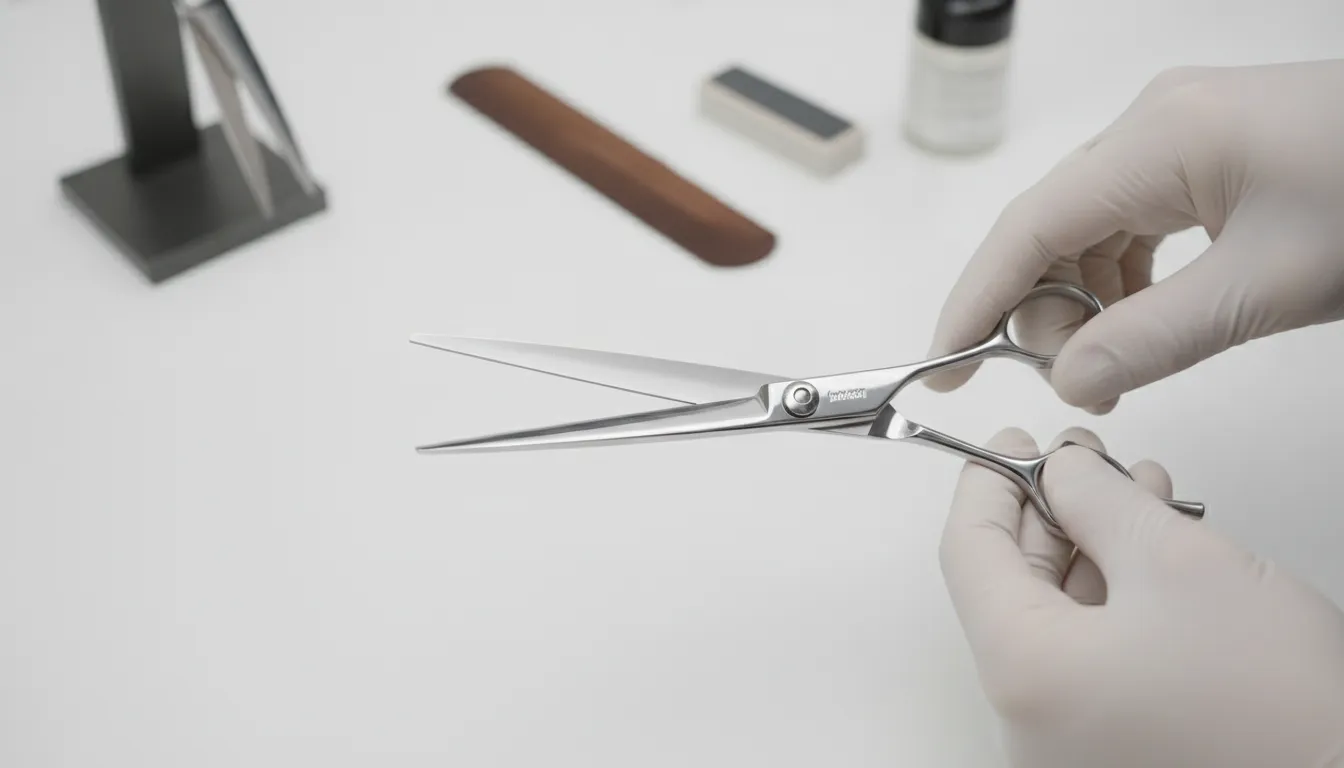
- Intake and inspection. The process starts with an examination of the shears and a conversation about the problem you are noticing. The technician can look for visible nicks, uneven wear, looseness, hinge resistance, bent components, or other damage that may affect whether sharpening is appropriate. Explain whether the shears are pulling, pushing, folding hair, or simply feeling different from their normal performance. That information gives the inspection useful context without assuming that every cutting issue comes from a dull edge.
- Cleaning and disassembly as appropriate. Hair, product residue, oil, and moisture can collect around the blades, screw, and fulcrum. Those deposits can interfere with a clear inspection and smooth movement. The shears are cleaned, and components are disassembled only when appropriate for the tool and the condition being addressed. This is also why professional shears should be handled as specialized equipment rather than treated like household scissors. They are delicate tools designed for accurate hair cutting, and unnecessary force or disassembly can create its own problems.
- Controlled edge work. Edge work should match the shear’s design and the condition found during intake. A professional service focuses on restoring a usable cutting edge and preserving the geometry that allows the blades to meet correctly. The technician should not promise a result before evaluating the tool, because excessive damage, bending, or previous alterations may change the service decision. Precision edge geometry is a central distinction between professional shear maintenance and a one-size-fits-all sharpening approach. The work is performed with control rather than removing material indiscriminately.
- Tension and assembly checks. After edge work, the components are assembled or adjusted as needed. The tension screw and hinge area deserve attention because the blades must move together with controlled resistance. Too loose, too tight, or uneven tension can change how the shears close and how they feel in the hand. The technician checks the assembly for smooth operation and confirms that the blades are aligned as intended before moving to a cutting test.
- Cutting test and handoff guidance. A final test helps identify whether the shears are closing and cutting consistently after service. At handoff, ask what the technician observed, whether any damage needs future attention, and what daily care is recommended for your tool. Keep the shears dedicated to hair cutting, clean away hair and product during use, and follow an appropriate lubrication routine around moving parts. The Barber Company provides professional technical maintenance in Las Vegas, including blade sharpening and related equipment service. Visit the professional shear sharpening services in Las Vegas page for the service scope and contact path. This article is a buying and comparison guide, while that page is the service-focused resource.
A careful workflow matters because the service decision depends on the tool’s condition, construction, and cutting behavior. Bring the shears in their normal working condition, describe what changed, and ask questions before approving work. That gives the technician a better basis for evaluating the edge, tension, and overall suitability for service.
Utsumi Shears and Other Professional Brands We Service
Choose a sharpening conversation around the shear’s construction, edge design, ergonomics, and daily technique, not just its brand name. The Barber Company carries Utsumi Shears and other professional brands. But model compatibility and service needs should be confirmed from the exact tool and the way you use it.
Brand matters, but the service decision should start with how you work. A shear used for precision detailing has different demands from one used for slide cutting or high-volume scissor-over-comb work. The Barber Company carries professional brands including Utsumi Shears, Wahl Professional, Gamma+ Professional, BaByliss Pro, StyleCraft, and Andis Professional. Confirm unusual models before drop-off.
Match the service to the shear’s job
| Use case | What to evaluate | Maintenance conversation |
|---|---|---|
| Precision detailing. | Clean edge behavior, controlled tip work, and comfortable finger position. | Discuss edge condition, tension, and any nicks or impact damage. |
| Slide cutting and texture. | How the blades glide, the handle’s ergonomic feel, and your hand control. | Explain the technique and products used so the edge is evaluated appropriately. |
| Scissor-over-comb and daily shop use. | Consistent closing action, comfort over repeated cuts, and reliable alignment. | Review hinge smoothness, tension, cleaning, lubrication, and storage habits. |
Edge geometry is not a one-size-fits-all choice
Convex and beveled edges are useful terms, but they should not be treated as automatic quality rankings. Their suitability depends on the shear’s design and the cutting technique. A convex edge is commonly discussed in connection with smooth, precise cutting. A beveled edge may suit a different working feel. The important point is to preserve the intended geometry rather than force a generic edge profile onto every tool.
Ergonomics deserve the same attention. A comfortable offset handle, finger rest, and balanced feel can reduce unnecessary hand strain, but comfort is personal. Tell the technician whether the shear feels stiff, pulls hair, pushes through sections, or closes unevenly. Those observations are more useful than choosing service based only on a logo.
Maintenance protects the result
Professional shears are specialized tools, not general-purpose scissors. Clean hair, product, and moisture from them during use, and use appropriate lubrication around moving contact points. Professional education sources also caution against using haircutting shears on non-hair materials, since that can dull the blades. Regular care supports service, but it does not replace inspection when performance changes.
The Barber Company provides technical maintenance in Las Vegas, including professional blade sharpening. Because service compatibility can depend on the model, construction, damage, and the work you need the shear to perform. Bring the exact tool or contact the store before assuming a particular treatment applies. That conversation helps protect the edge, handle, tension, and your daily technique.
Source guidance: professional shear maintenance guidance and barbering tool care guidance.
How to Drop Off Shears at The Barber Company
Prepare shears for drop-off by cleaning away loose residue, protecting the closed blades, labeling each pair, and writing down the symptoms you noticed. At the storefront, ask for an assessment, clarify the service scope for that model, and confirm pickup communication before leaving the tool.
Dropping off professional shears is straightforward, but a few details help the technician assess the tool accurately and help you retrieve the correct pair. Inspect the shears before leaving your shop, protect the cutting edges during transport, and give clear contact information. The steps below are a practical drop-off guide, while the clipper repair and blade sharpening services page explains the broader maintenance options.
- Inspect the shears before transport. Wipe away hair, product residue, and excess oil so you can see the condition of the blades, pivot, finger rings, and tension area. Note symptoms such as pushing hair, pulling during a cut, a rough hinge, visible nicks, looseness, or a blade that appears bent. This is not a replacement for professional assessment, but your observations give the team useful context. If the shears were dropped or slammed onto a counter, mention that because impact can nick or damage the blades.
- Protect the cutting edges. Place each pair in a dedicated shear case or another rigid protective sleeve. Keep the blades closed, separate shears from clippers and loose tools, and avoid placing anything heavy on top. Do not wrap them in a way that allows the tips to puncture the package or rub against metal equipment. Professional shears are delicate, specialized tools designed for accurate hair cutting, not general-purpose scissors.
- Label the pair and your contact details. Add your name, phone number, and the number of pairs being dropped off. If you are leaving several tools for a shop, label each pair with an identifier that matches your own inventory record. Include the brand and model when known, plus any specific concern, such as tension, edge feel, or accidental damage. This reduces confusion when multiple barbers are submitting equipment.
- Ask for an assessment before assuming the repair scope. At the storefront, ask what the technician observes, whether the shears appear suitable for sharpening or need additional service, and whether any damage could affect the result. Ask how you will be contacted if the assessment changes the recommended work. The Barber Company provides technical maintenance for barber equipment, including professional blade sharpening, clipper motor repairs, and precision zero gapping. Scope should be confirmed for the individual tool rather than assumed from a general service description.
- Confirm pickup details before you leave. Ask how pickup notification will be handled, what identification or receipt you should bring, and whether the team needs any additional information about your preferred cutting feel. Do not plan around an exact turnaround promise unless the store confirms one for your specific shears. If you need other equipment maintained, ask whether it should be recorded as a separate item.
Bring the shears, their protective case, and any relevant service or purchase information you have. You do not need a professional license to access The Barber Company’s storefront, and the team serves both working barbers and retail customers. Bilingual customer service is available, including Spanish support, so you can explain the issue clearly and ask questions comfortably.
Visit The Barber Company at 4700 Meadows Ln #110, Las Vegas, NV 89107. This article focuses on preparing for a local drop-off and choosing the right questions to ask. The linked service page is the place to review the broader sharpening and repair offering before contacting the store. For local shear sharpening in Las Vegas, a clear handoff gives the technician the best starting point without promising a price or exact completion time.
Call The Barber Company at (702) 900-9972 before your drop-off to confirm service details.
Frequently Asked Questions
How often should professional hair shears be sharpened?
There is no universal schedule. Usage volume, cutting technique, storage, cleaning, and accidental damage all affect the edge. As a general high-volume reference, professional shears may need service every 3 to 6 months. But pulling, pushing, reduced control, or visible damage are better reasons to request an inspection sooner. Professional shear care guidance supports adjusting frequency to use.
Where can I find professional shear sharpening in Las Vegas?
The Barber Company accepts local barber equipment and maintenance inquiries at 4700 Meadows Ln #110, Las Vegas, NV 89107. You can call (702) 900-9972 before bringing in a specialized or damaged model to confirm the appropriate service path. A professional license is not required to access the storefront.
What is the process for shear sharpening?
A professional service should begin with an inspection of the blades, pivot, tension, and overall condition. The technician then determines the appropriate edge work, reassembles and tensions the shears, and checks their cutting behavior before handoff. The exact steps can vary by shear design and condition, so ask what was inspected and adjusted.
Can I sharpen my own barber shears at home?
Routine cleaning, careful drying, lubrication around the pivot, and safe storage are appropriate home maintenance. Sharpening is different because changing edge geometry or tension without the right equipment and technique can reduce control or damage a precision tool. If the shears are bent, nicked, or cutting unevenly, have them assessed professionally rather than experimenting on the edge.
How do I know if my shears need sharpening?
Watch for hair bending or pushing instead of cutting cleanly, increased hand fatigue, snagging, uneven cutting, or a tension setting that no longer feels stable. Also arrange service after a drop or impact. Keep shears limited to hair cutting, since other materials can dull specialized blades. Barbering tool-care guidance recommends servicing bent or damaged shears.
Get Your Shears Ready for the Next Client
Professional sharpening can help restore the control, clean edge behavior, and comfort you expect from your barber shears. When you are ready to arrange an in-store drop-off in Las Vegas, call The Barber Company at (702) 900-9972 to ask about professional shear sharpening. The team can help you clarify the service details before you bring your shears to 4700 Meadows Ln #110, Las Vegas, NV 89107.
Shop professional equipment and grooming products at The Barber Company online store. Follow The Barber Company on Instagram for updates. Store address: 4700 Meadows Ln #110, Las Vegas, NV 89107. Phone: (702) 900-9972.