
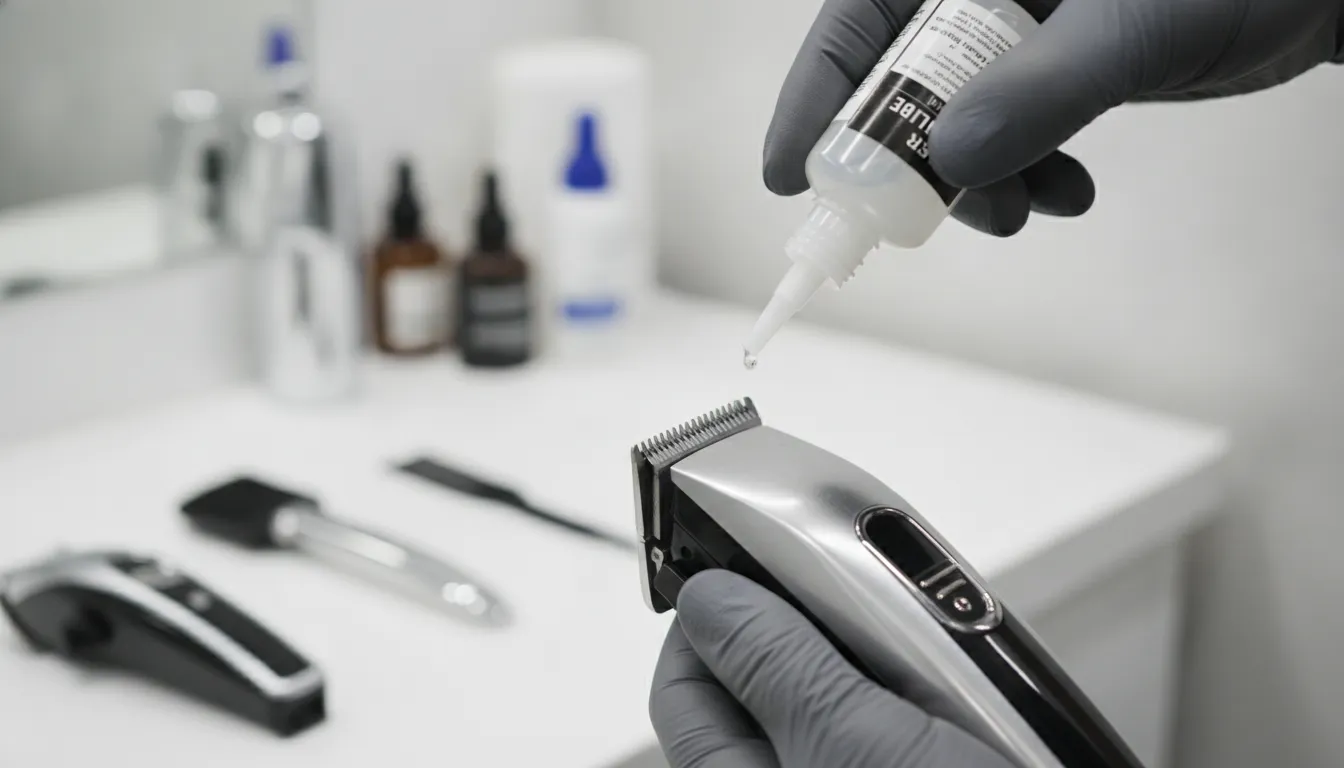
Dull, slow blades that pull hair can quickly ruin your professional barbering reputation.
Stop by The Barber Company in Las Vegas today to feel the difference, or call us at (702) 900-9972 to get professional-grade oil and blade care.
Learning how to properly oil clipper blades is the most important step to prevent overheating, reduce blade wear, and maintain sharpness. According to the industry experts at Wahl Professional, regular lubrication of blades is crucial to keep your tools running smoothly. Without proper oiling, metal-on-metal friction causes rapid blade dulling, pulls client hair, and strains the clipper motor, leading to costly equipment repairs or replacements. By applying a few drops of specialized clipper oil before and after each haircut. You create a protective barrier that resists heat, repels moisture, and keeps your blades gliding effortlessly. This simple habit preserves your tools, saves you money, and ensures clean, precise cuts for every client who sits in your chair.
Understanding the actual mechanics of blade friction helps you see why this brief task is so vital. It is easy to skip maintenance when your shop gets busy, but keeping your gear oiled is the foundation of professional barbering. We will cover the specific reasons why Why Oiling Clipper Blades Is Non-Negotiable for Barbers to keep your business running at its best.
How To Properly Oil Clipper Blades: Why Oiling Clipper Blades Is Non-Negotiable for Barbers
Clipper blade oiling is a vital step that prevents mechanical wear, overheating, and rust on your tools. Skipping this routine leads to metal friction, loud noises, and poor cuts that can ruin your day and lose you clients. If you want your tools to run smooth and last for years, oiling is a must.
How Friction and Heat Ruin Blades
Clipper blades are made of high-carbon steel that rubs together at high speeds. Without oil, this metal contact creates high friction and fast heat buildup. This heat can burn your client’s skin or make your clippers slow down. A lack of oil also strains your clipper motor, which can cause early tool failure and lead to costly repairs.
The Danger of Blade Drag and Rust
When you skip oil, your blades will start to drag and pull on your client’s hair. This drag ruins the blend and makes the haircut feel painful. Dry steel is also prone to rust from air moisture and wet hair. You can protect your steel tools by keeping them clean and using oil after each cut. For major issues or worn out tools, you can use our professional clipper maintenance services to restore your gear.
Keep Your Tools Sharp and Save Money
Regular blade oiling keeps your tools sharp and extends their life. Clean and oiled blades do not need to be sharpened as often. This simple step saves you time and cuts down on tool costs. In-store services like regular clipper lubrication help prevent early wear on expensive blades. When you care for your steel, you keep your business running and your cuts clean.
What Type of Oil to Use on Clipper Blades
To learn how to properly oil clipper blades, you must first choose the right lubricant. Our professional recommendation is to use only a light, low-viscosity mineral oil formulated specifically for high-speed cutting tools. Using the wrong type of oil can gum up the moving parts of your clipper, ruin your blades, and slow down your machine.
The Viscosity Rule for High-Speed Blades
Professional hair clippers run at high speeds, often reaching thousands of strokes per minute. Standard household lubricants like 3-in-1 oil or motor oil are far too thick for these fast-moving metal parts. Heavy oils create drag, trap cut hair within the blade assembly, and cause the motor to overheat. A light clipper oil lubricates without building up sticky residue.
Household Oils to Avoid
Many barbers and home users make the mistake of using common household items on their gear. According to official blade maintenance guides from Wahl Professional, you should never use WD-40 or olive oil on your clipper blades. WD-40 is a solvent designed to displace water, not a durable lubricant, and it will quickly evaporate and leave your blades dry. Olive oil and other vegetable oils are organic, meaning they go rancid, turn sticky, and will completely jam your cutting head over time.
Your Safe Clipper Oil Options
For the best results, stick to mineral-based oils made by trusted brands like Wahl, Andis, or Gamma+. The Barber Company carries all of these top brands, along with our own Las Vegas made Barber Works styling and maintenance line. If you run out of specialized oil in a pinch, a pure, food-grade light mineral oil is the only acceptable temporary alternative. Always avoid cooking oils, sewing machine oils, or thick grease.
| Oil Type | Safe for Clippers? | Why |
|---|---|---|
| Clipper Oil (Wahl, Andis) | Yes | Right thickness, resists heat, does not attract hair. |
| Light Mineral Oil | Yes (Temporary) | Pure and thin, but lacks pro heat-resistant additives. |
| WD-40 | No | Acts as a solvent, evaporates too fast, strips lubrication. |
| Olive Oil | No | Gums up the blade, goes rancid, creates sticky buildup. |
| 3-in-1 / Motor Oil | No | Too thick, clogs high-speed parts, overheats motor. |
How to Oil Clipper Blades: A Step-by-Step Walkthrough
To learn how to properly oil clipper blades, you must clean the teeth, hold the unit downward, apply small drops of specialized oil to key friction points, and run the motor to coat the steel. This quick walkthrough guides you through each step of the process to protect your tools from heat and wear.
Prep Your Tool and Clear Debris
You must turn off and unplug your clippers before you start. Safety is key whenever you handle sharp metal parts. Slide off the plastic guard to expose the cutting surface. Next, use a small nylon brush to sweep away hair clippings, skin scales, and dust from the teeth and the blade track. Leaving old debris on the tool creates a thick paste when mixed with fresh fluid, which slows down the motor and dulls the cutting edge.
Position Your Clippers
Hold the clippers so the blades face straight down toward the floor or table. This downward tilt is vital because it stops gravity from pulling excess liquid back into the plastic motor housing. If fluid flows into the motor compartment, it can burn out the electrical parts, ruin the switch, and cause the tool to short circuit. Keep the unit pointed down during the whole process.
Apply the Oil to Key Points
To achieve correct lubrication, use the five-point method backed by top brands. First, place one drop of oil in the center of the moving top blade and one drop on each end of that same top blade. Next, apply one drop of oil to the heel of the stationary bottom blade on each side, which makes five drops total. This technique matches the industry standard documented by Wahl Clipper Blade Maintenance guidelines.
You can also use the four-point blade method from Groomer to Groomer maintenance standards. This method targets three rear track points once a day and requires a drop on the cutting teeth each time you mount a new blade. Whichever path you choose, keep the drops small to avoid mess.
Run the Motor and Wipe the Steel
Turn the tool on and let it run for 10 to 30 seconds to distribute the fluid across the moving parts. This run time spreads the film across the whole surface to reduce friction and stop heat build-up. Once the oil coats the steel, turn the switch off. Take a clean, soft cloth and wipe away any excess liquid from the outer surfaces to keep it from dripping onto your client during a trim.
- Unplug and prep: Switch off the power, disconnect the cord, and slide off any attachment combs or plastic guards.
- Brush away debris: Use a stiff cleaning brush or an old toothbrush to clear all hair, dust, and grime from the blade assembly.
- Point clippers down: Hold the unit with the teeth facing the floor so fluid does not seep back into the internal motor casing.
- Lubricate moving blade: Place three small drops of specialized clipper oil across the teeth of the sliding top blade (one on each end, one in the center).
- Lubricate rear rails: Add one drop of oil to the back heel rail on the left side and one drop on the right side of the bottom blade.
- Circulate the fluid: Turn the clippers on and let them run for 15 seconds so the moving parts spread the protective film evenly.
- Wipe excess oil: Turn the motor off and use a lint-free towel to clean up any remaining wet fluid from the metal edges.
Keep Your Blades in Peak Shape
Regular oiling keeps your tools cool, prevents rust, and ensures clean cuts. If you notice your blades pulling hair or running hot even after proper lubrication, you may need a deeper tune-up. Professional barbers in Las Vegas can stop by The Barber Company for expert clipper care. Our local shop offers high-quality clipper maintenance and blade sharpening services to keep your gear in top condition.
How Often Should You Oil Your Clippers? (By Usage Level)
How often you oil your clippers depends directly on how much you use them. Professional barbers running busy Las Vegas shops should oil their blades before and after every single haircut. While home grooming enthusiasts should oil them before and after each personal cutting session to prevent friction, heat, and rust.
Oiling Schedule for Professional Barbers
For high-volume professional barbers, proper maintenance is a daily task. Major manufacturers like Wahl recommend that you oil your blades before and after each haircut to ensure your tools work at their absolute peak. This frequent lubrication keeps the motor running cool and prevents blade wear during back-to-back appointments. According to industry guidelines on Wahl clipper maintenance, regular lubrication is crucial to prevent overheating, reduce wear, and maintain sharpness. If you want to keep your tools in top shape, you can also browse the professional clipper maintenance services available at The Barber Company.
Oiling Schedule for Home Users
If you only use your clippers at home for personal grooming, you do not need a daily schedule. But you must still oil the blades before and after each session. Oiling the blades before you cut ensures the teeth glide smoothly through hair without pulling or snagging. Oiling them after you clean the blades helps protect the steel from moisture in the air. Industry guides emphasize that oiling clipper blades before extended storage is the best way to prevent rust from forming on the metal surfaces while your tools sit in a drawer.
The Blade Change and Daily Point Method
You can also follow the professional Groomer to Groomer method to keep your maintenance simple. This technique splits your oiling routine into two parts: daily points and blade changes. There are four key points on the blade to lubricate, but you only need to oil three of these points once a day. These three main body points will hold enough oil for the whole day unless you wash the tool in a liquid blade wash. However, you must oil the teeth of the blade every single time you swap a blade on your clipper. Following this dual routine ensures maximum protection with minimal waste.
Signs Your Blades Need Oil Right Now
Dry blades show clear warning signs before they stop working or cause permanent tool damage. Knowing how to properly oil clipper blades helps you spot these minor issues early so you can fix them right at your station.
Hair Pulling and Snagging
The most common sign of dry blades is when they pull or snag hair instead of cutting it. Without oil, friction slows the top blade down, which causes it to grab and pull hair. If your clients feel pain or you feel drag during a fade, stop and oil your blades. Keeping blades oiled ensures smooth cuts and keeps your clients happy.
Excess Heat and Loud Noise
Dry metal blades rubbing together at high speeds create friction that makes them hot to the touch. If your clipper blades feel warm after just a few minutes, they need oil to cool down. You may also hear a loud rattling or grinding sound from your tool. Regular lubrication is crucial to prevent overheating, reduce wear, and maintain sharpness, according to industry guidelines from Wahl Professional.
Slow Cutting and Dullness
When blades lack oil, the motor must work harder to move the cutting teeth, which slows down your work. Over time, this extra strain can damage your clipper motor and dull your steel edges. While oiling solves slow cuts, very dull blades need sharpening or replacement. If your blades are already dull, you can get professional clipper maintenance services at The Barber Company in Las Vegas to restore your tools.
Where to Buy Professional Clipper Oil in Las Vegas
Finding high-quality clipper oil in Las Vegas is essential for maintaining your tools. Whether you run a busy shop on the Strip or keep your style sharp at home. The Barber Company is your trusted local supplier, offering premium lubricants and expert technical care for all professional barbering equipment.
Your One-Stop Shop for Leading Brands
At The Barber Company, we carry an extensive inventory of specialized clipper lubricants from the industry’s top manufacturers, including Wahl, Andis, Gamma+, and StyleCraft. We also stock our own Las Vegas-manufactured Barber Works line. Featuring professional-grade oils designed specifically to withstand the extreme heat and rapid friction of high-speed magnetic, pivot, and rotary motor clippers. Professional accounts can also take advantage of our wholesale bulk pricing when purchasing cases of maintenance fluids and sprays.
Convenient Local Pick-Up and Valley-Wide Delivery
Our hybrid retail and wholesale showroom on Sahara Avenue is open directly to the public, allowing grooming enthusiasts to purchase professional-grade products without needing a barber’s license. For busy local shop owners, we make stocking up even easier by offering free local delivery on all orders over $50 throughout the entire Las Vegas valley. Covering Las Vegas proper, Henderson, and North Las Vegas. This ensures you never run out of the vital supplies needed to keep your stations running smoothly.
Complete Barber Tool Care and Maintenance
Beyond supplying premium clipper oils, we are dedicated to helping Las Vegas barbers extend the life of their equipment. If your tools require more than routine oiling, our in-store technicians provide comprehensive professional clipper maintenance services, including blade sharpening, custom zero gapping, and motor repairs. Give us a call at (702) 900-9972 or visit our physical storefront today to stock your station with the best blade care products in Nevada.
Frequently Asked Questions About Oiling Clipper Blades
Keep your tools performing at their absolute best by reviewing these answers to the most common questions about clipper blade maintenance and lubrication.
How often should I oil my clipper blades?
Professional barbers should oil their clipper blades before and after every single haircut to ensure the tools work at peak performance. For home users, we recommend oiling before and after each grooming session. Regular lubrication reduces metal-on-metal wear and keeps the blades from heating up during use.
Should I oil clipper blades before or after use?
You should oil your blades both before and after use. Oiling before a haircut ensures the metal teeth glide smoothly through hair without pulling or snagging. Oiling after cleaning and before storage creates a protective barrier that prevents moisture from rusting the high-carbon steel blades.
Where exactly should I apply the clipper oil?
Apply three drops of oil across the front teeth of the moving top blade (one on each corner and one in the center). Then, place one drop of oil on each rear heel rail of the stationary bottom blade (five drops total). This ensures even coverage across all high-friction surface areas.
What happens if I never oil my clipper blades?
Failing to oil your blades causes intense metal friction, which overheats the blade and can burn your client’s skin. Over time, the blades will drag and pull hair, dull rapidly, and rust from environmental moisture. The added friction also strains the clipper motor, leading to complete mechanical failure.
Can I use any oil to lubricate my clipper blades?
No, you must only use specialized, low-viscosity clipper oil. Household products like WD-40, 3-in-1 oil, and olive oil should be avoided. Olive oil goes rancid and gums up the moving parts, while WD-40 acts as a solvent and evaporates too quickly, leaving the metal completely dry and unprotected.
How long should I run the clippers after applying oil?
After applying the drops, turn the clippers on and let them run for 10 to 30 seconds. This allows the rapid back-and-forth movement of the top blade to distribute the fluid evenly across all mating surfaces of the blade assembly.
Should I wipe off excess oil after application?
Yes. After running the clippers to distribute the oil, turn them off and use a clean. Soft microfiber cloth to wipe any excess fluid from the sides of the blade. This prevents messy drippings from getting on your client’s cape, skin, or hair.